
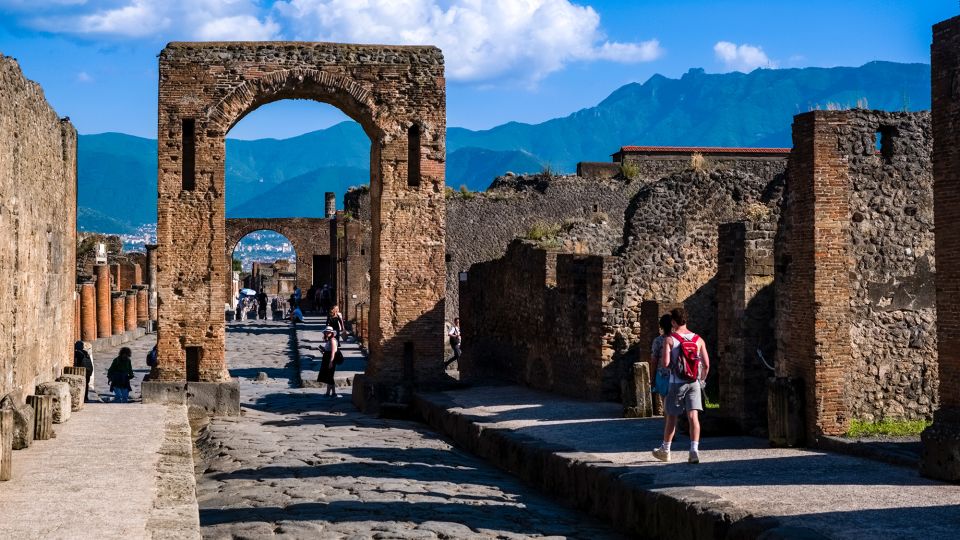
The architectural legacy of ancient Rome continues to reveal its secrets through modern archaeological discoveries. Recent excavations at Pompeii have uncovered a construction site that offers unprecedented understanding of Roman concrete technology.
Preserved Construction Site
In AD 79, when Mount Vesuvius erupted and buried Pompeii under volcanic ash, workers were actively repairing a residential structure. This site remained untouched until 2023, when international researchers led by Admir Masic from MIT conducted new excavations. "When I entered this archaeological site in Pompeii, everything was so vivid and also kind of perfectly preserved, to be able to just reconstruct clearly what was going on there," Masic said. "They're frozen in time. It's literally a time capsule."
The findings, published December 9 in Nature Communications, represent the clearest evidence yet of Roman concrete mixing processes. "They allow researchers to make conclusions that we were not able to make, or at least not with this certainty about the Roman technology," Masic told CNN.
Concrete Analysis
Researchers examined various elements at the site, including partially built walls, completed structures, and piles of dry materials intended for concrete production. This discovery builds upon Masic's previous research from 2023, which analyzed a 2,000-year-old city wall in Privernum, Italy. That study identified lime clasts - small white mineral chunks that enable concrete's self-healing properties. When cracks form, water dissolves these lime particles, allowing them to fill and seal fractures as they recrystallize.
Masic's team determined that Romans used a "hot-mixing" process, combining lime fragments with dry ingredients like volcanic ash before adding water. This chemical reaction generated heat and trapped lime clasts within the concrete matrix.
Historical Discrepancies
The Pompeii findings present an interesting contrast with historical records. The first-century manuscript "De architectura" by Roman architect Vitruvius describes adding water to lime before other materials, rather than the hot-mixing method observed at Pompeii. "It's really difficult to think that Vitruvius was wrong. And I respect Vitruvius, and he inspired literally all my work," Masic noted, suggesting Vitruvius' method might have been used elsewhere or that scholars have misinterpreted his writings.
John Senseney, an ancient history professor at the University of Arizona, commented on this discrepancy: "Expecting scientific discoveries to conform to what Vitruvius writes would be misguided. Vitruvius's corpus was indeed authoritative for humanist architects during the Renaissance over a thousand years later, but you'd be hard pressed to find much in Roman imperial era buildings that followed that reflect his prescriptions."
Senseney emphasized the importance of recognizing common workers' contributions: "Discoveries like this throw light on the incredible contributions of common workers and even enslaved persons in ancient history, which is very difficult to appreciate directly in the written works of elite authors." He pointed to structures like the Pantheon and Colosseum as examples of everyday people's expertise and innovation.
Masic expressed hope that this discovery will encourage further examination of Vitruvius' work in relation to surviving Roman architecture and potentially inspire improvements to modern construction practices. Reflecting on the experience, he said, "I will never forget being able to just open a time capsule and travel in time and feel like I am in 79 AD looking at people making their concrete."
"That's what really fascinates me in dissecting these, particularly when it comes to ancient Roman concrete and infrastructure Romans built that is still standing here after 2,000 years - I'm not sure how much of our things will be there in 2,000 years from now."