Government Response to Attack
After the mass shooting during a Hanukkah celebration at Bondi Beach, Australian Prime Minister Anthony Albanese revealed plans for a national firearm buyback initiative and stricter hate speech regulations.
The proposed legislation, while not yet formally drafted, has generated significant controversy. Concerns have been raised that these laws might be exploited for political purposes rather than addressing core issues.
Free Speech Concerns
Dr. Reuben Kirkham of the Free Speech Union of Australia expressed skepticism about the proposals. "Well, it's a bit hard for them to actually strengthen the laws. It's not clear what they're proposing to do," Kirkham stated. "What they're probably going to try and do is widen it to include a bunch of things that are not to do with hate speech, necessarily."
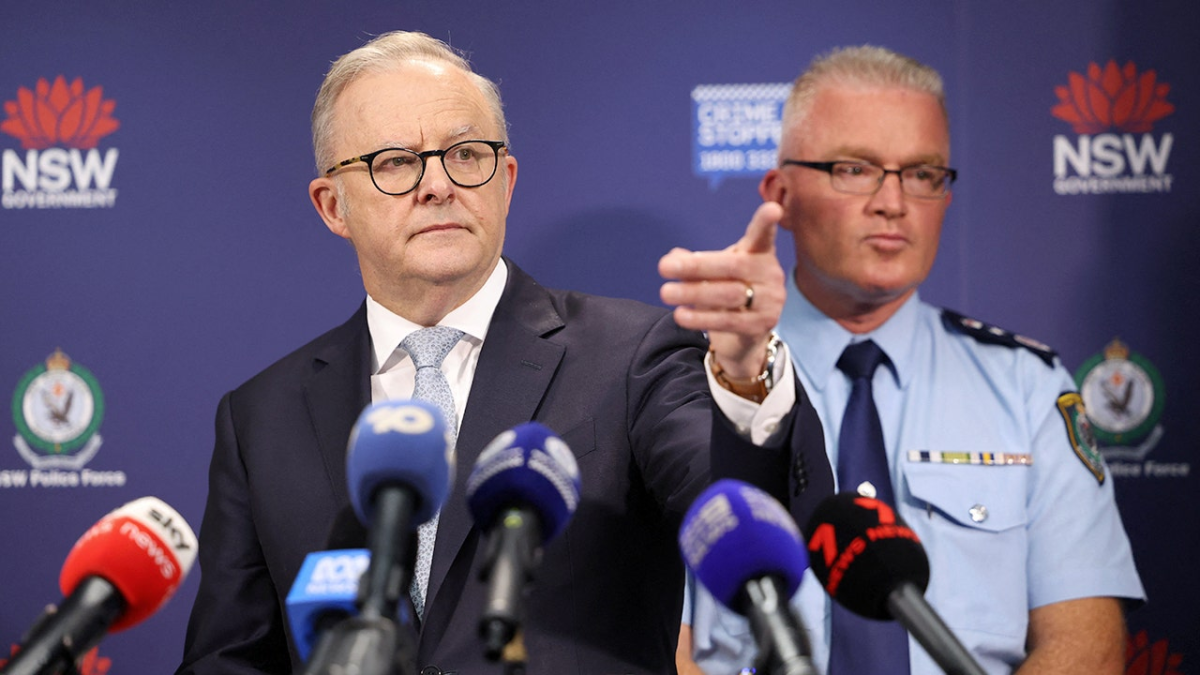
Prime Minister Albanese acknowledged the complexities during a Friday press conference, noting that the government aims to "get the laws right" while considering free speech implications. He emphasized, "There are issues of free speech involved in this as well — we want to make sure that these laws don't get passed and then get knocked over."
Legislative Details
The planned changes reportedly include federal offenses targeting "aggravated hate speech" by religious figures promoting violence and "serious vilification" based on racial background. This follows similar legal enhancements made just ten months earlier aimed at reducing antisemitism and Islamophobia.
In New South Wales, where the attack occurred, authorities are considering bans on chants like "globalize the intifada," viewed by many as antisemitic calls for violence. The restrictions would also cover public displays of ISIS flags and extremist symbols.
NSW Premier Chris Minns indicated that under proposed measures, police would gain expanded authority to require protesters to remove face coverings during demonstrations.
Criticism of Approach
Kirkham argued that existing anti-vilification laws have already been used to suppress speech challenging government positions. He warned that strengthened laws following the Bondi incident might serve as political tools rather than public protections. Kirkham further suggested the government might be using the tragedy to advance its legislative agenda.
"What they’re basically saying is, ‘Well, we need more censorship laws. Why? Well, apparently to protect Jewish people.’ So what they’re saying to these communities is, ‘We’re censoring you to protect the Jews.’ I mean, how is that going to go down? Is that going to improve the issue of antisemitism, or is it going to make it worse?" Kirkham questioned.
Intelligence Findings
While focusing on legislative responses, critics like Kirkham point to potential intelligence failures revealed by the attack. Albanese confirmed that intelligence agencies identified the Bondi shooting as ISIS-inspired, citing regular online video feeds from the terrorist organization.
"We've been informed that the Office of National Intelligence has identified a regular online video feed from ISIS that reinforces that this was an ISIS-inspired attack. Further work has been done by the security agencies around motivation, and we'll continue to meet and provide them with whatever support they need at this difficult time," Albanese told reporters.
Broader Security Concerns
Bill Roggio, senior fellow at the Foundation for Defense of Democracies, criticized Western governments for failing to address underlying issues behind Islamist extremist attacks. "The problem here is there's this radical Islamist ideology that spans a spectrum from political Islam, the Muslim Brotherhood, to Hamas and Palestinian terrorist groups, to al Qaeda and Islamic State, and we in the West refuse to, and have from the very beginning since 9/11, refuse to actually take that on," Roggio explained. "We don't want to admit that there is an actual problem within Islam, not with Islam, but within Islam."
International Connections
Investigations have focused on the gunmen's trip to the Philippines before the attack. According to hotel records, the father and son arrived earlier than scheduled in Davao City, paid in cash, extended their stay multiple times, and had minimal interaction with staff.
Philippine police official Brig. Gen. Leon Victor Rosete noted the older gunman's interest in firearms, though they didn't visit firing ranges. CCTV footage showed them engaging in what appeared to be "physical conditioning" exercises.
Roggio highlighted that Mindanao is a "known hotbed for Islamist groups," suggesting the pair might have received training, planning advice, or indoctrination during their visit. "Three weeks-plus isn't enough to become a highly efficient two-man fire team, but they clearly got enough training to make that happen," Roggio observed.
As investigations continue, debates persist about whether proposed legislative measures adequately address fundamental security challenges.