Connection Between University Shooting and Professor's Death
Authorities have established a connection between a shooting at Brown University last Saturday and the subsequent killing of an MIT professor. The suspect, a former Brown student, is believed to have known the professor from their shared educational background in Portugal.
Details of the Incidents
On Saturday, two Brown University students were fatally shot and nine others were injured during a study session. Two days later, MIT professor Nuno F.G. Loureiro was found dead at his home in Brookline, Massachusetts.
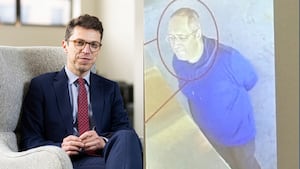
United States Attorney for the District of Massachusetts Leah B. Foley stated that surveillance footage linked the suspect to both crimes. The suspect was seen in the Brookline area around the time of the professor's death.
Educational Background Connection
Foley detailed that the suspect and Professor Loureiro were classmates in an engineering program in Portugal from 1995 to 2000. Loureiro graduated from Instituto Superior Técnico in 2000, while the suspect was dismissed from a position at the same institution that year.
It remains unclear whether the two had maintained contact since their student days.
Victims and Aftermath
The Brown University victims included 19-year-old Ella Cook and 18-year-old Mukhammad Aziz Umurzokov, both students preparing for final exams. Of the nine injured students, three have been discharged from medical care while six remained in stable condition as of Thursday.
Professor Loureiro served as Director of MIT's Plasma Science and Fusion Center and was researching the physics behind solar flares and other astronomical phenomena.
Suspect's Background and Discovery
The suspect, a Portuguese national, had originally come to Brown University on a student visa and later obtained permanent residence status in 2017. His last known residence was in Miami, Florida.
On Thursday night, the suspect was found deceased from a self-inflicted gunshot wound at a storage facility in Salem, New Hampshire. Surveillance footage from that location showed him wearing the same clothing seen in Brookline around the time of the professor's death.
Police acknowledged that a tip from someone who had encountered the suspect proved crucial in the investigation.