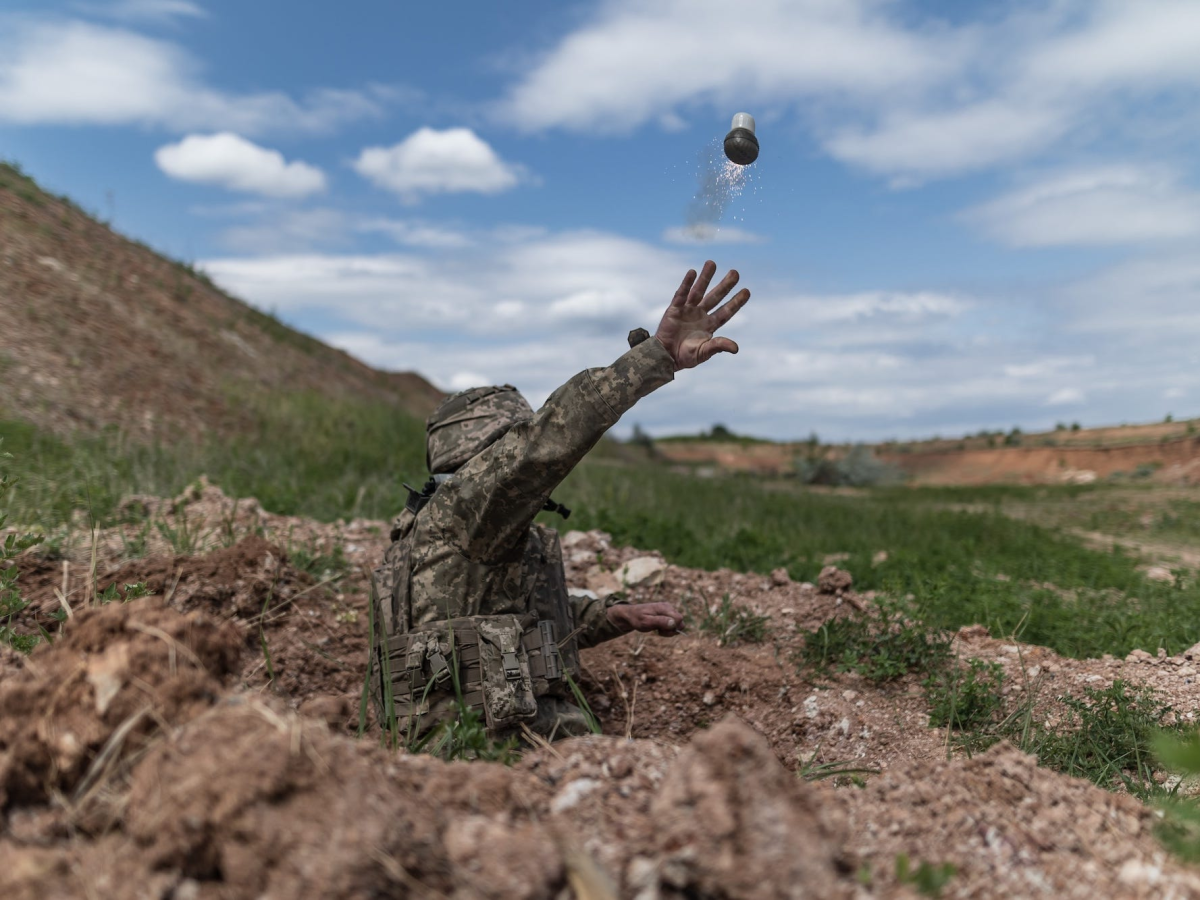
In the ongoing conflict in Ukraine, hand grenades have transformed from standard infantry equipment to indispensable weapons in the brutal trench warfare against Russian forces.
Close-Quarters Combat Necessity
The battlefield in Ukraine features extensive trench systems reminiscent of World War I, where soldiers engage in extremely close combat. A US veteran who served in Ukraine told Business Insider anonymously that "when you go through these trenches, hand grenades are your best fucking friends." He described engagements where combatants were so close they could "literally touch them with the muzzle of your rifle at times."
Trenches present unique challenges for assaulting forces. "You're basically trying to take the home of another individual who's lived there for days, weeks, months at this point," the veteran explained. "So they know every nook and cranny; they know every turn."
Evolution of Grenade Usage
While grenades have long been infantry staples in conflicts like Iraq and Afghanistan, Ukraine's war has elevated their importance to levels not seen in decades. Western officials and military trainers have noted the extensive grenade usage by Ukrainian forces.
Lt. Col. Davidson, involved in the UK-led Operation Interflex training program for Ukrainian soldiers, stated last year that "Ukrainians have got a heavy use of grenades," prompting adjustments to training programs.
The types of grenades employed vary widely, including fragmentation, explosive, flashbang, and chemical varieties. Smoke grenades serve particular purposes, with a Ukrainian officer noting they can create poor visibility for evacuating wounded soldiers, though this risks attracting Russian attention.
Supply Challenges and Innovations
Ukraine sources grenades from multiple channels, including Soviet-era stockpiles and supplies from partner nations. A January 2025 US Department of Defense report indicated America had provided "more than 500,000,000 rounds of small arms ammunition and grenades" to Ukraine.
Supply shortages have created difficult situations. Another anonymous US veteran described being told to be "careful practicing with grenades" during periods when US aid was stalled. Troops rotating positions would request departing soldiers leave behind any remaining grenades and ammunition. "That's how desperate that situation got to where it's like guys were literally getting ammo and grenades off of dudes leaving the area so that they could keep fighting," he said.
Tactical Adaptations
Grenade usage has evolved with battlefield innovations. Beyond traditional hand-throwing, Ukrainian forces now frequently deploy grenades via drones across front lines, targeting soldiers, bunkers, hideouts, and vehicles. A US Army Colonel described this approach as having "proved dramatically effective" for Ukraine.
Ukrainian units and engineers are adapting older grenades for drone deployment using 3D-printed components while also creating custom grenades with plastic casings filled with explosives.
Broader Implications
The extensive grenade usage in Ukraine has captured Western military attention. Maj. Maguire, a British officer involved in Operation Interflex training who helped document lessons from Ukraine, noted that "there's a massive demand for grenades" in trench fighting.
Western militaries, unaccustomed to large-scale trench warfare in recent decades, are studying Ukraine's experience to understand the weapons needed for such combat. The conflict demonstrates that even amid advanced technologies, sustained close combat in trenches remains heavily dependent on basic infantry weapons like grenades and sufficient supplies of them.