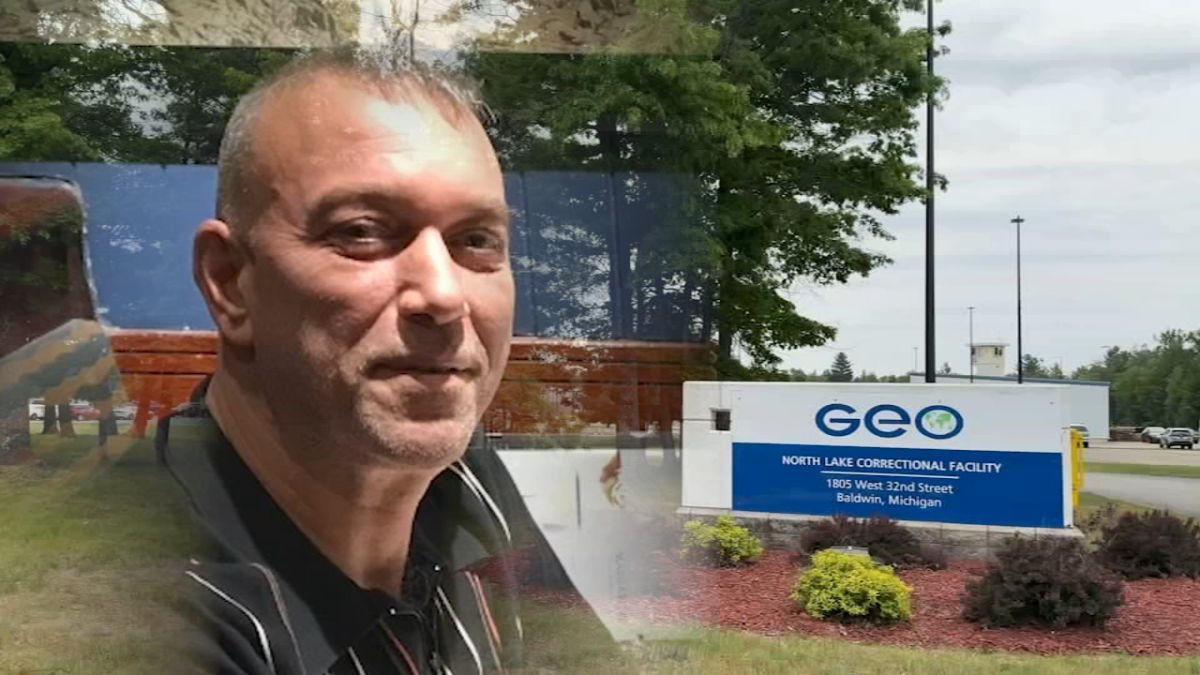
A 56-year-old man from Bulgaria who resided in Chicago passed away while detained by U.S. Immigration and Customs Enforcement at a private prison facility in Michigan. Nenko Gantchev died on Monday at the North Lake Correctional Facility in Baldwin, a location contracted by ICE to hold individuals without documentation.
Following inquiries, the Department of Homeland Security released a statement indicating the death is believed to be from natural causes, though the official determination remains pending investigation.
However, Gantchev's relatives and acquaintances report growing concerns about his declining health during his months in custody, culminating in the events of his final day. "I want people to know what happened to him, a man who lived 30 years here, hardworking, paid taxes, and they treated him like an animal," said Gantchev's wife, a U.S. citizen who requested anonymity due to fear of retaliation. "They are so rude to him... They treated him like he was a murderer."
Congresswoman Delia Ramirez has demanded an immediate and transparent probe into the circumstances. "We are aware of at least 30 deaths at ICE detention centers this year, making 2025 the deadliest year for immigrants in ICE custody," Ramirez stated online.
Gantchev was among numerous individuals a federal judge in Chicago ordered released on bond last month after his arrest was questioned under the Castañon Nava consent decree. Court documents noted his release was not deemed a high public safety risk.
His wife explained that the order initially brought hope for his release to seek medical treatment for diabetes, but when the Seventh Circuit Appeals Court blocked it, Gantchev faced a choice between voluntary removal to Bulgaria or remaining detained. "I told him, 'You have to make the decision, but please don't leave me alone here,'" his wife recalled. "He's paid taxes this whole time, he's not a criminal. Why do they treat him like this?"
The North Lake facility is operated by GEO Group, a major private prison company contracted by ICE as the Midwest's largest detention center. Illinois laws prohibit using state or county prisons for immigration enforcement, leading to this arrangement. GEO Group directed all questions to ICE.
Gantchev arrived in Chicago three decades ago on a student visa, later obtaining a work permit and establishing a trucking business in 2008. He married in 2017 and was applying for a green card through his spouse. He was apprehended by ICE on September 23 during an interview at the USCIS Chicago office regarding his application.
His wife was informed of his death on December 16, their eighth wedding anniversary. "We had a very good life together, this is very hard for me," she said.
A close friend, "Anna," described Gantchev as "a wonderful human being, very, very docile, very good natured, funny, you know, just very helpful, the kind that would stick up for his friends. If you needed something, he would be there for you."
Concerns Over Medical Treatment
Gantchev's wife and friends stated that since his detention, he repeatedly reported worsening health over phone calls. He had type 2 diabetes and claimed no dietary accommodations were provided. They asserted the limited food at North Lake was insufficient to manage his blood sugar, and they sent money for commissary items.
"There was no special diet," Anna remarked. "There was not enough food that he needed for his condition, which is why we were sending the money through the system there so he could go to the commissary." She added that stress could exacerbate diabetic conditions, and his health progressively declined.
His wife grew concerned when she missed a nightly call and found his ICE locator status showed release. The next morning, the Bulgarian Embassy notified her of his death. She has since received little information.
"To be honest, the family hasn't really learned much of anything," Anna said. "They believed he collapsed and that it may have been a heart attack, and that was it. They gave [his wife] no other information. Nobody else called her."
ICE reported that Gantchev was found unresponsive during routine checks, with facility staff initiating CPR and summoning emergency services, who pronounced him deceased. The Bulgarian Embassy delivered a letter from ICE's Detroit office, promising further details and procedures for belongings, but as of Friday, his wife had received no follow-up calls from ICE, GEO Group, or the medical examiner.
Anna expressed distress over the lack of communication: "There's been no opportunity afforded to his wife to even identify him or to determine any kind of religious rites or needs for the body, nor was there permission gained to even do an autopsy."
A medical examiner's office spokesperson stated deaths in federal custody are released through federal channels, with cause of death certified later. A Chicago funeral director mentioned an autopsy was conducted, and cremation was planned per family wishes.
Christine Sauvé of the Michigan Immigrant Rights Center argued the death might have been preventable, reflecting broader issues. "Mr. Gantchev's death sadly underscores how the Trump administration is exacerbating unconscionable conditions in a detention system that is proven to be inherently inhumane," a statement read, noting it is the 29th death in ICE custody since 2017, a record since tracking began in 2006. The MIRC cited long-standing problems with medical neglect and overcrowding in Michigan facilities.
A DHS spokesperson denied allegations of poor treatment in ICE facilities as false.
Background and Legal Status
ICE labeled Gantchev a "criminal" in a statement, but court records reveal only traffic violations, with no serious crime charges. His wife and friends highlighted his trucking company ownership and strong work ethic.
"He had real estate here. He had a business here. He was here a very long time," Anna noted. "He wanted very much to be an American citizen. He was married to an American citizen."
ICE officials stated Gantchev was granted lawful permanent residence in May 2005, but USCIS denied it in 2009. In 2023, an immigration judge ordered his removal to Bulgaria, leading to his September arrest. His wife and friends believe his green card application was nearing approval.
"He was trying to do it right, and it's sad that he'll never see the fruits of that labor," Anna said. "Maybe, if enough attention is called to what is happening here, maybe they can save someone else's life. Maybe someone else will get that bond and get out to take care of themselves."
Gantchev's wife hopes sharing his story will improve conditions for others in ICE detention. "To save somebody from this situation, for other people out there, that's why I'm talking to you," she told reporters.