Union Takes Action Against State Practices
On Tuesday, Maryland's largest public employees union, AFSCME Council 3, submitted multiple unfair labor practice complaints. The union asserts that state administrators have breached regulations concerning employee monitoring at work and have unilaterally altered previously agreed-upon policies regarding telework eligibility and shift differentials.
These filings were made as part of a wider appeal to Governor Wes Moore and state legislators for improved compensation and working conditions. The union highlighted that state agencies are currently under significant strain.
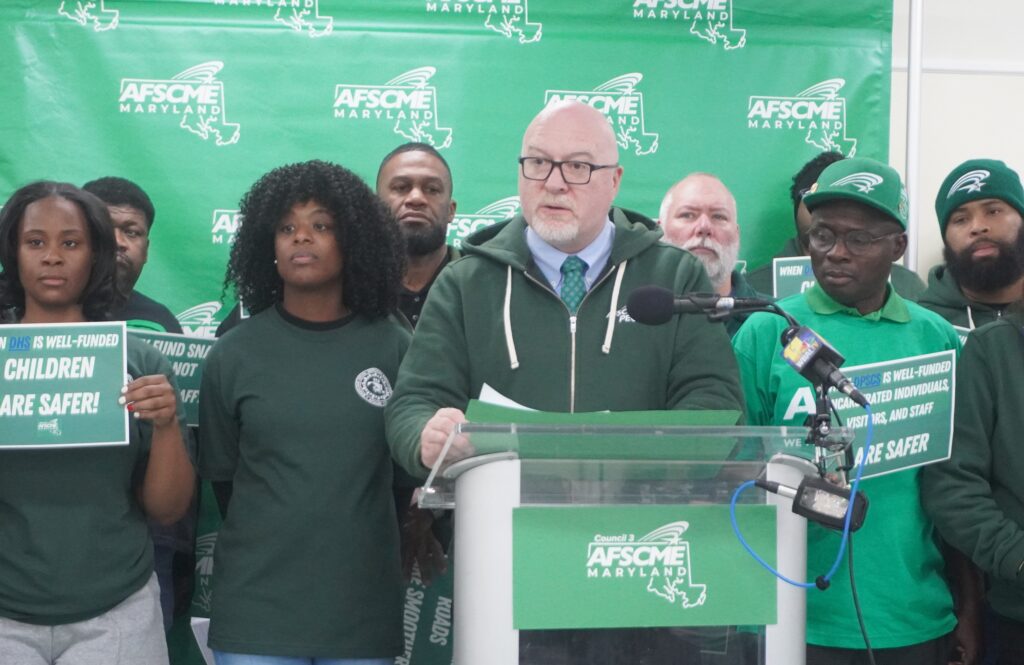
"We're at a critical time in Maryland when we have an administration in Washington that has made it their mission to go after the public services millions rely on," stated Council 3 President Patrick Moran during a Baltimore press conference, where he was supported by numerous state workers.
"We need a state government and state leadership that are standing up to those threats and charting a different course. Standing with public employees means not committing unfair labor practices," he added.
Administration's Response
A spokesperson for the governor responded on Tuesday afternoon, noting that the Moore administration remains supportive of public servants while navigating a "historic budget crisis as Maryland continues to face unprecedented attacks from the federal administration."
"From day one, Gov. Moore has consistently stood up for Maryland's workers, making clear that supporting labor and protecting our workforce are central to this administration's work," said spokesperson Rhyan Lake.
"Each year, he has reaffirmed that commitment to public servants and organized labor, despite ongoing budget constraints, the state and the union have reached agreements to continue annual increases. The governor will continue to work with our labor partners to ensure our workers are protected," Lake continued.
Specific Allegations Detailed
However, in separate submissions to the state's Public Employee Labor Relations Board filed on Tuesday, the union detailed several areas where it believes the administration has failed to meet obligations.
The first complaint alleges that the Department of Budget and Management violated shift differential terms in the current collective bargaining agreement, which is effective until December 31, 2026. The union contends that the agreement mandates an extra $1 per hour for any union member working an overnight shift, but the department recently created a list of job classifications that would qualify, which the union views as selective application.
The second complaint, also directed at DBM, claims the department is refusing to provide a list of union members eligible for telework—a practice it followed previously—or to track those utilizing it, thereby hindering the union's ability to negotiate on the matter. The agency has reportedly stated that telework "agreements are a management right."
Additionally, the union raised concerns about video surveillance in the workplace. The collective bargaining agreement specifies that such monitoring should be used "solely for security purposes," but the union alleges that the Maryland Department of Health is employing it to track "employees in the moment-to-moment performance of their duties."
Examples cited include monitoring nurses and other workers at the Thomas B. Finan Center in Cumberland during medication preparation and delivery, observing handwashing duration and personal protective equipment use. In one instance, a supervisor reportedly texted workers to adjust their positions for better camera visibility.
Similar monitoring practices are said to occur at several other state hospital centers, including Springfield Hospital Center in Eldersburg and Clifton T. Perkins Hospital Center in Jessup.
Broader Context and Union Calls
All three complaints were lodged with the state's Public Employees Relations Board. Union members described such filings as "very rare" and emphasized that they come at a time when "state services are in crisis." They pointed to issues such as hospital bed shortages, assaults on correctional facility staff, and overall staffing deficiencies affecting work quality.
Moran noted that average monthly turnover in state government reached 409 employees in August, and a voluntary separation program announced earlier this summer has worsened staffing and public service challenges.
Union members have voiced concerns about working conditions since last year, following the discovery of Legionella bacteria in the water at State Center. Earlier this year, AFSCME and other labor groups advocated for stronger worker protections, resulting in the Davis Martinez Public Employee Safety and Health Act enacted in May.
On Tuesday, union members urged state officials to collaborate on cost-saving measures that would not only aid in hiring and retention but also ensure safety for workers and the public.
"We are ready, and we have been ready, to partner with the state on how to cut costs in a real, sustainable way that doesn't harm state employees, state services and Maryland's working families," said Cherrish Vick, a family services case worker with 17 years of experience and AFSCME Maryland's secretary treasurer. "We cannot do our work if our government does not have our back, and that looks like acting as a partner, working with us on cost savings and paying state workers what we deserve."