Conservation Milestone in Namibia
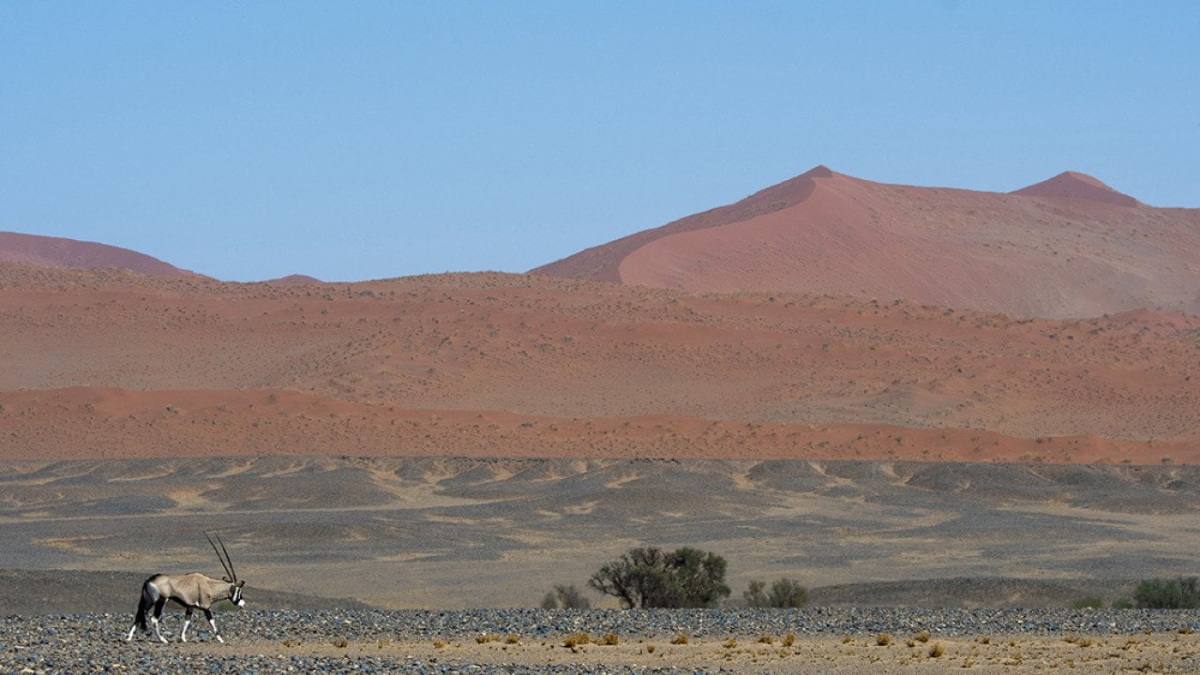
As dusk settled over Namibia's arid mountains, a truck carrying ostriches, springbok, and oryx arrived at the Orange River Karoo conservation area. Local community members and observers watched as conservationists opened the transport crates, releasing the animals into their new habitat. This carefully planned translocation represented years of preparation by the nonprofit organization ORKCA.
"Honestly, it was one of the happiest days ever, in terms of how many years and days have gone into getting us to where we are today," said Andreia Pawel, cofounder of ORKCA.
Historical Decline and Current Efforts
The Orange River-Karoo region has experienced severe wildlife losses over the past two centuries. According to ORKCA, southern Namibia lost 90% of its wildlife due to poaching, mining, and agricultural expansion. Elephant populations dropped from 10,000 to zero, while springbok numbers plummeted from 20 million to just 5,000. Leopard populations decreased from 2,000 to 10, and lions became locally extinct.
Despite these challenges, ORKCA formed in 2020 with a vision for restoration. In 2023, the Rolex Perpetual Planet Initiative recognized their work and supported the organization's first wildlife release.
"When you're talking about research in the far south, in the desert, everyone laughs and asks you what is there?" said ORKCA chief executive Nabot Mbeeli. "When you really start looking closely, close to the surface, you'll be amazed by the amount of life that is actually there."
Ecological Significance and Local Knowledge
The region spans three distinct biomes: desert, Nama Karoo with low shrubs, and Succulent Karoo, the world's only arid biodiversity hotspot. This unique combination creates an ecotone that serves as a natural crossroads and evolutionary catalyst.
Local Indigenous communities have long understood the area's potential. "Karoo" originates from a Khoisan word meaning "land of thirst." The Nama people maintain a reciprocal relationship with the landscape.
"Traditional healers depend on indigenous species for remedies, herders rely on healthy grazing ecosystems, and our way of life is shaped by the balance between people and nature," said Lizle Jacobs, a member of the Orange River Queens, a local Nama women's group.
Restoration Progress and Methods
ORKCA has set aside 395,000 acres for conservation, where vegetation has recovered significantly after five years without livestock pressure. "There's grass as high as and as thick as your hip because the area has had no livestock pressure; it's just been allowed to rest for five years now," Mbeeli noted. "It's amazing the amount of difference."
The organization employs various restoration techniques, including removing fences, installing communication towers, and placing camera traps to monitor wildlife and detect threats. Two animals from each released species were fitted with tracking collars to study their movements.
"We are understanding how they're moving within this section of the landscape, how they will be dispersing across a greater landscape, and so on," Mbeeli explained. "It's a massive landscape, and trying to study without using tech would be a lot more challenging. So, this is a first step in collecting the data."
Challenges and Future Vision
Climate change poses additional threats to the region, with declining endemic plant species and threatened wetlands. The Orange River, a vital water source, faces drought conditions and pollution from agricultural runoff.
Despite these obstacles, signs of recovery are emerging. "We've had [some years] that we get good rain, and we start seeing species of flowers that just pop up that we've never seen before in areas that we thought were barren," Pawel observed. "Then, all of a sudden, it's this amazing vegetation that is there."
ORKCA plans to establish a transboundary park centered around the Orange River, transforming it from a political border into a protected ecological corridor. The organization's work has already attracted renewed scientific interest in the region.
"A lot of conservation is actually taking down fences, cleaning out water holes," Pawel said. "It's very hard work, and it's long days in the field, so it's really important for us to also get hands-on and have that connection with wildlife, the ones that we're actually passionate about, and that inspires us as a team."
While the landscape still shows evidence of past losses, ORKCA remains committed to restoring its ecological vitality in partnership with Indigenous stewards. The successful wildlife reintroduction represents just the beginning of this ambitious conservation journey.