Founding and Mission
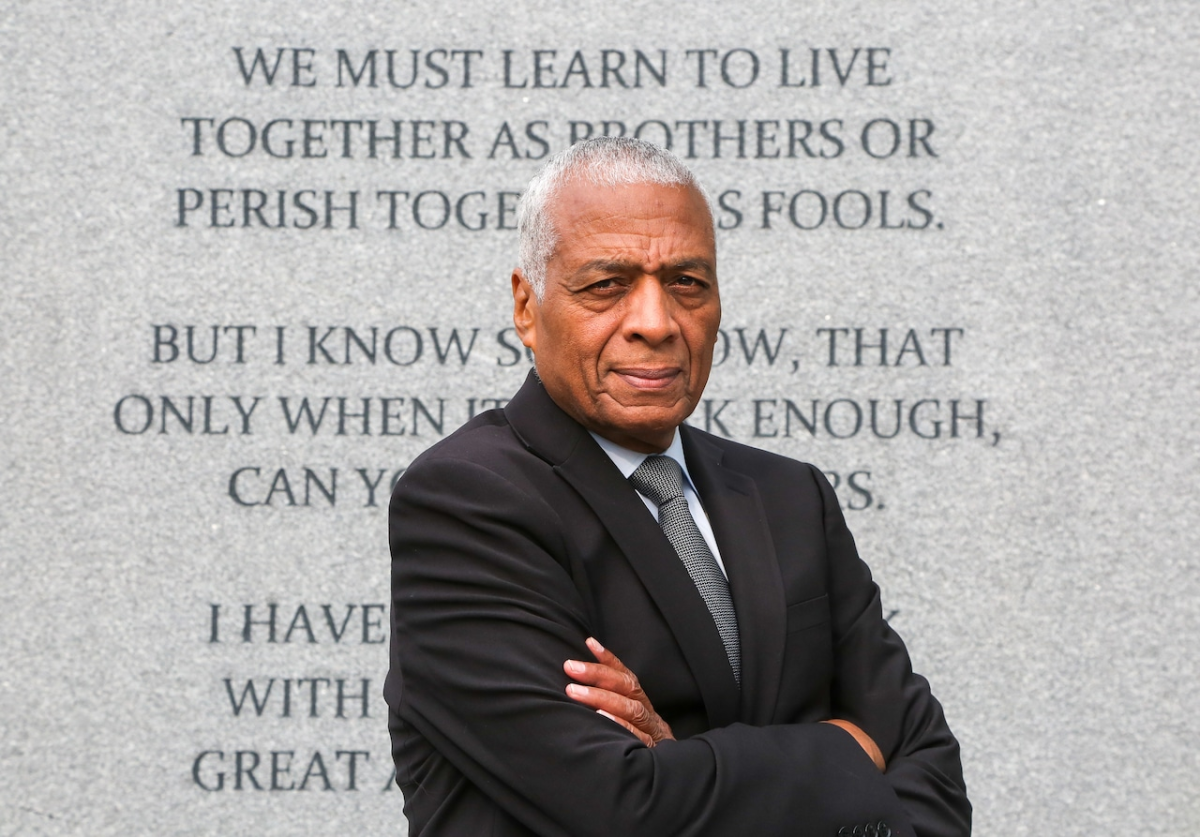
Lawrence Hamm established the People's Organization for Progress in 1982, creating a civil rights group dedicated to advancing racial equality, economic justice, and peace. The organization, commonly known as POP, has consistently worked with numerous groups to promote these principles, inspired by Dr. Martin Luther King Jr.'s vision.
Coalition Philosophy
For POP, forming alliances is not just a strategy but a core philosophy. Through various activities including marches, conventions, legislative advocacy, and ongoing political education, the organization has helped build a unified progressive movement in New Jersey. This approach demonstrates that collective action is more powerful than isolated efforts in addressing injustice.
Leadership Perspective
Rev. Dr. Forrest Pritchett, director of the Martin Luther King, Jr. Leadership Program at Seton Hall University, observed that Hamm has been actively addressing community challenges since his youth. In a recent discussion, Hamm reflected on POP's work in 2025 and outlined plans for the coming year.
Organizational Background
The People's Organization for Progress was created to pursue racial, social, and economic justice along with peace. It originated from a group of young activists, primarily high school students, who continued their advocacy during college. Many were involved in the anti-apartheid movement from the 1960s through the early 1990s, which concluded with Nelson Mandela's release in February 1990.
After completing their education and entering adult life, these individuals sought to maintain political engagement. POP emerged from their desire to establish an organization that would be more dynamic, direct, and effective on key issues than existing groups.
Iconic Signage
POP is recognized for its distinctive banners, with "Stop Police Brutality" being the most prominent as it was the first. Professional banners were developed to ensure visibility, as handmade signs often proved difficult to read from a distance, especially for passing vehicles.
Early media coverage presented challenges, as photographs sometimes failed to capture messages on handmade signs, making them appear blank. Consistency was another concern, as individually created signs could convey mixed messages that didn't align with POP's objectives.
To address these issues, the organization collaborated with a local Essex County sign maker to produce large, lightweight, durable, and reusable banners. After experimenting with heavy plywood signs that were impractical to carry, POP adopted corrugated plastic materials. This choice enhanced durability and readability, making the banners a defining feature of the organization.
Beyond Marches
When asked about perceptions that POP primarily marches in Newark, Hamm clarified that while activities occur there due to the federal building's location, the organization also demonstrates in Trenton as the state capital and in Washington, D.C., where the federal government is based.
Hamm emphasized that protest encompasses various forms of dissent, including demonstrations, letter-writing, contacting elected officials, attending government meetings, testifying before legislative committees, and organizing boycotts. POP has participated in Assembly and Senate committee hearings in Trenton and provided testimony on reparations, including during Congressman John Conyers' hearings on HR 40.
Additional Activities
Beyond marches and rallies, POP conducts year-round voter registration through its Empowerment Team, viewing this as essential political empowerment. From March through October, registration occurs weekly outdoors, shifting to indoor events during winter months.
The organization also hosts teachings, forums, and educational programs focused on community, civic, and political education. POP brings historical figures and experts to the community, having hosted Claudette Colvin multiple times and Sarah Collins Rudolph, sister of a victim of the Birmingham church bombing. These efforts underscore education's central role in POP's work.
2025 Priorities
Police brutality remains a core issue, having shaped POP into a more active street organization in its early years. A major focus in 2025 was advocating for a civilian police review board with subpoena power, essential for compelling testimony and documents.
Defending democracy was another priority, leading to three significant demonstrations: the "No Kings" protest on June 14 challenging authoritarianism; the "Good Trouble Lives On" march on July 17 honoring John Lewis and emphasizing voting rights; and a second "No Kings" protest on Oct. 18 advocating for democratic governance. These actions responded to attacks on democratic institutions.
Recent Accomplishments
POP's involvement in the New Jersey Reparations Council, established in 2023 to advocate for Black reparations, was significant. The council's final document will serve as an important reference for years to come, with ongoing efforts for reparations legislation at state and federal levels.
2025 marked the first time 300 organizations endorsed a single POP event—the Martin Luther King March for Resistance. The organization also held the Martin Luther King People's Convention for Justice and Resistance on April 26, endorsed by 207 groups, resulting in a comprehensive agenda with 27 resolutions.
2026 Focus
Plans for 2026 begin with the Martin Luther King March of Resistance on Jan. 19 in Newark, followed by another People's Convention in April focused on justice agenda. POP is organizing a Million People's March in October 2026 in New Jersey.
While the Amistad Act mandating Black history in state curricula is law, full implementation remains a priority. Legislative goals include establishing a state reparations task force, creating a civilian review board with subpoena power, implementing same-day voter registration, and focusing on education and mobilization for the 2026 midterm elections.