Political Clash Over AI Regulation Intensifies
An attack advertisement launched last week in New York declared, "Alex Bores. Wrong on AI. Wrong for Congress." The Democratic candidate for a Manhattan House seat responded in an online video filmed on a city street.
"AI billionaires, go have fun," stated Bores, a state assemblyman. The ad criticized him for sponsoring a bill requiring large AI firms to publish safety data. "We're standing up for New Yorkers," he added.
National Battle for AI Narrative Control
This exchange marks the beginning of a nationwide conflict. A super PAC supported by Trump-aligned tech leaders and an independent effort by Meta aim to use the 2026 midterms to reshape Congress and state legislatures in favor of their AI ambitions.
These groups seek to control the AI narrative as politicians from both parties warn the industry is advancing too rapidly. The largest pro-AI super PAC, Leading the Future, holds over $100 million from prominent investors and executives. An affiliated nonprofit recently launched a $10 million campaign urging Congress to pass legislation that would accelerate American AI innovation to compete with China.
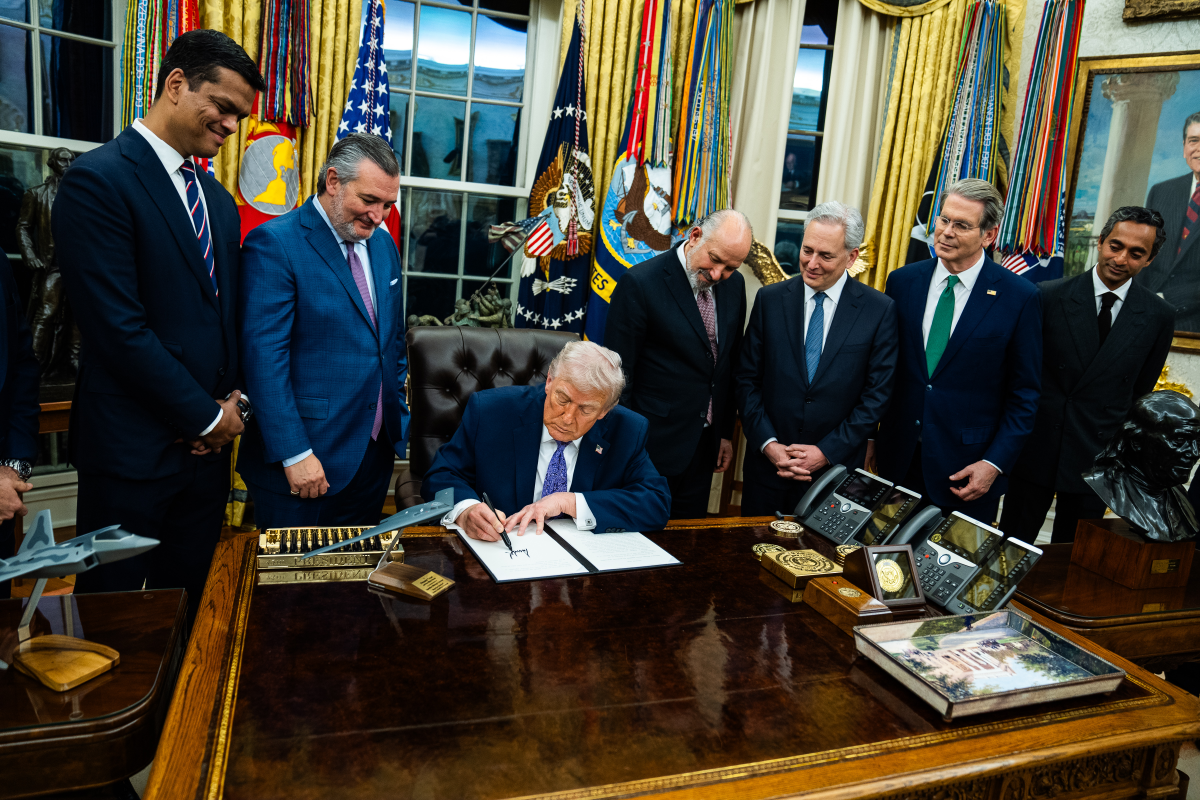
The Silicon Valley initiative hopes to expand gains from Donald Trump's second term. He has reversed AI restrictions from the Biden administration and recently signed an executive order threatening legal action against states that enact AI laws. According to the U.S. Chamber of Commerce, state legislators introduced over 1,000 AI regulation bills in 2025.
Targeting Pro-Regulation Candidates
By opposing candidates like Bores who favor regulations and supporting industry allies, these tech-backed groups signal that challenging the tech sector could endanger electoral prospects nationwide.
"Bores just happened to be first, but he's not the last, and he's certainly not the only," said Josh Vlasto, co-head of Leading the Future, the bipartisan super PAC behind the ad.
The group plans to engage in congressional and state elections next year, funding rapid response operations against voices advocating for more oversight. Funders include tech elites such as Andreessen Horowitz, Palantir co-founder Joe Lonsdale, and OpenAI president Greg Brockman and his wife.
This strategy mirrors the cryptocurrency industry's approach, which used a super PAC to help pass the Genius Act this summer, boosting the sector's fortunes after the 2023 FTX fraud convictions damaged its reputation.
Growing Public Concern and Political Divisions
More than half of Americans believe AI poses a high risk to society, a Pew Research Center survey found in June. As AI use expands, warnings about job disruption, data center proliferation, and mental health impacts from chatbots are increasing.
Politicians across the spectrum are leveraging AI concerns in campaigns, promising to protect children from chatbots or oppose new data centers. Republican divisions in the Senate recently thwarted a bid, backed by some Trump tech allies, for a 10-year federal moratorium on state AI laws.
Trump's recent moves to block state AI regulation have drawn criticism from figures like Florida Gov. Ron DeSantis and commentator Stephen K. Bannon, who argue his tech alliances risk alienating his base amid voter frustration over issues like energy costs.
Meta's Entry and Counter Efforts
In August, Meta announced its own super PAC focused on AI policy, its first since Facebook's 2004 launch, followed by a second in September. Meta spokeswoman Rachel Holland stated this bipartisan effort aims to prevent a patchwork of state AI laws but operates independently of Leading the Future. Meta has donated "tens of millions" to each group.
Leading the Future is initially targeting four states with active AI bills: New York, California, Illinois, and Ohio. Vlasto said the group advocates for federal preemption of state laws and a national AI regulatory framework. Andreessen Horowitz recently proposed AI policies limiting states to regulating for consumer protection reasons like child safety.
Vlasto explained Bores was targeted because he is associated with a movement to slow American AI progress. Bores has made federal AI regulation part of his midterms campaign, raising $1.2 million in the first 15 hours after his October launch, according to his Instagram. His spokesperson Alyssa Cass noted, "No AI billionaires or oligarchs have given to his campaign. And he isn't taking PAC money."
Opposition and Broader Implications
Candidates targeted by pro-AI groups may receive support from super PACs planned by former congressman Brad Carson, president of Americans for Responsible Innovation. He said his bipartisan super PACs will intervene in races targeted by Leading the Future or Meta to support candidates championing AI transparency and risk protection.
"I would hope - and expect - that we raise funds from people at all of the major labs," Carson said, declining to specify further. Funding will be raised through Public First, a 501(c)4 nonprofit that can influence elections without disclosing donors.
Leading the Future has also established a 501(c)4 nonprofit, Build American AI, to promote its industry vision. An early adviser, speaking anonymously, said it plans to counter a "doomer" movement within tech that warns AI poses an existential threat.
Sarah Myers West, co-executive director of the AI Now Institute, criticized the new groups for not focusing on voter issues like AI's labor market effects or data center health impacts. "It's hugely problematic if the scope for policy debate is narrowed [by] two very well-capitalized interest groups that are largely based out of Silicon Valley, for a technology that is already having profound effects on the world," she said.
Michael Toscano of the Institute for Family Studies noted widespread AI concerns as chatbots like ChatGPT become common. He predicted "whiplash" for Trump's MAGA coalition, as Republican voters who supported his past tech industry attacks may be troubled by his recent Silicon Valley alliances over AI. "This is perhaps the thing that writes the epitaph of the MAGA movement," Toscano said.