
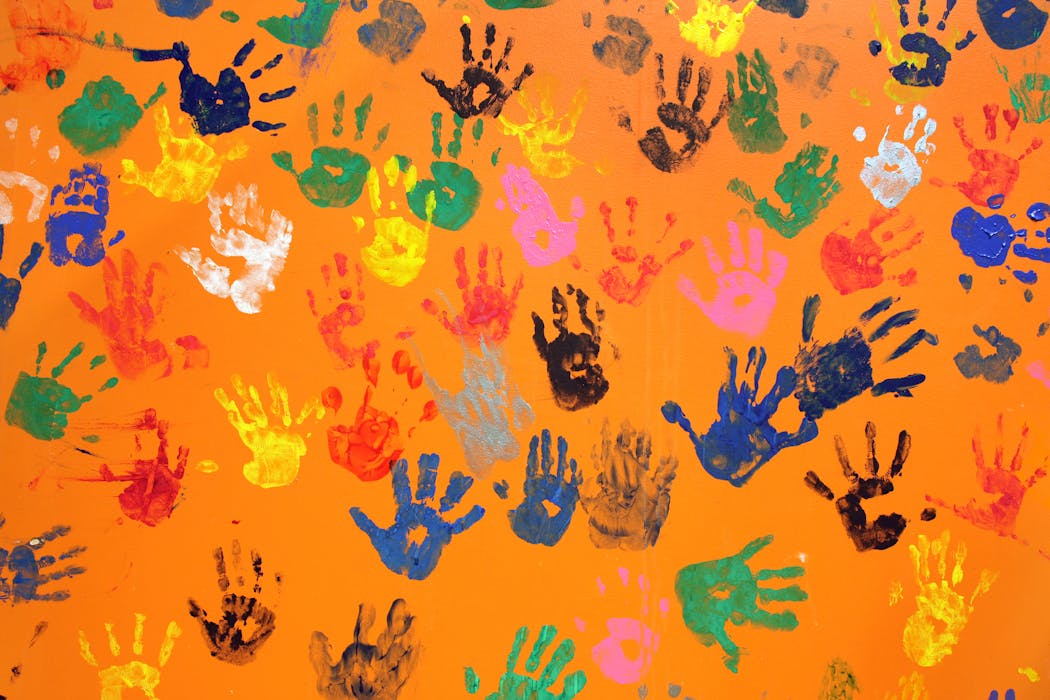
Fingerprints are the distinctive patterns of ridges found on human fingertips, formed by folds in the skin's outer layer known as the epidermis. These patterns leave behind traces of oils or dirt when we touch surfaces, creating the recognizable prints.
The development of fingerprints begins during fetal growth. Initially, the skin's surface is smooth, but around 10 weeks into gestation, the basal layer beneath starts expanding more rapidly than the layers above it. This differential growth causes the skin to buckle and form ridges, with the process completing by approximately 17 weeks, establishing the individual's unique fingerprint patterns.
Genetic factors inherited from parents influence the general size and shape of fingerprints, meaning family members often share similar patterns. However, the specific details are shaped by additional elements such as blood vessel configuration, skin growth rates, and the chemical conditions within the womb. This combination ensures that no two individuals, not even identical twins, have identical fingerprints.
Research from 2015 confirmed that fingerprints remain stable throughout a person's life. The patterns are encoded in deeper skin layers, so even significant injuries to the surface typically allow fingerprints to regenerate as the skin heals, though scars may appear. This permanence underscores their uniqueness, established before birth and maintained indefinitely.
The Purpose of Fingerprints
Despite their prevalence, the exact function of fingerprints remains uncertain. Traditionally, they were thought to enhance grip by increasing friction, a theory supported by their presence in tree-climbing animals like primates and koalas. However, recent studies suggest they may not significantly aid in holding smooth objects, challenging this assumption.
Other hypotheses propose that fingerprints might improve tactile sensitivity or offer protection against finger injuries, but scientists have yet to reach a definitive conclusion on their primary role.
Applications of Fingerprints
Fingerprints have been utilized for identification purposes for over two millennia, with early use documented in ancient China. Their uniqueness makes them valuable in various modern contexts, including unlocking devices, securing restricted areas, and verifying identities in systems like loan programs for farmers in Malawi or tracking immunization records from infancy.
In law enforcement, advancements in forensic techniques have expanded their utility. Detectives can now analyze fingerprints to link individuals to specific actions, such as identifying who handled a particular object. Additionally, new methods enable the detection of trace substances like illegal drugs within fingerprint residues and allow for the analysis of decades-old prints through chemical mapping of sweat glands, potentially aiding in solving historical cases.