A recent United Nations assessment indicates that while famine conditions have been prevented in Gaza, the food security situation continues to be severe. The Integrated Food Security Phase Classification (IPC) report highlighted ongoing challenges despite improvements following a ceasefire.
Israeli Authorities Challenge UN Findings
The Coordination of Government Activities in the Territories (COGAT) has strongly disputed the UN's analysis. In a statement released on Friday, COGAT described the report as presenting "a distorted and baseless picture of reality."
Maj. Gen. Ghassan Alian, who leads COGAT, asserted that the conclusions demonstrate "a blatant, biased, and deliberate disregard for the volumes of food that entered during the ceasefire - the distorted conclusions were written in advance."
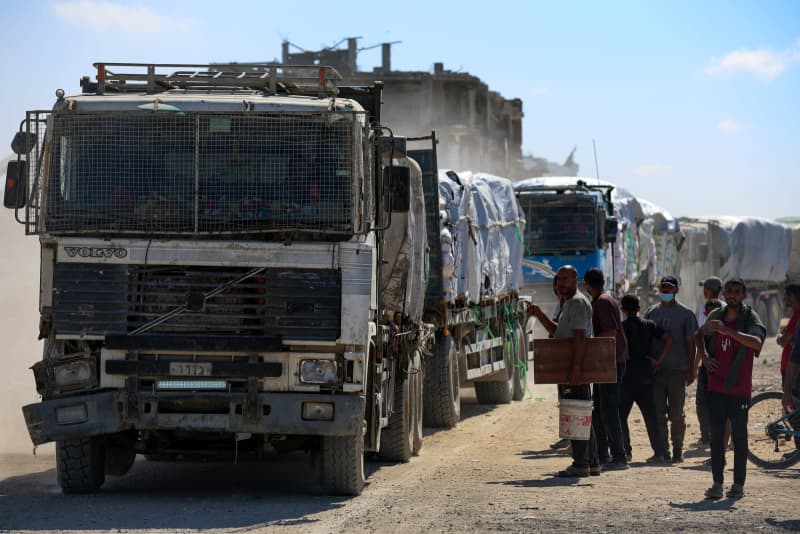
According to COGAT's data, between 600 and 800 aid trucks enter Gaza daily, with approximately 70 percent transporting food supplies. The remaining vehicles carry medical equipment, shelter materials, tents, clothing, and other essential humanitarian items.
COGAT further questioned the report's credibility, stating it "raises serious questions regarding its credibility and professional integrity." The organization claimed that report authors only agreed to meet with Israeli officials and US Civil-Military Coordination Center representatives after the document had been finalized.
UN Report Details Persistent Challenges
The IPC assessment, published by the United Nations, acknowledged that food security and nutrition have improved in Gaza compared to the August 2025 analysis that detected famine conditions. This improvement followed the ceasefire declared on 10 October 2025.
However, the report emphasized that most of Gaza's population continues to experience high levels of acute food insecurity. Over 500,000 people face IPC Phase 4 conditions, while more than 100,000 are experiencing IPC Phase 5.
The assessment also noted critical acute malnutrition levels in Gaza Governorate and serious levels in Deir al-Balah and Khan Younis governorates. The report warned that in a worst-case scenario involving renewed hostilities and halted humanitarian inflows, the entire Gaza Strip could face famine risk through mid-April 2026.
Foreign Ministry Response
Oren Marmorstein, spokesperson for Israel's Foreign Ministry, stated: "In the face of overwhelming and unequivocal evidence, even the IPC had to admit that there is no famine in Gaza. Yet the IPC's report is once again deliberately distorted and doesn't reflect the reality in the Gaza Strip."
Marmorstein criticized the report for relying exclusively on UN data, which he said accounts for only 20% of aid trucks entering Gaza. He referenced US Civil-Military Coordination Center figures indicating more than 30,000 aid trucks have entered Gaza since CMCC operations began.
The Foreign Ministry statement concluded that substantial aid deliveries have produced measurable effects, noting that food prices in Gaza fell by more than 80% between July and November alone.