
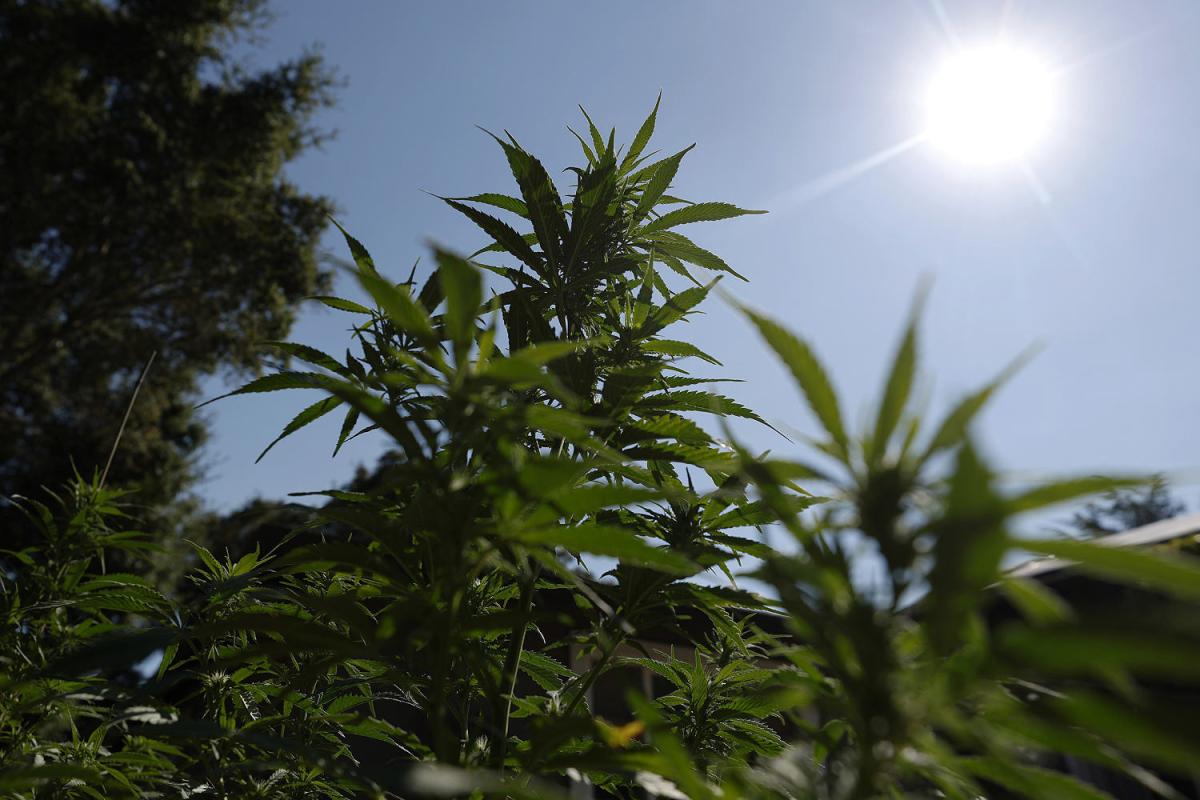
A significant shift in U.S. drug policy is poised to enhance scientific investigation into marijuana, the most widely used substance still illegal under federal law.
This Thursday, an executive order was signed to transition cannabis from a Schedule I to a Schedule III controlled substance, implementing a regulatory change initially advanced under the previous administration.
"Decades of federal drug control policy have neglected marijuana’s medical uses," the order states. "That oversight has limited the ability of scientists and manufacturers to complete the necessary research on safety and efficacy to inform doctors and patients."
Although this reclassification is designed to support medical research and does not federally legalize cannabis, it occurs as consumption in the nation reaches elevated levels. Recent polling indicates approximately 15% of adults report marijuana use, a notable increase from 7% a decade prior.
This survey, which did not separate medical from recreational use, revealed the highest usage rate (19%) among individuals aged 18 to 34. Research has associated cannabis use in this demographic with potential adverse psychiatric outcomes. For instance, a recent study linked even infrequent monthly use among teenagers to emotional difficulties and poorer academic performance.
Medically, cannabis is often recommended for managing chronic pain, controlling nausea—particularly for cancer patients undergoing chemotherapy—and stimulating appetite in specific conditions. It remains uncertain how the scheduling change might influence studies focused on non-medical use.
Researchers such as Ziva Cooper express optimism that this policy adjustment could transform public health understanding through more extensive scientific inquiry.
"It is extremely difficult to study cannabis, aka marijuana, for both the potential adverse effects as well as therapeutic effects," said Cooper, director of the Center for Cannabis and Cannabinoids at the University of California, Los Angeles. "The industry is developing at a very fast pace, and so consumer behavior is developing along with that industry.
"It’s very hard for us, as scientists, as people who are interested in public health, to be able to keep up with the changes, in part because the research is difficult."
Schedule I, the most restrictive category, is reserved for substances deemed to have no accepted medical use and a high abuse potential, such as heroin. Schedule III includes drugs like ketamine, recognized as having a lower potential for dependence.
Cooper notes that even in states with permissive cannabis laws, researchers face significant obstacles identical to those in states with total prohibitions.
"Researchers cannot test what is readily available to the market, just basic questions about what is in those products that are available in the dispensary I can see outside of my laboratory window, for example," Cooper said. "It also means that there are certain restrictions with respect to where we can get our cannabis that we do research on."
Urgent Need for Comprehensive Cannabis Studies
Federal funding for cannabinoid research has seen recent increases, yet scientists highlight that bureaucratic complexities often limit studies to observational designs rather than the rigorous clinical trials standard for pharmaceuticals. The resulting evidence has been inconsistent.
Some studies suggest potential cognitive benefits for older adults, while others indicate memory impairment in younger, heavy users. Recent analyses point to cannabinoids as a possible alternative for chronic pain management but underscore a critical need for large-scale, controlled trials. Concurrently, data shows rising healthcare visits related to cannabis disorders among older adults.
Experts explain that reclassification will permit researchers to study specific, standardized cannabis formulations—a significant advancement given the current variability in product quality and potency across dispensaries.
"We can actively track immediate symptoms or blood levels of things, longer-term effects," said Dr. Brooke Worster. "All the things you’d want to do when you’re studying a medication, all the things that the federal government otherwise requires us to do to study a medication."
While acknowledging potential medical benefits for some, other experts caution against overstating the impact of U.S. regulations, noting that research proceeds in other nations without such restrictions.
"They do not restrict research in Canada or France or Israel," said Jonathan Caulkins. "I don’t think that we should imagine that the only reason cannabis hasn’t become the wonder drug is because of anything about U.S. law, because we’re not the only country in the world that has a pharmaceutical industry and a research base."
The policy change also brings heightened responsibility for the medical community to ensure safe use, as not all cannabis products or methods of consumption are suitable for every individual.
"What still needs to be figured out is, how do we get the right patient the right medication and the right guidance?" Worster said. "The products out there are, a lot of times, not regulated. There are real risks with mental health, with youth who use it too regularly, certainly some cardiovascular effects that we need to pay more attention to."
Ending a Decades-Long Regulatory Stance
The research barriers trace back over fifty years to the 1970 Controlled Substances Act, which originally classified marijuana as Schedule I. Consequently, much about its therapeutic potential—or limitations—remains scientifically unclear, as the substance has been legally regarded primarily as one of abuse.
Experts anticipate that moving cannabis to Schedule III will streamline the licensing process for researchers. Currently, studying a Schedule I drug requires a separate, substance-specific license involving complex protocols and DEA inspections.
"It involves extensive writing of protocols," said Susan Ferguson. "It involves DEA agents coming out and inspecting the lab and talking to me about the research and the plans for the experiments. It gets very, very complicated."
Rescheduling, Ferguson suggests, could "open the floodgates" for clinical studies, partly by making participation more appealing compared to studies involving Schedule I substances.
Drawing a parallel to alcohol and tobacco, Ferguson emphasized that widespread use does not equate to safety, and that dedicated medical research is essential to fully understand risks and benefits.
"We haven’t done that research on cannabis," Ferguson said. "It’ll be able to ultimately tell people what are the risks, what are the benefits, and just give people more information."