Utah Representative Katy Hall has clarified that HB261, legislation she sponsored in 2024 to eliminate public diversity, equity, and inclusion programs, was never designed to limit free expression on college campuses.
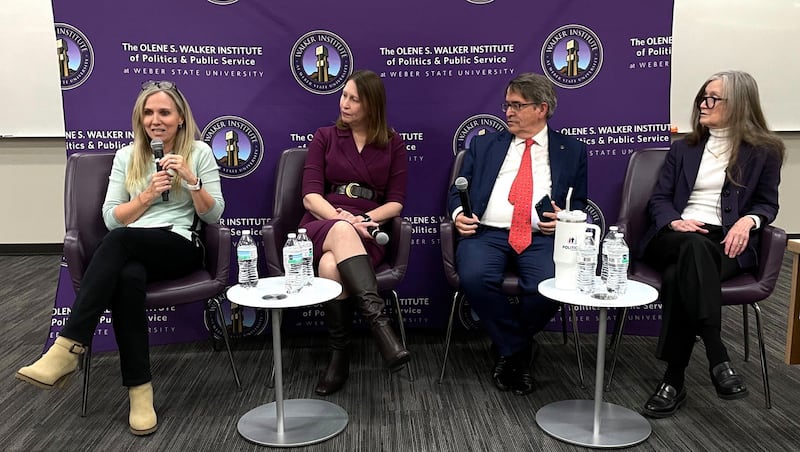
"We want speakers on all ends of the spectrum so we can have that bouncing of ideas," Hall stated during a Thursday legislative forum at Weber State University in Ogden. "We don't want to limit speech. That's never what (HB261) was about."
The clarification comes after Weber State University provided a list of "prohibited words and concepts" to potential guest speaker Darcie Little Badger, citing HB261 as justification. Little Badger subsequently canceled her planned appearance at the university last month due to these restrictions.
Utah Senator John Johnson, who helped draft HB261, supported Hall's position at the same forum. "I think it's crucial that we do talk about sensitive topics, but we do them in a sensible manner," Johnson remarked. "There is nothing in that bill that says you can't use these words."
Both lawmakers expressed surprise at Weber State's interpretation of the legislation. Hall said she was "shocked" by the university's creation of prohibited word lists, while Johnson noted he was "kind of sad that that happened at Weber."
Leah Murray, director of Weber State's Walker Institute of Politics and Public Service, moderated the forum and explained that university officials believed their implementation approach "was the best way to make sure we did not run afoul of the Legislature's wishes." Interim WSU President Leslie Durham has since announced the university is reviewing its response to HB261 for potential revisions.
HB261 requires Utah's public universities to eliminate diversity, equity, and inclusion initiatives and prohibits mandatory training or documentation related to these principles for students and faculty. Critics argue such programs discriminate against certain groups, while supporters maintain they help traditionally marginalized communities adjust to campus life.
Johnson emphasized the legislation's educational philosophy: "The idea is to teach students to question things. That's kind of been our philosophy all along. What we don't want to do is force people to think a certain way."
Looking ahead, Hall and Johnson are considering a "cleanup bill" during the 2026 legislative session to better articulate the law's intent. They're also exploring additional legislation to bring speakers to campuses for debates on sensitive topics.
Utah Senator Ann Millner suggested the controversy might have a "silver lining" by helping clarify the legislation's purpose. "New legislation can sometimes be misinterpreted, requiring lawmakers to revisit it," she observed, "and I think that's what's happened here."