
The Universal Need for Sleep
Sleep is essential for nearly all creatures with brains, and even some without. From humans to whales and jellyfish, every organism requires rest, despite the dangers it poses.
"Sleep is universal 'even though it’s actually very risky,'" noted Paul-Antoine Libourel, a researcher at France's Neuroscience Research Center of Lyon.
During sleep, animals become vulnerable to predators. Yet, this biological imperative is so powerful that no species can avoid it entirely, even when circumstances make it difficult.
Studying Sleep in the Wild
Historically, scientists inferred sleep in wild animals by observing stillness and closed eyes. Now, advanced technology like miniature brain-wave monitors allows direct observation of diverse sleeping behaviors in natural habitats.
"We’re finding that sleep is really flexible in response to ecological demands," explained Niels Rattenborg, a specialist at Germany's Max Planck Institute for Biological Intelligence.
This field, sometimes called "extreme sleep" science, explores how animals adapt their rest to survive.
Penguins and Microsleeps
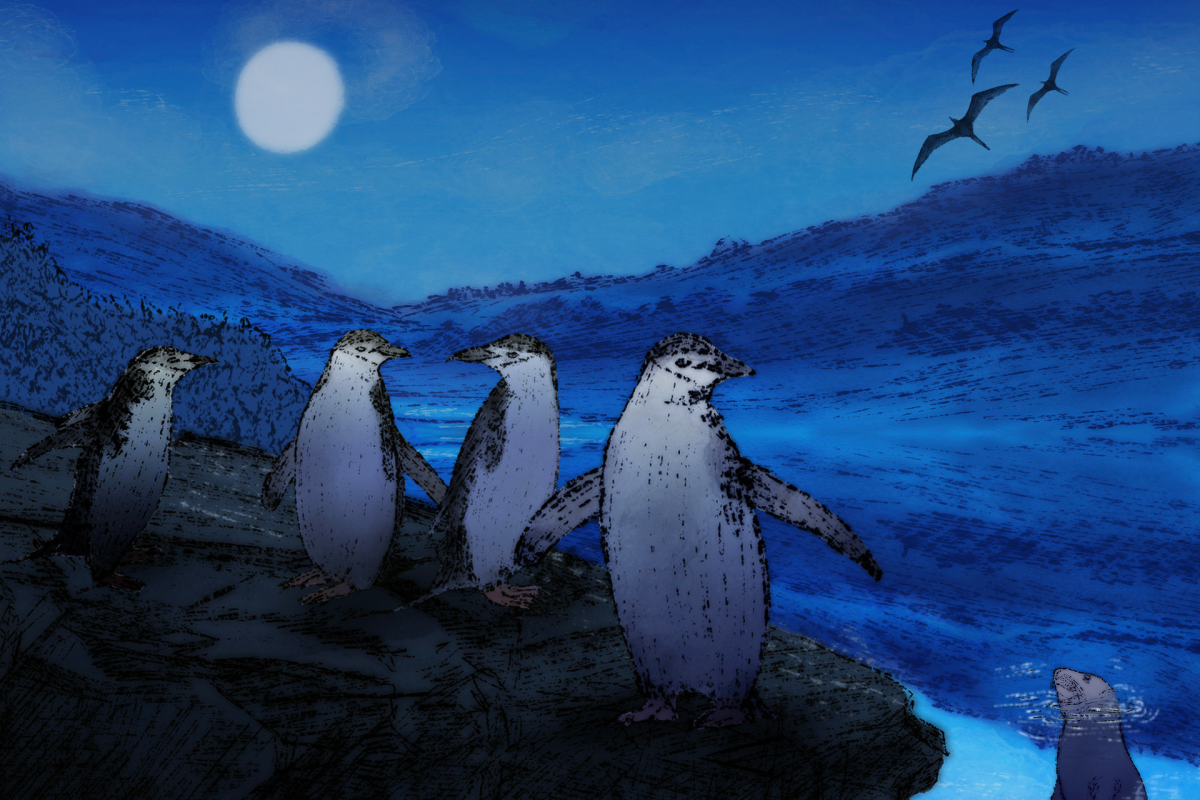
Chinstrap penguins in Antarctica demonstrate one adaptation. These birds share parenting duties, with one guarding the egg or chick while the other hunts.
To manage constant vigilance, they take thousands of brief naps daily, each lasting about four seconds. These "microsleeps," as described by Korea Polar Research Institute biologist Won Young Lee, enable them to care for offspring in noisy colonies.
Research on King George Island showed penguins accumulate 11 hours of sleep per day through these short rests, maintaining alertness while sneaking in rest.
Frigatebirds' Aerial Naps
Great frigatebirds, which nest in the Galapagos Islands, sleep while flying by resting one brain hemisphere at a time. This allows them to remain semi-alert for obstacles during long flights.
They sleep primarily during gliding on warm air currents, conserving energy. At their nests, they switch to longer, whole-brain sleep, indicating an adaptation for extended travel.
Similar abilities are seen in dolphins and other birds like swifts, enabling endurance feats such as flying over 250 miles daily for weeks.
Elephant Seals' Deep-Dive Slumber
Northern elephant seals face predation risks at sea during months-long foraging trips. Research led by Jessica Kendall-Bar of Scripps Institution of Oceanography found they sleep during deep dives, below predator zones.
Using specialized caps to monitor brain activity, scientists discovered seals experience both slow-wave and REM sleep underwater. During REM sleep, they may enter a "sleep spiral," turning upside down while paralyzed.
At sea, seals sleep about two hours daily, compared to ten hours on land, showcasing another survival adaptation.
Evolutionary Insights
These examples highlight sleep's flexibility across species. While humans cannot replicate these extreme patterns, studying them reveals how nature enables rest in precarious situations, deepening our understanding of sleep's fundamental role.