
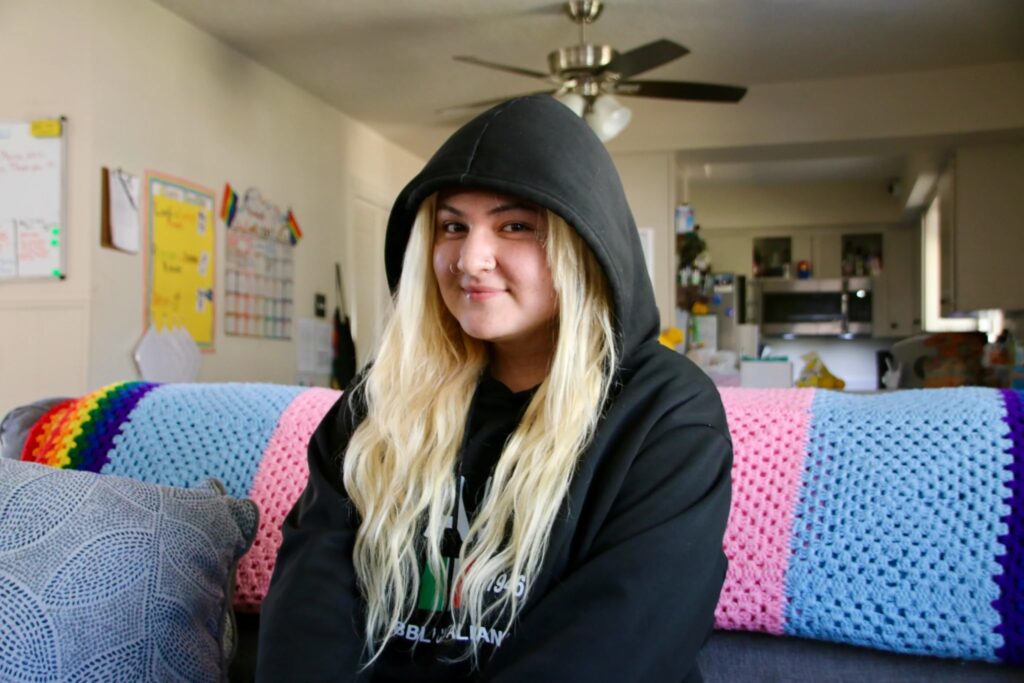
On November 14, 2025, Ashley Vance experiences mornings filled with quiet—a stark contrast to her past. The 20-year-old trans woman now has a locked door and her own bed at Casa Lola in Albuquerque, yet her sense of security remains delicate.
From Childhood Instability to Shelter Life
"I always knew who I was, so I always thought of myself as a girl," Vance recalled. Her transition began at age 10, but by 11, her home situation became unstable, leading the Children, Youth and Families Department (CYFD) to intervene. "Every time I got used to a place, CYFD would move me again. I never had time to settle. I never had time to be a kid," she said.
At 15, she was referred to Casa Q, a housing program for LGBTQ+ teens. "It was the first place where I felt seen," Vance noted. However, this stability ended when she turned 18, as state rules automatically terminated her placement.
The Struggle for Safe Housing
After leaving Casa Q, Vance cycled through friends' couches and city shelters. "I didn't feel safe. I had to keep myself quiet about who I was just to make it through the night. When I told people I was trans, that was a mistake," she explained. Even basic acts like using her correct name could risk harassment.
Her search led her to Casa Lola, a program for LGBTQ+ young adults. Adrien Lawyer, co-Executive Director of the Transgender Resource Center of New Mexico, stated that New Mexico has only two housing programs specifically for LGBTQ+ youth, with limited beds and long waitlists.
Homelessness Statistics and Systemic Gaps
Homelessness in New Mexico has intensified, with a statewide count in January recording 4,683 people experiencing homelessness—more than double the 2021 figure. Among these, 837 were youth, with 34 identifying as transgender or nonbinary.
National research suggests these numbers understate the issue. Covenant House estimates that about 40% of homeless youth in the U.S. identify as LGBTQ+, who are 120% more likely to experience homelessness than their peers.
Programs Providing Refuge
Casa Q, licensed by CYFD, serves teens escaping family rejection or violence. Executive Director Shannon Darrell said, "There are very few places like this. We're the only program that's lasted this long, and the need hasn't slowed down."
For residents turning 18, Casa Q offers a Transitional Living Program (TLP), but it's small with a long waitlist. "We need more housing, opportunities, and funding to help these young adults succeed," Darrell added.
Casa Lola, operating under the Transgender Resource Center, provides six beds for stays up to two years. Lawyer explained its name honors a trans woman who died from homelessness-related health issues: "Her story is a reminder of how deadly housing insecurity can be."
Funding Challenges and Legislative Efforts
Both programs face funding obstacles. Casa Q's transitional housing relies on grants and donations, while Casa Lola operates primarily through a private gift. Lawyer noted the risk of expansion without sustainable funding: "The worst thing is to say, 'look at this wonderful thing we made for you,' only to close it because we couldn't fund it."
Sen. Michael Padilla, D-Albuquerque, who was a foster youth, sponsored 2019 legislation creating the Fostering Connections program. "Aging out of care is like 'the floor falling out from under you,'" he said, noting that 35 to 40% of aged-out foster youth become homeless before age 21.
A Path Forward
Vance, now saving for goals like cosmetology school, reflects on her rare path: "I think about the people I met in shelters who didn't make it here. A lot of them are still out there." Her story underscores the urgent need for affirming housing programs like Casa Q and Casa Lola to be available when young people need them most.