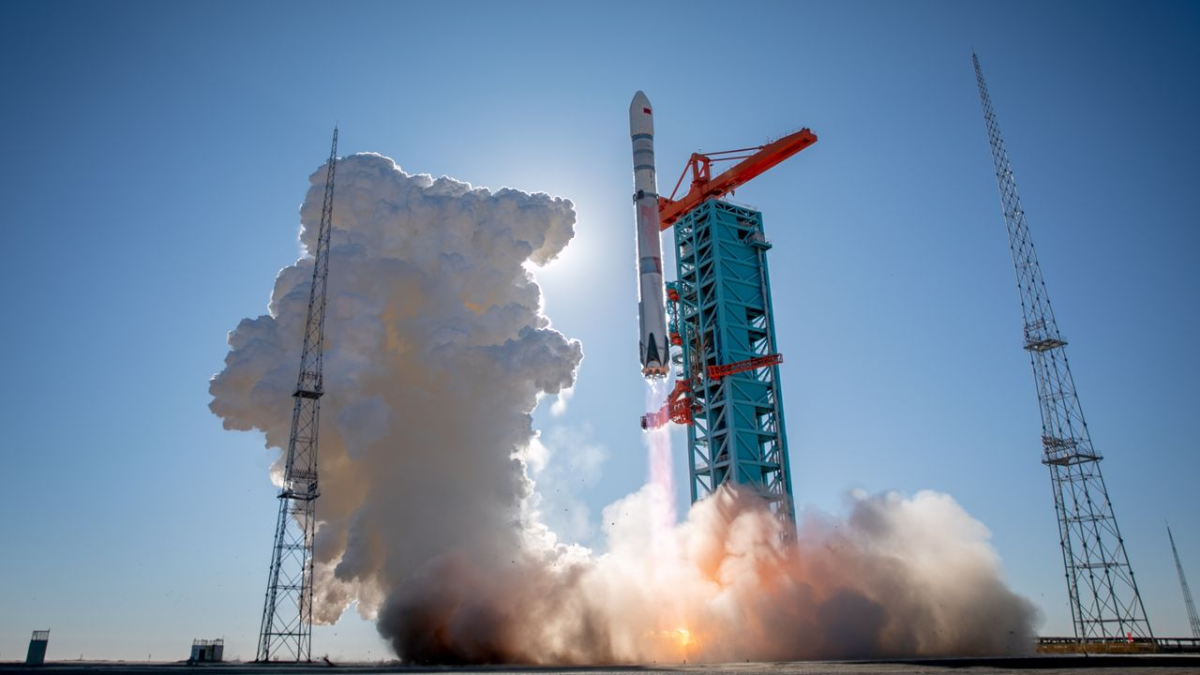
In 2025, China's space sector experienced a remarkable period of advancement, marked by numerous significant achievements across various domains. The nation surpassed its previous annual launch record, conducting more than 80 orbital attempts, with only two failures attributed to commercial providers. The reliable Long March series maintained its flawless operational streak.
Key Developments and Technological Progress
A notable event was the inaugural flight of Landspace's Zhuque 3 reusable rocket, which achieved orbit but encountered issues during its first-stage landing attempt. As the year concludes, anticipation builds for the debut of the new Long March 12A reusable vehicle, signaling China's ongoing pursuit of reusable launch technology.
Substantial growth in launch frequency is partly driven by two major satellite constellation projects: the national Guowang network and the Thousand Sails initiative. These systems, each planned to exceed 10,000 satellites, represent China's strategic response to global low Earth orbit communications networks.
Lunar Ambitions and Deep Space Exploration
Significant strides were made in the crewed lunar exploration program, targeting a landing before 2030. Critical hardware tests included evaluations of a new moon rocket stage, simulated lunar landing trials for the Lanyue lander, and a pad abort test for the crew spacecraft. These advancements have intensified the international space race, particularly concerning timelines for crewed lunar returns.
In deep space, the Tianwen 2 mission launched in May, embarking on a journey to collect samples from asteroid Kamo'oalewa, with arrival expected in 2026. Additionally, the active Tianwen 1 Mars orbiter captured images of interstellar comet 3I/ATLAS, highlighting ongoing scientific contributions.
Another technological milestone was achieved with a successful satellite refueling demonstration in geostationary orbit, promising to extend spacecraft operational life and enhance orbital sustainability.
Managing Challenges and Future Outlook
The year also presented challenges, notably China's first major human spaceflight emergency. In November, a crack was discovered on the Shenzhou 20 spacecraft's viewport, likely from space debris, prompting a swift contingency response. Astronauts safely returned using the Shenzhou 21 spacecraft, while an uncrewed Shenzhou 22 was rapidly launched to ensure continued crew safety, demonstrating effective crisis management.
Looking ahead to 2026, launch activities are expected to accelerate further, supported by expanding spaceport infrastructure. Key missions include the Chang'e 7 lunar south pole probe, the joint SMILE space weather mission with ESA, and crewed Shenzhou flights to the Tiangong station, which may host an international astronaut.
Critical to lunar ambitions are the planned inaugural flights of the Long March 10 rocket and Mengzhou spacecraft, pivotal for maintaining the schedule toward a crewed moon landing before 2030.