
Recent archaeological work in India has revealed a significant ancient structure that provides fresh understanding of historical commerce patterns. Local reports confirm the identification of a large circular stone labyrinth that dates back approximately two millennia.
Discovery Details
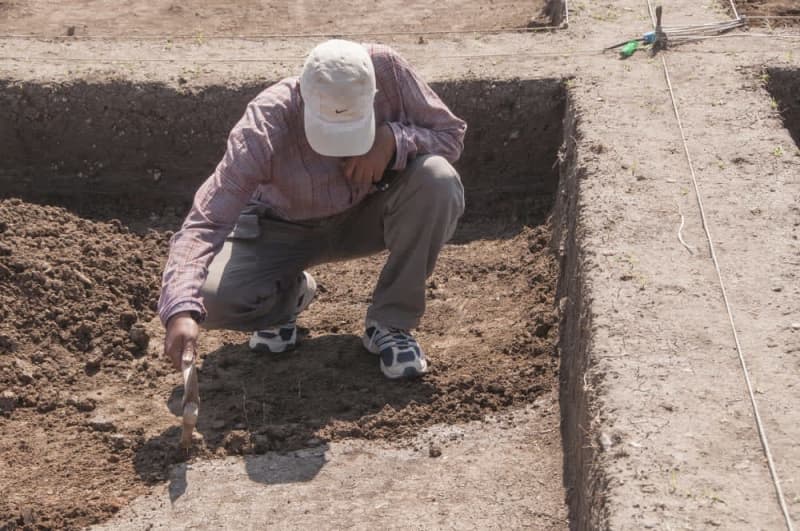
The finding was made in the Boramani grasslands of Solapur district, located within Maharashtra state. This region occupies a central position on the Indian subcontinent and includes major urban centers like Mumbai. The unearthed structure measures about 50 feet in diameter and features 15 concentric stone rings, establishing it as the largest circular labyrinth documented in India to date.
This configuration surpasses previous discoveries that contained no more than 11 circuits. While a larger square labyrinth exists at Gedimedu in Tamil Nadu, the Boramani site now holds the record for circular designs.
Historical Context
Researchers associate the construction with the Satavahana dynasty, which governed extensive territories across the Deccan Plateau from the 1st to 3rd centuries CE. During this era, Maharashtra functioned as a crucial intermediary in long-distance exchange between Indian communities and Roman traders, connecting interior settlements with active ports along the western coast.
The Boramani area, characterized by open plains and semi-arid conditions, is currently maintained as a grassland conservation zone. Limited excavation over past decades due to environmental considerations likely contributed to the structure's preservation through changing climatic conditions.
Evidence of Cross-Cultural Exchange
Investigators note that the labyrinth's circular design presents strong indications of contact between Indian and Roman civilizations. The pattern closely matches labyrinth motifs appearing on ancient Cretan coins, which circulated as Roman currency and have been recovered from Indian port cities and trading hubs dating to the same historical period.
This discovery forms part of a broader pattern, with comparable though smaller stone labyrinths identified in nearby districts including Sangli, Satara, and Kolhapur. Collectively, these findings point to an extensive network of structures across western Maharashtra, potentially marking inland trade corridors that linked coastal ports with interior Deccan regions.
Functional Interpretations
Specialists suggest these labyrinths might have operated as directional markers or symbolic guides for Roman merchants and local traders transporting commodities like spices, textiles, and gemstones. Their location in open grasslands—rather than within settlements, religious compounds, or defensive works—has led to theories that they were intended to be visible from afar, assisting travelers navigating unfamiliar landscapes.
The uncovering prompts new inquiries about how these constructions were utilized and perceived by their creators. Were they functional navigation aids, cultural symbols borrowed through external interaction, or ritual markers associated with commerce and mobility? Ongoing archaeological examination of the site is already transforming perspectives on Maharashtra's historical significance as a key junction in global trade nearly 2,000 years ago.