
Massachusetts confronts a period of significant challenges and opportunities as it looks toward the coming years. The state must construct over 200,000 new residences in the next ten years to alleviate a severe housing shortage that has pushed costs to unprecedented levels. Educational recovery from the pandemic remains slow in many districts, and government officials at all levels are preparing for difficult fiscal choices.
Compounding these local issues is the renewed friction between the state and the federal government following the return of President Donald Trump to the White House.
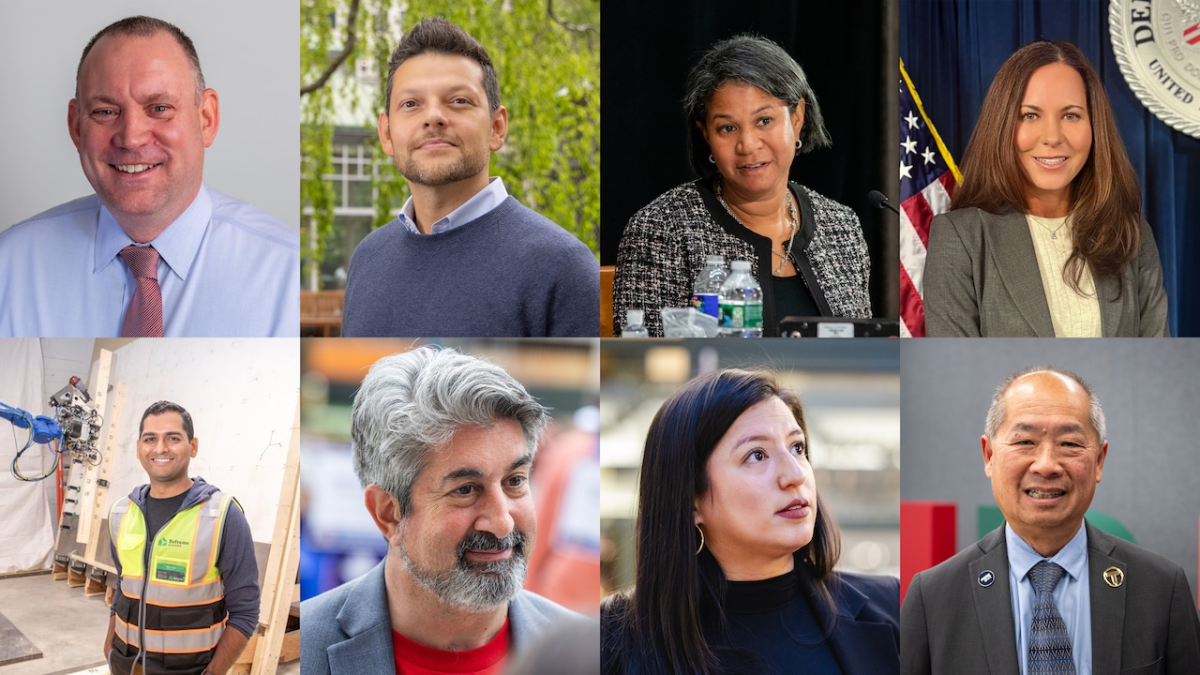
In this context, eight individuals have been identified as key figures who will help steer Massachusetts through these complex times. Selected for their current influence, innovative approaches, or potential to impact their communities, these leaders come from diverse fields including education, law, transportation, and economic development.
Brian Allen: Worcester's Educational Steward
As the superintendent of Worcester Public Schools, Brian Allen oversees a district celebrated for its financial management. The school system has received a national budgeting award for twelve consecutive years, a distinction shared by only two other Massachusetts districts last year. Allen, who became superintendent this year after serving as deputy since 2022, managed a $586 million budget and attributes this success to stable, long-term planning.
One of his notable achievements was leading the transition to a district-operated transportation system. "Millions of dollars had been going to an independent bus contractor annually. Now, those dollars stay within the school system," Allen stated. This change also improved service quality and ensured full staffing of drivers for the past two years, earning state and national recognition and becoming a model for other districts.
Allen emphasized that handling such operational details effectively frees up time for broader goals. "If we're not dealing with parent complaints on transportation, if we're not dealing with always facing criticism over our finances, we can use that time to focus on our strategic plan, our overarching goals of the district and really provide the leadership to schools," he explained.
He also advocated for the 2019 Student Opportunity Act, which reformed school funding. The district is now implementing a strategic vision that includes recruiting teachers who reflect the student population. "We have heard over and over again, 'We want our teachers to look more like our students,'" Allen said. "Where's the best place to get that from? Our own students." A Worcester native and graduate of South High Community School, Allen added, "I'm a Worcester kid."
Iván Espinoza-Madrigal: Defending Civil Rights
Iván Espinoza-Madrigal, executive director of Lawyers for Civil Rights, is at the forefront of legal battles against Trump administration policies. With a twenty-year career defending voting rights, workers' rights, and the LGBTQ community, he is particularly known for immigration advocacy. His organization has challenged efforts to end birthright citizenship, threats to sanctuary city funding, and the removal of protections for Haitian and Venezuelan immigrants.
"We are seeing tremendous need on the ground," Espinoza-Madrigal noted. "And the availability of free legal services is one of the most critical interventions at this time. People need free legal support to be able to navigate what has steadily become significant federal overreach."
The organization, founded during the 1960s civil rights movement, has a history of challenging discrimination in Boston policing, public housing segregation, and immigration arrests. Espinoza-Madrigal draws inspiration from mentors who participated in historic marches, such as the 1965 Selma crossing. "When I think about the challenges we're facing today, it's important for us to remember that progress is possible," he reflected. "It requires us to think creatively and to have tremendous resilience in the face of adversity."
Kimberly Budd: Modernizing the Judiciary
Chief Justice Kimberly Budd, completing her fifth year leading the Massachusetts Supreme Judicial Court, is the first Black woman in this role and the youngest chief justice in over a century. She oversees the state's entire court system and has emphasized modernization, including upgraded WiFi and digital signage pilots.
When asked about maintaining public confidence, Budd highlighted efforts to improve accessibility and the relaunch of a judicial evaluation process paused during the pandemic. "We're constantly looking for ways to improve. We're not staying static," she affirmed.
In 2025, she authored the decision upholding the MBTA Communities Law and presided over high-profile cases like Karen Read's appeal. The court also ruled on life sentences for emerging adults and privacy rights in prostitution cases. Beyond headlines, the court reviews all first-degree murder convictions and sets legal precedents, with Budd playing a central role in these decisions for years to come.
Leah Foley: Federal Prosecutor in a Blue State
Appointed U.S. attorney for Massachusetts immediately after Trump's inauguration, Leah Foley is a veteran prosecutor with nearly two decades in the office. In a predominantly Democratic state under Republican federal leadership, she has become a prominent conservative voice.
Foley publicly clashed with Boston Mayor Michelle Wu, calling Wu's description of immigration agents as "secret police" "reckless and inflammatory." She also criticized Attorney General Andrea Campbell regarding state limitations on acting against ICE. Her office has enforced strict immigration policies, including prosecuting individuals for interfering with ICE operations.
While state politicians oppose Trump, Foley's office remains the authoritative voice on federal law enforcement in Massachusetts.
Max Page: Advocating for Educators
Max Page, president of the Massachusetts Teachers Association, leads a 117,000-member union through anticipated federal education cuts and increased federal influence over classrooms. "This administration, as many previous authoritarian administrations, wants to control ... public education, pre-K through higher ed," Page, a UMass Amherst professor, remarked. "This moment as head of this union ... is a very fraught one."
The union supported the Fair Share Amendment, a 4% tax on income over $1 million, which has directed billions to education and transportation, funding initiatives like free community college and universal school meals. Page advocates for further corporate taxes and a proactive strategy. "As the state with the heritage of the best public education system in the country, we have to actually double down on that," he said.
However, the union's influence has limits, as seen when the House passed a literacy bill the MTA opposed for its "one-size-fits-all approach."
Phillip Eng: Transforming Transportation
Phillip Eng, MBTA general manager and state transportation secretary, took over a transit system in crisis in 2023, with safety concerns and frequent disruptions. After an aggressive repair surge, service has improved, and the T is nearing federal safety standards.
Eng now also leads the Department of Transportation, influencing major projects amid federal funding uncertainties. "There's definitely a fantastic opportunity for me to streamline how transportation agencies work together in this dual role," he said. "And I look forward to doing more of that."
Vikas Enti: Innovating Housing Construction
Vikas Enti, CEO of Reframe Systems, addresses Massachusetts' housing shortage by automating home construction to reduce costs and increase supply. "We think there is a path to the future here where we increase housing supply at the right price points," Enti said. The approach also aims to lower carbon emissions from construction.
Robots handle repetitive tasks like framing, while humans focus on finishing work. "We're working towards eventually automating 60 to 80% of factory tasks, blending robotic precision with human craftsmanship," Enti explained. The company's first factory in Andover has completed initial homes, with plans for expansion to California and a goal of building one million homes nationwide over two decades.
Xiomara Albán DeLobato: Bridging Business and Community
Xiomara Albán DeLobato, chief of staff to the Western Mass. Economic Development Council, connects corporate interests with local communities. A first-generation American, she uses her political experience to foster relationships and address diverse regional needs.
She highlighted the Springfield WORKS Cliff Effect Pilot, which helps individuals transition off assistance without financial loss. "Not only is this benefiting our participants, right, our workers who are dedicated and committed and able to do this, it's also going to save the state a lot of tax dollars," she noted.
Looking ahead, DeLobato sees potential for quantum computing development in Western Massachusetts, with projects in Holyoke and Springfield aimed at boosting the local economy and workforce skills.