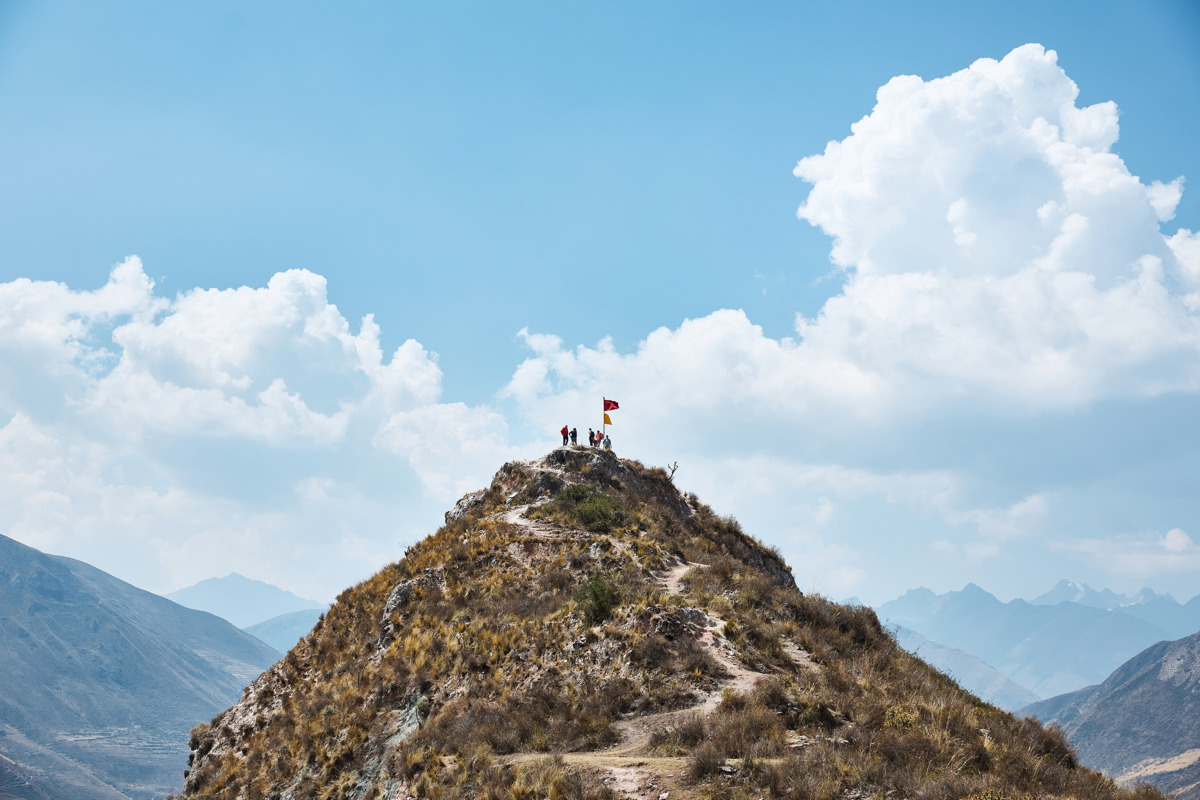
"We've reached the point of no return," declares guide Julio Llancay, his cheerful expression softening what might otherwise seem a dire statement.
High-Altitude Trekking
At 11,411 feet in the Sacred Valley, the Quarry Trail offers a 17-mile journey developed by Intrepid with Peruvian communities as a less-crowded option compared to the Inca Trail. The route ascends to 14,600 feet over three days, winding above Ollantaytambo.
"Haku!" Julio calls, leading the group past rural scenes where farmers carry straw and pigs rest by the path. Red limestone cliffs contrast with the bright blue sky.
Ancient Burial Sites
Descending a rocky slope, Julio indicates Qory Song'o (Golden Heart), a pre-Inca burial ground with caves containing scattered skulls. He explains that skulls were intentionally elongated from childhood, possibly for spiritual connection, glacier resemblance, or believed brain enhancement.
The landscape shifts to mountain scrub as hikers approach Perolniyoc Waterfall, a 165-foot cascade channeling glacial water to lower villages.
Inca Culture and Wildlife
At Raqaypata, an Inca village serving military, astronomical, and religious purposes, a condor circles overhead. Julio notes that condors, alongside pumas and snakes, formed a sacred trio in Inca culture, symbolizing eternity through their black feathers and impressive wingspans.
"Nowadays, condors face misconceptions," Julio observes. "Locals blame them for livestock deaths, but they're scavengers—pumas are the actual predators."
Night Skies and Early Mornings
Under a star-filled sky, the Milky Way—known as mayu (river) in Quechua—arches overhead, representing celestial rivers in Andean cosmology.
At 5:30 AM, hikers receive cocoa tea before tackling Puccaqasa pass, climbing 3,300 feet over two miles of trail.
Changing Landscapes
Golden ichu grass covers slopes, providing sustenance for llamas and alpacas. The Chicón glacier glitters in the distance, while American agave and llaulli flowers dot the terrain—the latter's stems historically used by Inca women for combs.
Reaching a hilltop, the Urubamba River appears below, framed by La Veronica's glacier-capped peak.
Myths and Legends
During a break, Julio recounts the Ukuku legend—a half-man, half-bear figure bringing glacial water to villages. This tale likely inspired Paddington Bear, linking Andean spectacled bears to global storytelling.
After descending shale slopes, campsite roofs emerge, followed by Inti Punku Sun Gate perfectly framing Veronica's peak.
Inca Engineering
Returning via the namesake quarry, Julio describes Inca stone-cutting techniques: chiseling grooves, inserting wooden pegs, and adding water to split boulders for Ollantaytambo's construction.
Descending to Ollantaytambo, triangular crop fields align with Qorikancha (Temple of the Sun), visible only from above.
Journey's End
Walking Ollantaytambo's 500-year-old streets offers a fitting conclusion—not Machu Picchu, but a profound immersion into Inca heritage. This trail reveals a Sacred Valley where silence echoes history, connecting travelers to ancient skies and spiritual depths.