
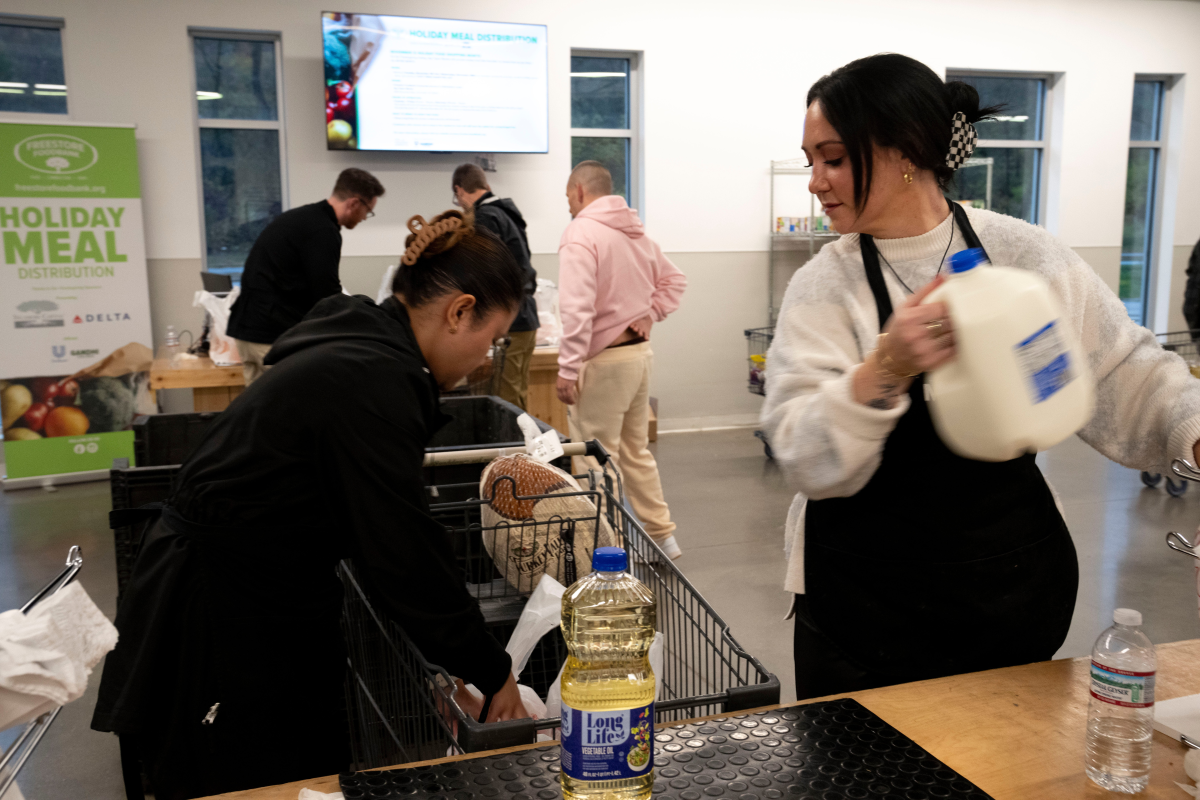
In the days leading up to Thanksgiving, individuals across Cincinnati turned to Freestore Foodbank for assistance. James Timerding gathered provisions for his sober living community at the Riverside market, while Hunter Gubeno distributed potatoes to families during a holiday meal drive in Roselawn. Meanwhile, Devilin Moore collected vegetables and turkey for her East Price Hill household and neighbors, noting, "I’m pretty much giving it away."
Escalating Food Insecurity Numbers
Kurt Reiber, CEO of Freestore, oversees operations as the organization faces one of its most difficult periods. He remarked that during the recent federal government shutdown, people inquired about hunger's appearance. "People would come to me and say, 'Kurt, what does the face of hunger look like?' And I said, 'Just look in the mirror. It doesn’t look any different than you or I.'"
Across the Freestore network, more than 274,000 individuals experience food insecurity, including approximately 82,000 children. Reiber explained this means "they don't know where their next meal is coming from." The organization serves most through 579 pantry partners across 20 counties in Ohio, Kentucky, and Indiana, offering inventory at significant discounts.
Factors Driving Increased Demand
The current food-insecure population has grown from about 250,000 several years ago when COVID relief funds assisted with grocery expenses. Reiber attributed the rise to depleted relief funds and personal savings. This summer saw increased attendance at Freestore's two markets, with an additional 2,200 new families shopping at Riverside and Over-the-Rhine locations through the fall.
Recent developments have further heightened demand for Freestore's services:
Job losses affected some of the 15,000 federal workers in the region after January.
Furloughs occurred during the October 1-November 13 government shutdown.
SNAP recipients experienced a two-week benefit pause in November.
Ongoing inflation has increased costs for rent, insurance, medical care, and utilities.
"So many of our families are living paycheck-to-paycheck," Reiber stated. "So when that emergency pops up, when the car breaks down, when the child gets sick, when the utility bills are out of sight ... they have to make hard decisions."
Organizational Response and Support
Freestore Foodbank alleviates pressure by providing free food through markets operating on an honor system for households at or below 200% of the federal poverty level. With basic grocery costs exceeding $200, this assistance proves crucial for families.
Nationally, SNAP benefits average about $190 monthly, or $6 daily. The November pause increased demand at food banks. In response, Freestore purchased approximately $1.5 million in additional food using its own funds, selling it to pantries at half price. Similar funding from Ohio, Kentucky, and Hamilton County provided free supplies to pantries.
Reiber expressed concern about potential future SNAP challenges, noting, "Those challenging situations add to the angst and anxiety of the families we serve."
Cincinnati's Complementary Efforts
As Freestore addresses needs across 20 counties, Cincinnati—where nearly 25% of households live at or below poverty level—has implemented additional measures:
The Cincinnati Health Department launched its fourth Cincy Freeze & Feed location on November 18 in Winton Hills, joining others in Millvale, Avondale, and Hartwell offering ready-to-heat meals without registration.
The city introduced four Friday night community dinners serving up to 75 people at Freeze & Feed sites through the Cincy Community Table program, providing hot meals with social service support.
Eviction prevention efforts will expand early next year, with the city's help center operating five days weekly instead of two.
Beyond Food Distribution
Freestore distributed over 47 million meals in the past year through pantries and direct student and senior deliveries. The organization also assists with government benefits, housing, transportation, rent, utilities, and employment preparation through programs like Cincinnati COOKS and LIFT the Tristate, offering free training for kitchen and warehouse work.
Alfonso Mathis, 56, completed two COOKS programs this year. The Avondale resident, eight years post-incarceration, aims to open a food truck business after gaining experience in his brother's restaurant. He credited the program with teaching knife skills, food safety, and patience. "They taught me to settle myself," he said. "I learned a lot about people. I learned a lot about myself."
Reiber emphasized that such comprehensive services reduce food insecurity. Food banks both "feed the line" and seek to "end the line," he explained. "We’re trying to put ourselves out of business. And the way we do that is through our workforce training programs, our stabilization services, our food-as-medicine type of innovative programs."
Leadership Transition and Future Goals
Reiber, who joined Freestore's leadership in 2011 after 15 years on its board during his 29-year KeyBank career, plans to retire next July. Approximately 300 applicants have sought his position, with interviews beginning next month.
During his tenure, Freestore consolidated distribution and training at its $32 million Riverside facility opened in June 2023. The nonprofit has expanded services, increased revenue, and attracted more volunteers over 15 years.
As he prepares to depart, Reiber continues advocating for food bank fraud safeguards to the Trump administration and national officials. A final objective involves establishing new partnerships to stabilize food-insecure families "and allow them to have less anxiety."