Julie Hapeman, a 55-year-old educator working with visually impaired students through Milwaukee Public Schools, has spent years guiding her pupils through the Jackson Park neighborhood to teach navigation skills.
On December 16, Hapeman joined neighbors and Jackson Park Community Association members at the Milwaukee Public Library's Zablocki Branch to examine findings from three neighborhood walk audits conducted earlier.
These assessments evaluated pedestrian accessibility and safety features at key intersections near the park. While existing infrastructure like sidewalks and crossings scored above 70% in safety ratings, areas categorized as "pedestrian street safety and appeal" received scores below 45%.
During the gathering, Hapeman emphasized that implementing additional traffic calming measures around the park could prove valuable, but stressed that "There are some things to be considered whenever you’re putting in a traffic calming solution so that you’re not making it more dangerous for somebody else that is not maybe considered in your original thought."
Assessment Findings Reveal Safety Concerns
Sue Selover, safety patrol director at the Jackson Park Community Association, presented results from walk audits conducted in August by fifteen volunteers at three major intersections.
At South 43rd Street and Cleveland Avenue, volunteers identified problems including insufficient crossing times, missing pedestrian medians, and a bike lane that transitions into a turn lane, creating hazards for cyclists.
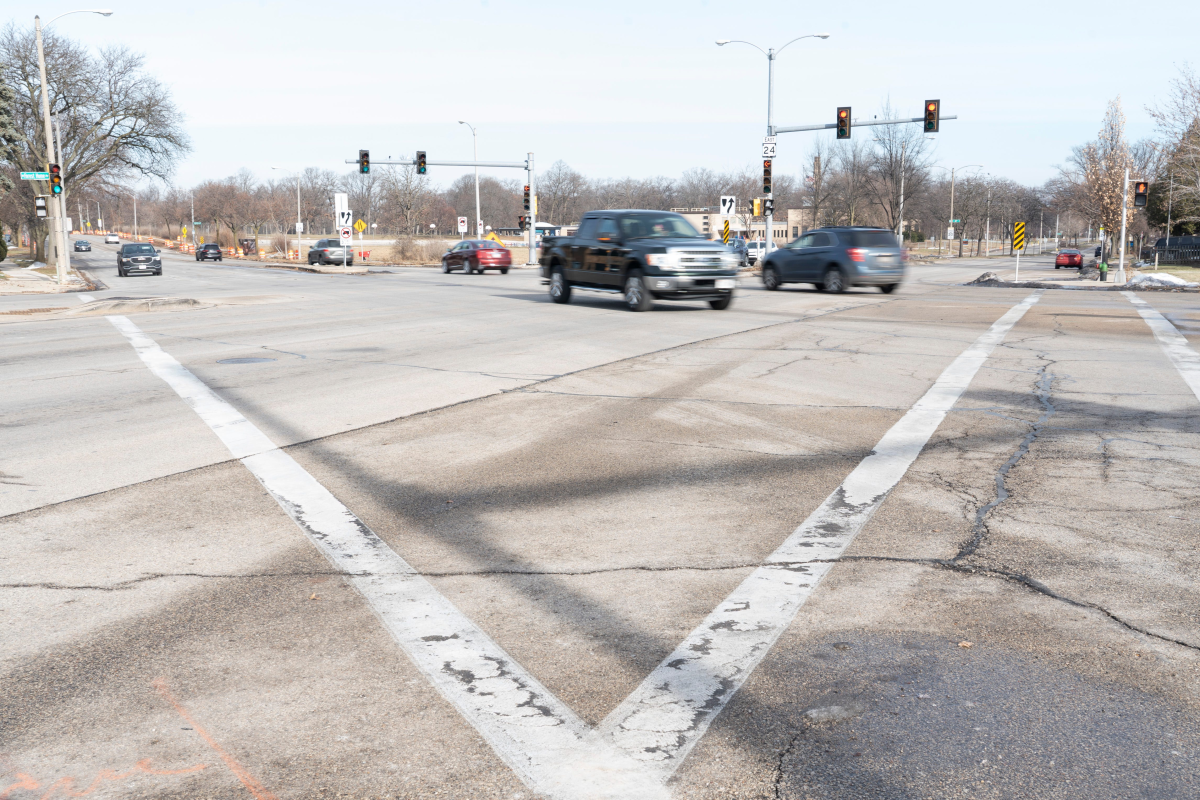
The intersection of South 35th Street, Forest Home Avenue and Kinnickinnic River Parkway showed no sidewalks leading into Jackson Park, poorly marked lanes, and frequent speeding with vehicles traveling approximately 50 miles per hour in a 35-mile-per-hour zone.
Another location dubbed the "Bermuda Triangle" where Forest Home Avenue, South 43rd Street and West Oklahoma Avenue converge exhibited heavy traffic congestion, inadequate pedestrian medians, absent bike lanes, and narrow sidewalks.
Community Preferences for Safety Enhancements
Following the presentation, attendees voted on preferred traffic calming solutions for the surveyed areas.
Most participants supported installing additional pedestrian islands, raised medians serving as resting spots, bump outs, sidewalk extensions to slow vehicles, and elevated crosswalks that improve visibility and function as speed humps.
Mike Amsden, multimodal transportation manager at the Department of Public Works, attended to discuss current road conditions, planned projects, and evaluate the feasibility of implementing requested features.
Amsden explained that if funding comes from existing projects, programs, or city department grants, local property owners wouldn't bear costs. Otherwise, expenses would be covered through property taxes.
Lynn Greb, a 60-year-old frequent park visitor, expressed difficulties accessing Jackson Park due to missing sidewalks, heavy traffic, and limited parking. After hearing proposed solutions, Greb endorsed bump outs to prevent unsafe passing and pedestrian islands for safer crossings.
"Me personally, if it impacted the front of my residence and it was going to help with safety, then I would be in support of it," Greb stated.
Greb expressed hope that safety measures would be funded through Public Works projects or grants but indicated willingness to contribute as a property owner if necessary.