
Solar Power Plans Experience Mixed Progress
JEA's efforts to expand solar energy generation recently encountered a significant obstacle when a contract that would have supplied electricity for thousands of homes failed to materialize.
Despite this setback, the utility continues to advance a separate agreement that will bring three new solar farms online in Jacksonville by late 2026.
Environmental organizations have expressed concern that JEA's current solar capacity additions fall short of what's needed to achieve the utility's own objective of obtaining 35% of its power from clean sources by 2030.
Current Clean Energy Status
Presently, JEA derives 15% of its electricity from clean sources including nuclear power, solar installations, landfill gas operations, and biomass facilities. The majority of this carbon-free energy originates from the Plant Vogtle nuclear facility in Georgia, which became operational after experiencing substantial delays and budget overruns.
Reaching the 2030 target would necessitate substantial expansion of renewable energy sources like solar power, which critics argue JEA has been slower to adopt compared to other utility companies.
Community Advocacy and Protests
"Jacksonville deserves cleaner air, lower bills and a real commitment to renewable energy, not more coal," stated Suzanne Sapp, senior campaign advisor for the Sierra Club's Beyond Coal campaign, during a December 17 demonstration at JEA's headquarters.
Activists from multiple organizations including the Sierra Club of Northeast Florida, CLEO Institute, NAACP, and St. Johns Riverkeeper entered JEA's offices, delivering bags labeled "Naughty" containing coal along with holiday cards and correspondence addressed to CEO Vickie Cavey.
Protesters referenced JEA's 2023 plan that committed the utility to working toward the 35% clean energy benchmark.
"They're going to have to hear from ratepayers and people are going to have to put a little pressure on them," commented Sierra Club Northeast Florida member John Burr. "And hopefully our public representatives will hear that buzz in the community and start addressing this also."
Utility's Response and Planning
JEA maintains that it consistently evaluates optimal methods for generating electricity for its 530,000 customers in the Jacksonville region.
"As JEA plans for future clean energy investments, we are carefully evaluating the economics of clean energy projects, particularly given potential changes to federal tax incentives," explained JEA spokeswoman Karen McAllister.
She emphasized that such investments must remain economically viable for customers while ensuring service reliability.
Contract Developments and Energy Sources
The utility established its 35% target after environmental groups criticized JEA's limited involvement in reducing carbon emissions from fossil fuel power plants. When JEA conducted its integrated resource planning for electricity generation, clean energy comprised only about 1% of its portfolio.
JEA subsequently entered a five-year agreement to purchase solar power from Florida Power & Light in 2023, contributing to its current 15% clean energy level alongside electricity acquired from Georgia's Plant Vogtle nuclear facility.
Another 2023 agreement with the Florida Municipal Power Agency for a 20-year solar power purchase encountered difficulties when the designated construction company faced delays and rising costs.
The Florida Municipal Power Agency's board terminated this contract in June, effectively ending JEA's arrangement to buy that solar electricity. JEA supported this contract cancellation.
Ongoing Solar Projects and Energy Mix
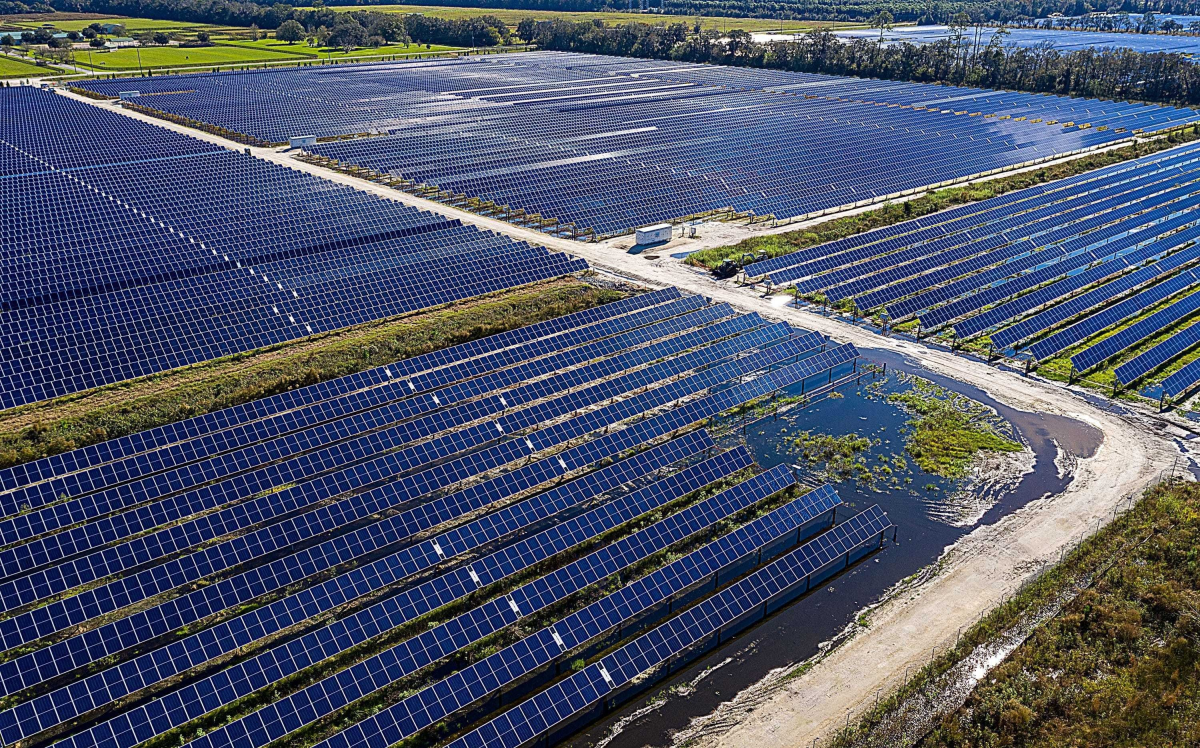
JEA continues to pursue a 35-year arrangement with Florida Renewable Partners to develop and operate new solar installations on three utility-owned properties, with anticipated completion by the end of 2026.
These three solar facilities, equipped with battery storage systems for periods without sunlight, would supply approximately 3% of JEA's electricity requirements. This addition would increase the current 15% clean energy proportion to 18%, representing roughly half the distance toward the 2030 objective.
Regarding conventional energy sources, JEA's data indicates dramatic reductions in coal usage over recent years.
Coal and petroleum coke accounted for 64% of JEA's electricity generation fuel in 2014. By 2024, coal represented just 1% of the fuel mixture while petroleum coke comprised 5%.
However, JEA still depends heavily on carbon-emitting fossil fuels, primarily natural gas, for electricity production. Protesters delivering coal to JEA headquarters argued that solar installations would be simpler to construct and more economical to operate than the new natural gas plant JEA plans to build.
"It's a no-brainer really and that's why utilities around the country are gravitating toward solar because they know that long-term, it's the way to go," Burr remarked.
JEA will commence updating its long-term electricity strategy in 2026, which will include evaluation of the existing 35% clean energy target. Part of the message delivered to Cavey urged JEA to make this revision process transparent to the public.