Municipal buildings may feature Christmas trees during the holiday season, but the inclusion of religious symbols alongside secular decorations raises constitutional questions.
Constitutional Framework for Religious Displays
While the U.S. Constitution clearly prohibits government establishment of religion, the application of this principle to holiday exhibits has generated numerous court interpretations. Legal scholars note that Supreme Court perspectives on this matter continue to evolve.
Benjamin Marcus, a religious freedom fellow at the Freedom Forum, observed that "I would say it seems very clear that religious displays on public property are allowed even under changing religious freedom jurisprudence." He further questioned, "But has the changing religious freedom jurisprudence changed anything about what additional symbols must be present in order to make a nativity scene on public property constitutional?"
Court decisions from the 1980s established that combining religious elements like nativity scenes with non-religious symbols such as Santa Claus or reindeer could pass constitutional scrutiny.
Legal Standards and Interpretation
Ryan Bangert of Alliance Defending Freedom explained that Supreme Court precedents indicate "mere religious symbolism is not unconstitutional." He noted that standalone religious displays could be permissible if they're recognized as historically significant for the holiday and if there's no evidence of government coercion regarding religious beliefs.
"I think, in some people's eyes, the mere fact that the government placed a religiously themed display on public property itself would constitute coercion of pressure," said Bangert, who serves as senior vice president of strategic initiatives and special counsel to the president at ADF.
The legal complexity arises from multiple intersecting areas of law, according to Marcus. This includes regulations about erecting holiday displays and creating forums for religious groups to present exhibits in public buildings.
Equal Treatment Requirements
When governments permit private groups to sponsor displays on public property, they must maintain equal treatment regardless of religious content. Brennen VanderVeen, program counsel for public advocacy at the Foundation for Individual Rights and Expression, emphasized that "the government can't treat a display differently because of its religious message."
This principle was tested in Florida approximately ten years ago when the state Capitol became a focal point for debates about religious displays and free expression boundaries.
Florida Case Study
In 2013, The Satanic Temple proposed installing a cardboard diorama in the Capitol rotunda showing an angel descending into hell. State officials initially rejected this as "grossly offensive," nearly prompting a First Amendment lawsuit.
The following year, authorities approved the display, but a self-described "devout Catholic" woman was arrested for attempting to remove it. Although charged with criminal mischief, prosecutors eventually dropped the case.
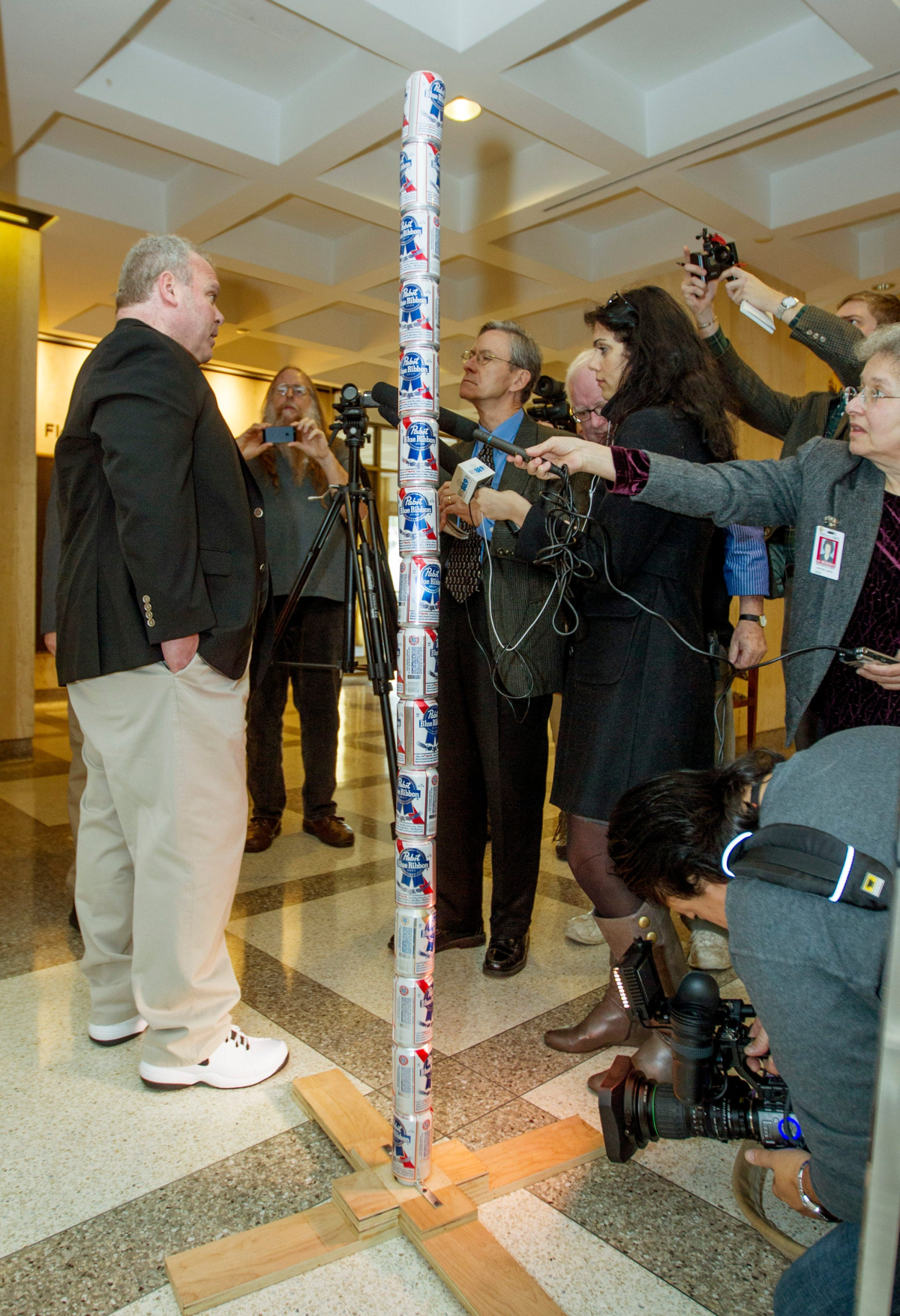
Other controversial displays included a six-foot Festivus pole constructed from empty beer cans, referencing a fictional holiday from television. More recently, The Satanic Temple of Iowa planned a holiday celebration in December, exactly one year after a Baphomet statue was destroyed at the State Capitol building in Des Moines, though state officials canceled the event.
VanderVeen summarized the constitutional principle: "The First Amendment means the government cannot prioritize privately sponsored Christmas or Hanukkah decorations over a Baphomet statue simply because government officials favor Christmas or Hanukkah (or Christianity or Judaism). And of course, the reverse is also true."