
Paleontologists working in Ethiopia's Afar region have made a significant breakthrough, identifying fossil evidence of a distinct early human species that existed approximately 3.4 million years ago.
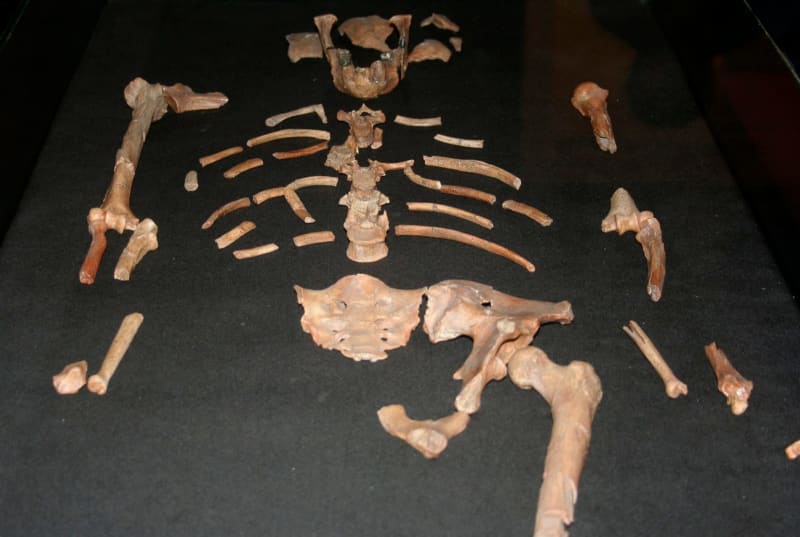
For decades, the famous "Lucy" skeleton has stood as a central figure in our understanding of human ancestry. Discovered in 1974, this 3.2-million-year-old Australopithecus afarensis specimen has been widely regarded as a crucial link in the evolutionary chain leading to modern humans. However, recent findings indicate Lucy's story might be more complex than previously believed.
The newly identified species, named Australopithecus deyiremeda, appears to have inhabited the same geographical area during the same period as Lucy's species. This discovery fundamentally questions the assumption that only one hominin species dominated the landscape at that time.
Analysis of jaw and dental fossils, combined with re-examination of a partial foot bone discovered over ten years ago (the "Burtele foot"), confirms that A. deyiremeda represents a separate species rather than a local variant of Lucy's kind.
Notable differences exist between the two species. While Lucy's anatomy shows clear adaptations for bipedal walking, the structure of the Burtele foot suggests A. deyiremeda retained significant tree-climbing capabilities. Dietary analysis based on tooth chemistry reveals further divergence: A. deyiremeda's diet was primarily composed of fruits and leaves, whereas Lucy's species consumed a more varied range of foods.
Implications for Human Evolution
Scientists propose that A. deyiremeda may share a close evolutionary relationship with Australopithecus anamensis, an even older species. This connection supports the emerging view that multiple human-like lineages branched from a common ancestor, creating a diverse "bush" of early hominins rather than a simple, straight line of descent.
This evidence suggests eastern Africa 3.5 million years ago was a dynamic environment where several distinct hominin species coexisted, each adapting to ecological niches in different ways. Although Lucy remains a key figure in human ancestry, she was clearly not the sole inhabitant of our evolutionary past.
As excavations in Ethiopia continue to yield new fossil material, our narrative of human origins is being reshaped, revealing a journey toward humanity that was considerably more intricate and populated than earlier theories suggested.