
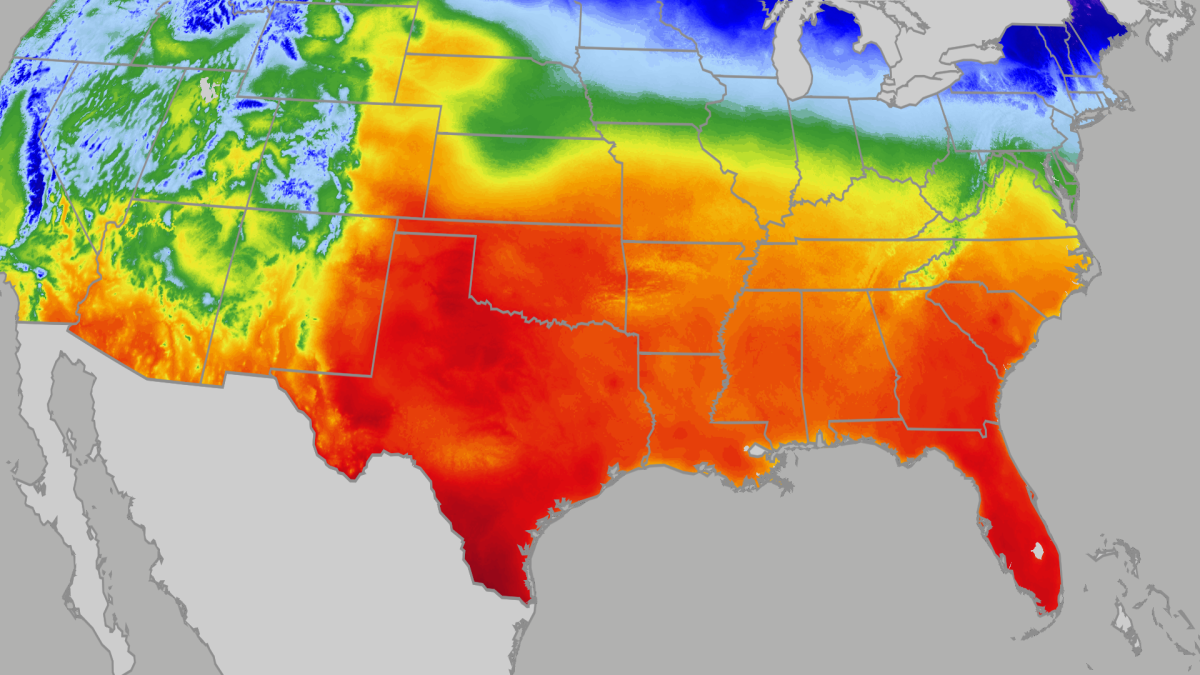
This Christmas, Santa might find himself sweating as he travels across the United States, with forecasts indicating potentially record-breaking warmth for millions of Americans.
The unusual heat isn't just arriving on Christmas Day. Earlier this week, December temperature records were matched or exceeded in several locations, including Lubbock, Texas at 85 degrees, North Platte, Nebraska at 78 degrees, and Tucson, Arizona at 85 degrees.
On Christmas itself, high temperatures across much of the Southern and Plains regions are predicted to be 20 to 35 degrees above normal, reaching into the 60s, 70s, and even 80s in many areas.
Numerous cities could see their warmest Christmas ever recorded. Locations like Atlanta, Oklahoma City, Kansas City, Amarillo, Denver, and Albuquerque are all positioned to potentially tie or break historical warmth records for December 25th.
Perhaps more surprisingly, significant warmth is also expected further north in states such as Idaho, Wyoming, and South Dakota. Rapid City, South Dakota, for instance, might see highs in the low to mid-60s.
While the Plains are expected to see the majority of records, nearly 100 daily warm temperature records—including both record highs and record warm lows—could be broken from coast to coast on Christmas Day.
The warm conditions won't be confined to the holiday. Hundreds of additional records could fall throughout the week as spring-like temperatures gradually move eastward.
This widespread thaw means many areas that typically hope for a white Christmas will instead see bare ground this year.
What's Driving the Unseasonable Heat
A powerful ridge of high pressure extending across the central U.S. is responsible for the warmup. This atmospheric feature acts like a lid, allowing mild air from southern regions to flow northward while trapping colder Arctic air far to the north. This pattern is more characteristic of spring than late December.
Although this spring-like setup is expected to dominate on Christmas, it isn't permanent. Weather models indicate that colder air is likely to return in the days following the holiday, bringing another shift in conditions.
For now, however, the only thing that might be frozen in many places this Christmas could be the eggnog.