
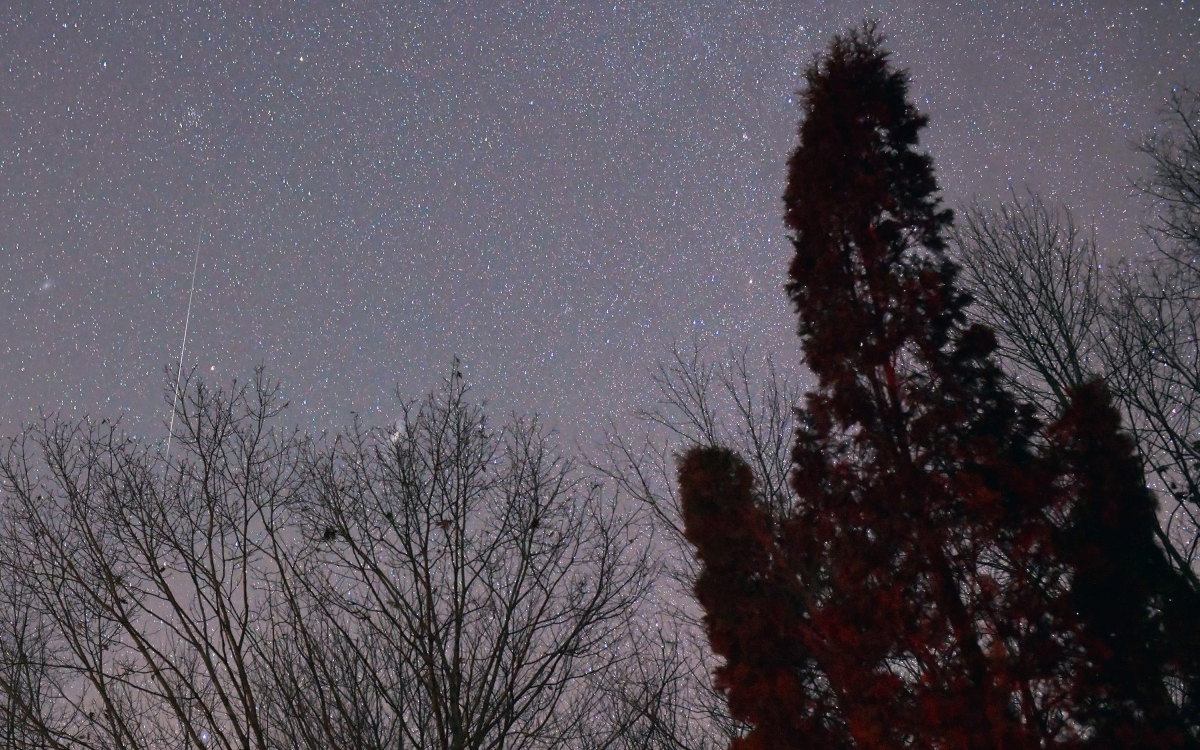
As the year draws to a close, skywatchers have a final celestial opportunity: the Ursid meteor shower. This event, frequently overshadowed by holiday festivities and the winter solstice, reaches its peak intensity from the evening of Sunday, December 21, through the dawn of Monday, December 22.
Observing the Ursids
Under ideal conditions—a dark, moonless sky—the Ursids typically generate between 5 and 10 meteors per hour. On rare occasions, observers have witnessed spectacular outbursts exceeding 100 meteors in a single hour. For the best chance to see this display, enthusiasts should look toward the eastern sky, where the meteors will appear near the bright planet Jupiter.
Viewing Tips for Mississippi
NASA provides general advice for meteor shower observation, which is crucial for success in Mississippi. Key recommendations include:
Seek out locations far from urban light pollution.
Dress warmly for winter temperatures; bring a blanket or reclining chair.
Lie on your back and allow your eyes at least 30 minutes to adjust to the darkness for optimal viewing.
Mississippi Weather Outlook
Cloud cover could potentially obstruct views across the state. The National Weather Service forecast for Sunday night, December 21, indicates variable conditions:
Jackson: 47°F with a 20% chance of showers.
Greenwood: 42°F, partly cloudy with a 20% chance of rain.
Gulfport: 67°F with a 30% chance of rain.
Hattiesburg: 50°F with a 30% chance of rain.
Oxford: 37°F and partly cloudy.
Starkville: 38°F and partly cloudy.
A graphic from the NWS suggests cloud cover may affect much of Mississippi around midnight on December 21.
Dark Sky Locations
To escape light pollution, several areas in Mississippi are recommended for stargazing. These locations are rated on the Bortle dark-sky scale, where a lower score indicates better darkness. Sites with a Bortle score of 3 include:
Bienville National Forest
Clark Creek Natural Area
Holmes County State Park
Homochitto National Forest
Leroy Percy State Park
Tishomingo State Park
Other notable dark sky areas are De Soto National Forest, Delta National Forest, French Camp, Holly Springs National Forest, and Tombigbee National Forest.
Related Celestial Events
The Ursids follow the Geminid meteor shower, which was active from December 4 to 17. Looking ahead, the Quadrantid meteor shower will begin around December 28, but its peak in the new year may be difficult to observe due to interference from a full moon.
The winter solstice, marking the official start of winter, occurs on Sunday, December 21, 2025. In Jackson, this day will feature approximately 10 hours and one minute of daylight. The next full moon, known as the Wolf Moon, is scheduled for Saturday, January 3, 2026.