
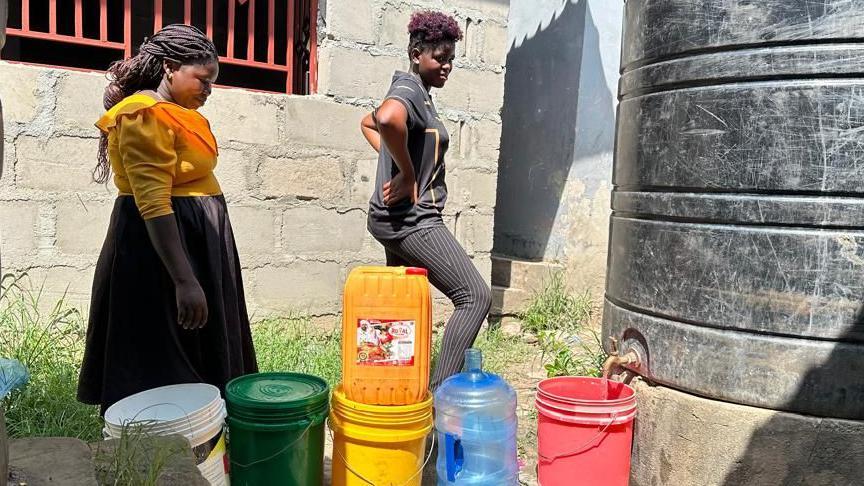
In Tanzania's bustling metropolis of Dar es Salaam, mornings begin with residents scrambling to secure water for their daily needs.
Festive Season Challenges
With Christmas approaching, the city's six million inhabitants find their celebrations overshadowed by empty taps and dry pipelines. Many households keep plastic containers prepared outside their doors, ready to collect water whenever nearby sources become available.
Municipal authorities have implemented strict water rationing, with most homes receiving supplies just once weekly. For some families, the wait between deliveries extends for multiple weeks.
Alternative Sources and Costs
Numerous residents now depend on private water vendors who extract water from boreholes and storage tanks. While these suppliers offer temporary relief, their elevated prices create significant financial strain for lower-income households.
Cedric Ndosi, a Madale resident planning Christmas festivities, expressed concern: "Christmas is here and there is no water in our taps. We are forced to buy water from shops for cooking and from water trucks for bathing, but it's expensive."
He added, "We were used to spending money on drinks, but now even water for cooking has become an added cost."
Underlying Causes
Officials attribute the crisis to prolonged dry conditions following the rainy season's conclusion in May. Reduced river flows and declining groundwater levels have forced water treatment plants to decrease production.
Dar es Salaam's rapid expansion over recent decades has further complicated the situation. The city's population has more than doubled as people seek economic opportunities, stretching water infrastructure beyond its capacity.
Unlike other Tanzanian cities with reservoir systems, Dar es Salaam relies heavily on rainfall-dependent rivers, particularly the Ruvu River which supplies approximately 70% of the city's drinking water.
Daily Adaptations
Residents have developed various coping strategies. Some remain awake through the night to capture water when it briefly flows through pipes, while others position containers to collect any rainfall.
Small businesses including food vendors, beauty salons, and car wash services have reduced operating hours or increased prices due to water scarcity.
Tegemeo Kombe from Kibamba described the broader impact: "When water is scarce, everything else stops. At times hygiene suffers, stress increases, especially for us mothers, and the whole household feels the impact."
Official Response
Water Minister Juma Aweso acknowledged the severity of the situation, telling the BBC that Dar es Salaam's dependence on rainfall-fed rivers has left it vulnerable.
"Longer-term solutions are under way, we are in the process of building a dam that will collect water from different fresh water sources to solve the problem in future," he stated.
The minister noted that additional borehole drilling investments would help address future demand and provide climate resilience.
The Dar es Salaam Water and Sanitation Authority has apologized for service disruptions and urged conservation efforts among residents.
Looking Forward
While some worry that water shortages may become more frequent, resident Joyce Fredrick maintains hope for improvement.
"When water is missing, life changes too," she told the BBC. "We believe things will be better next year."