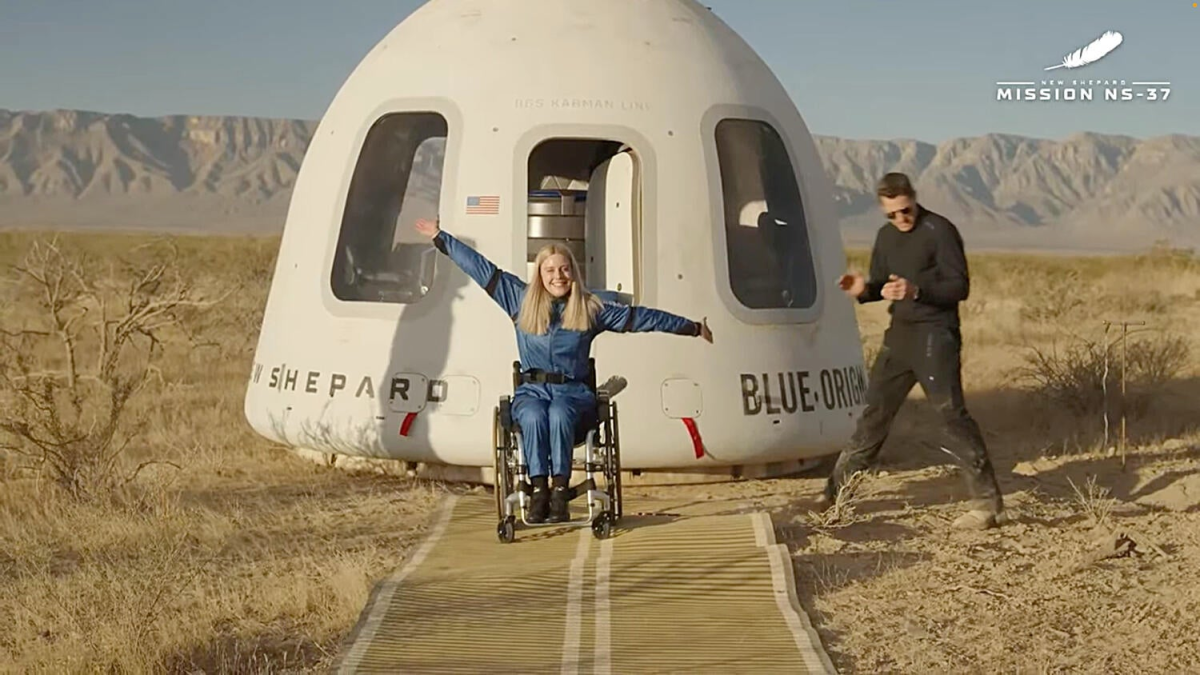
On Saturday morning, a groundbreaking event unfolded as Michaela Benthaus, a 33-year-old engineer from Germany working at the European Space Agency, soared past the Kármán Line—the boundary 100 kilometers above Earth—becoming the first individual using a wheelchair to reach outer space.
Her journey took place on Blue Origin's New Shepard capsule, designated NS-37, which launched from Texas. This mission represents the 16th suborbital flight by the company, founded by Jeff Bezos to broaden space access beyond traditional astronauts.
"I always wanted to go to space, but I never really considered it something which I could actually do," Benthaus shared with CNN before the flight.
Reflecting on her earlier doubts, she added, "Maybe space is for people who have an amputated leg but still can walk a little bit. Maybe having a spinal cord injury is way too disabled."
Benthaus sustained a spinal cord injury in a 2018 mountain biking accident, which fueled her passion for space exploration. She channeled this into engineering pursuits, adapting her work to accommodate her mobility needs.
The flight lasted approximately 10 minutes, accelerating Benthaus and five crewmates to speeds exceeding three times that of sound as they crossed into space.
Enhancing Accessibility in Space Travel
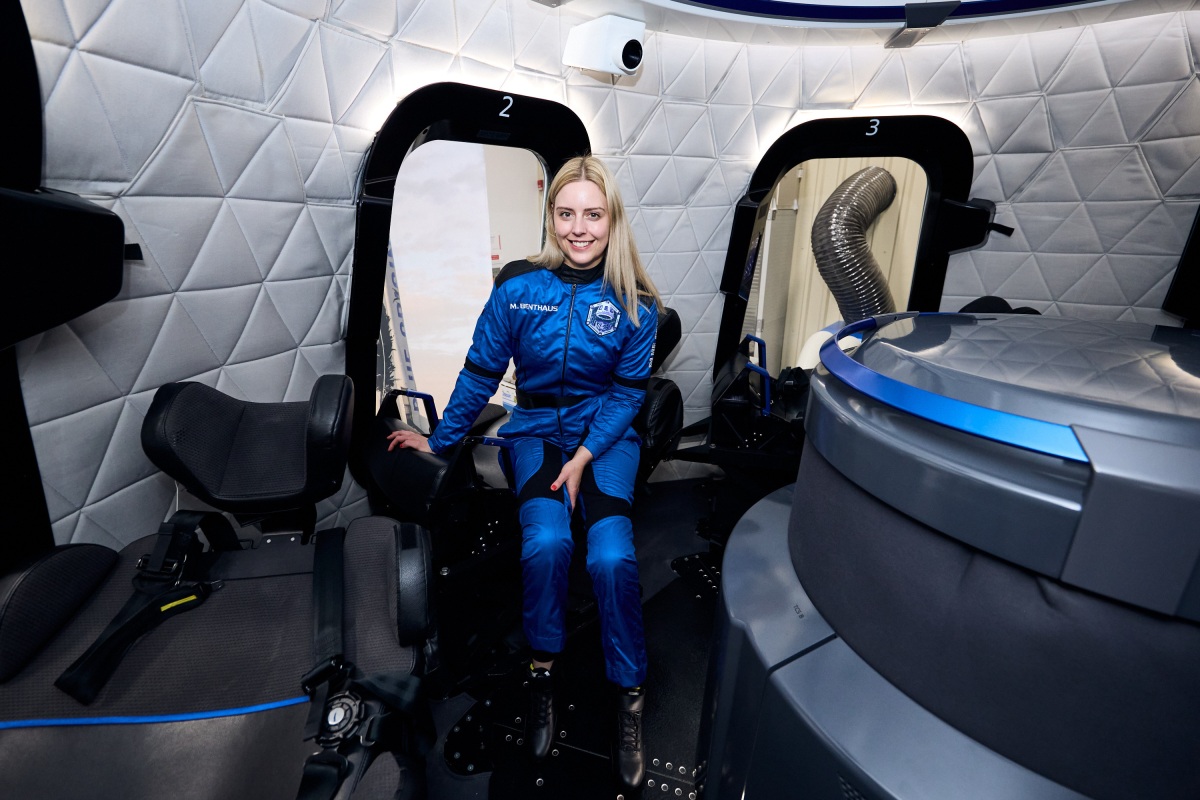
Designed to provide brief weightlessness at its peak, the New Shepard capsule allows passengers to experience microgravity before descending back to Earth.
In a preflight interview, Benthaus mentioned using a specialized strap to secure her legs while moving from her seat to enjoy the zero-gravity environment and observe Earth from the window.
Having previously experienced microgravity on parabolic flights, she anticipated focusing more on the panoramic views than on acrobatics inside the cabin.
Benthaus aims to apply insights from her trip to improve future experiences for others with similar mobility challenges. After landing, she reported that the strap functioned "quite well."
"I did really love the view and the microgravity phase, but I also loved all the going up," she remarked. "That was so cool to feel every stage of going up."
Beyond weightlessness, the flight exposes passengers to significant G-forces, reaching up to 5Gs during descent. Benthaus noted uncertainty about returning to her seat unaided, but Hans Koenigsmann, a former SpaceX executive and friend, was trained to assist if necessary.
Koenigsmann commented on the intensity, saying, "I didn't expect it to be that intense, to be honest. It was more intense than I thought. The movements are slower—they're slower, but they're more forceful."
As part of her mission, Benthaus is fundraising for Wings for Life, a nonprofit dedicated to spinal cord injury research.
Jared Isaacman, recently appointed as NASA's next administrator, applauded the achievement in a social media post: "Congratulations, Michi! You just inspired millions to look up and imagine what is possible."