
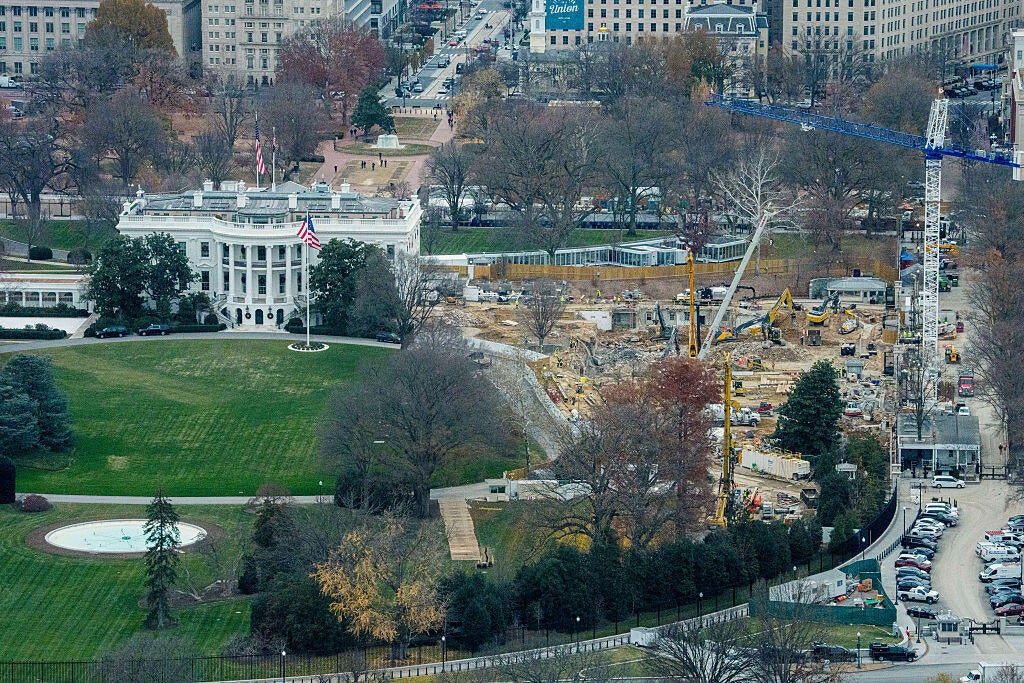
In Washington, the pace of construction often outstrips legal proceedings, creating challenges for preservation efforts.
Legal Setback for Preservationists
Last week, the National Trust for Historic Preservation failed to secure a temporary stop to the White House ballroom project. A judicial decision permitted construction to proceed at the East Wing location, though some restrictions were placed on the administration.
"The American people own these places. And we, the American people, have a right to weigh in when significant changes to them are proposed," stated Carol Quillen, president and CEO of the Trust, in a CBS News interview. "This project needs to follow the already legally mandated processes."
Rapid Renovations Continue
President Trump has implemented renovations at the White House with remarkable speed and minimal review. The East Wing and its connecting corridor were removed within days during October.
Future architectural plans remain uncertain, but there appear to be few obstacles to their implementation.
Quillen expressed "deep concern" about upcoming projects. The organization's legal action seeks a declaration that would establish pre-demolition protocols for White House construction, preventing historical elements from disappearing before expert and public consultation.
Administration's Position
The White House contends that the 90,000-square-foot ballroom development hasn't progressed sufficiently to require approval from Washington, D.C. federal construction oversight bodies. Government attorneys informed the court that construction plans remain incomplete.
Regarding potential future work at the executive residence, a White House representative stated, "There are no plans for any demolition of any structures at this time."
Judicial Ruling Details
Quillen noted a positive aspect in Judge Richard Leon's decision against the Trust.
"We view the judge's order as really helpful. And we learned a lot and it actually facilitates our aims in the suit," Quillen remarked.
While ruling against the preservation group, Leon mandated that the government submit construction plans to the National Capital Planning Commission and Commission of Fine Arts by month's end—a step the White House had already indicated it would take.
Regulatory Disputes
The administration argues it has no requirement to file construction plans with the NCPC before demolition, maintaining the commission's authority applies only to vertical construction, not demolition.
The government recently disclosed a previously unreleased environmental assessment of the ballroom project. This document, completed by the National Park Service in August but only released last week in court filings, outlines project scope, timeline, and preservation measures for the White House grounds.
Congressional Considerations
The Trust is additionally requesting judicial enforcement of legislation requiring congressional authorization for ballroom construction. The statute specifies that "A building or structure shall not be erected on any reservation, park, or public grounds of the Federal Government in the District of Columbia without express authority of Congress."
Congressional Republicans, who control both chambers, haven't formally addressed the ballroom issue. The $400 million project is privately funded, and no congressional funding or approval measures are currently under review.
The White House asserts the president possesses unilateral authority to develop White House property.
Preservation Concerns
Quillen argues that because the White House has operated outside standard federal construction procedures, experts and the public have been denied pre-demolition input, potentially resulting in historical loss.
"When projects like this go through these processes, the outcome ends up being better. The people have a voice. You build more support for the project. It becomes a more lasting legacy and improvements can be made to it along the way," Quillen explained.
Upcoming Proceedings
The National Capital Planning Commission is scheduled to review a ballroom presentation on January 8. Another court hearing is set for January 15.