The international medical organization Médecins Sans Frontières (MSF) has issued an urgent alert regarding the deteriorating health situation for Gaza's youngest residents during winter months. Medical staff report that infants and children are experiencing life-threatening conditions due to exposure to cold temperatures.
Infant Deaths from Exposure
Medical facilities in Gaza have documented multiple cases of hypothermia-related fatalities among newborns and young children. A 29-day-old premature infant named Said Asad Abedin died from severe hypothermia in Khan Younis, according to MSF's Friday statement. The organization noted that winter storms "combined with the already dire living conditions [are] increasing health risks" for vulnerable populations.
Gaza's health authorities reported that extreme weather conditions had claimed 13 lives by Thursday of last week. Among the victims was two-week-old Mohammed Khalil Abu al-Khair, who perished from exposure without adequate shelter or protective clothing.
Medical Professionals Sound Alarm
"Hypothermia is very dangerous for babies," stated Ahmed al-Farra, who leads the maternity pediatric department at Nasser Medical Complex. He warned in a video update that without proper heating solutions, mobile homes, or caravans for displaced families living in tents, "we will see more and more" such tragedies.
Bilal Abu Saada, a nursing supervisor at Nasser Hospital, told MSF that children are "losing their lives because they lack the most basic items for survival." He described infants arriving at medical facilities "cold, with near-death vital signs."
Beyond hypothermia cases, healthcare workers have observed elevated rates of respiratory infections that are expected to worsen throughout the winter season, posing particular danger to children under five years old.
Ongoing Military Actions
While humanitarian concerns mount, military operations continue in the region. Palestinian news sources reported that Israeli forces conducted demolitions, artillery shelling, and gunfire in areas east of Gaza City on Saturday morning, with additional incidents reported near Khan Younis.
On Friday, an Israeli strike on a shelter housing displaced Palestinians resulted in at least six fatalities. The Israeli military stated it was targeting "suspects" in the operation.
Shelter Crisis Worsens
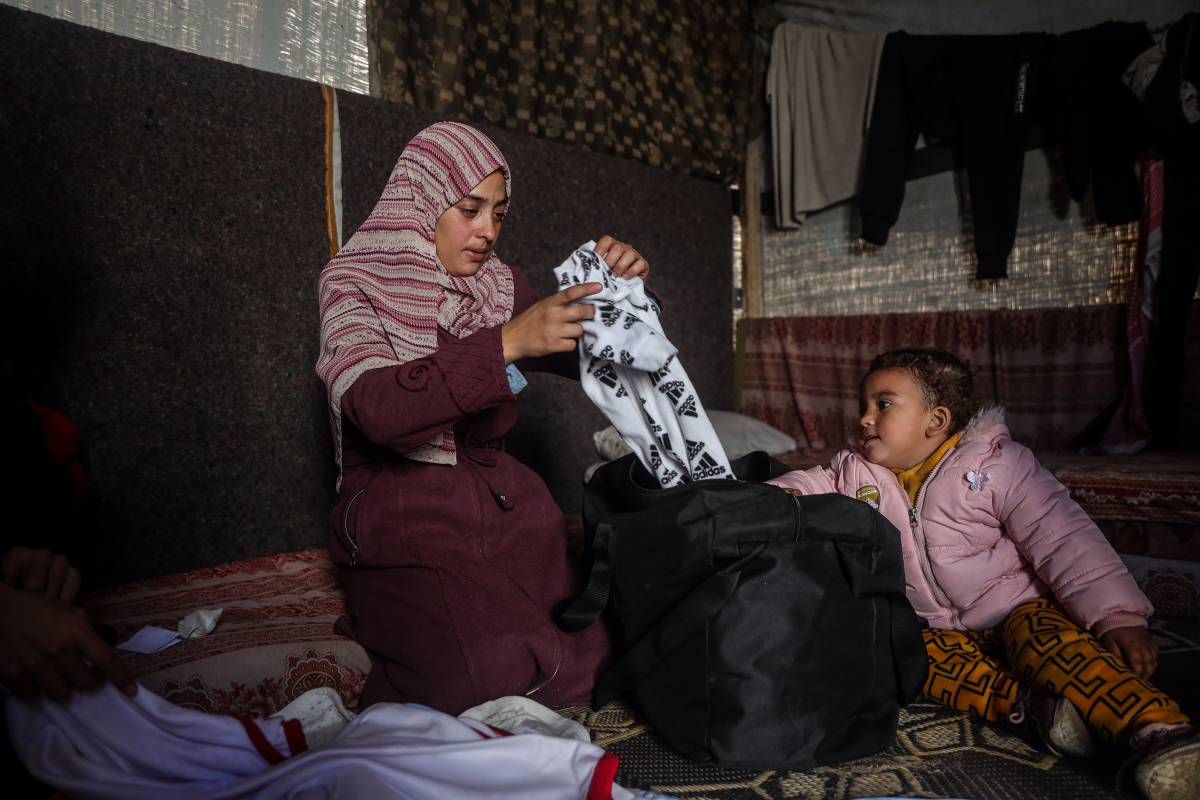
Recent weeks have brought heavy precipitation, strong winds, and freezing temperatures to Gaza, damaging or destroying over 53,000 makeshift tents that serve as temporary housing for displaced families. With extensive infrastructure damage throughout the territory, streets flood rapidly and sewage systems overflow.
Displaced families have sought refuge in partially collapsed buildings despite structural risks, with 13 buildings reportedly collapsing across Gaza last week alone.
Personal Tragedy Highlights Systemic Failure
The human impact of these conditions was illustrated by the experience of Eman Abu al-Khair, a 34-year-old displaced Palestinian living west of Khan Younis. On December 13, she discovered her sleeping infant Mohammed "cold as ice" with frozen extremities and discolored skin.
Unable to secure transportation to medical facilities amid intense rainfall, the family eventually transported the infant by animal-drawn cart to Red Crescent Hospital at dawn. Mohammed was admitted to intensive care with visible distress but died two days later.
"I can still hear his tiny cries in my ears," Eman recounted. "His tiny body simply couldn't withstand the extreme cold inside the tents."
Aid Restrictions Continue
Despite a ceasefire agreement taking effect in October, Israel has maintained restrictions on humanitarian aid entering Gaza. Multiple United Nations agencies, international organizations, and national governments have called for these restrictions to be lifted.
The United Nations has reported that Israel has prevented tents and blankets from reaching Palestinian populations, even as approximately 55,000 families have experienced damage or destruction of their shelters and belongings during recent storms.
Additionally, dozens of child-friendly spaces have been damaged, affecting approximately 30,000 children according to UN assessments.
Natasha Hall, a senior advocate with Refugees International, noted that aid enters Gaza in minimal quantities partly due to Israel's extensive list of "controlled dual-use items" that includes basic necessities like diapers, bandages, tools, and tents. "It's unclear how those could be used as weapons or any kind of dual use," Hall commented.
MSF has called on Israeli authorities to "urgently allow a massive scale up of aid into the Strip" as hundreds of thousands of Palestinians continue living in flooded and damaged temporary shelters.