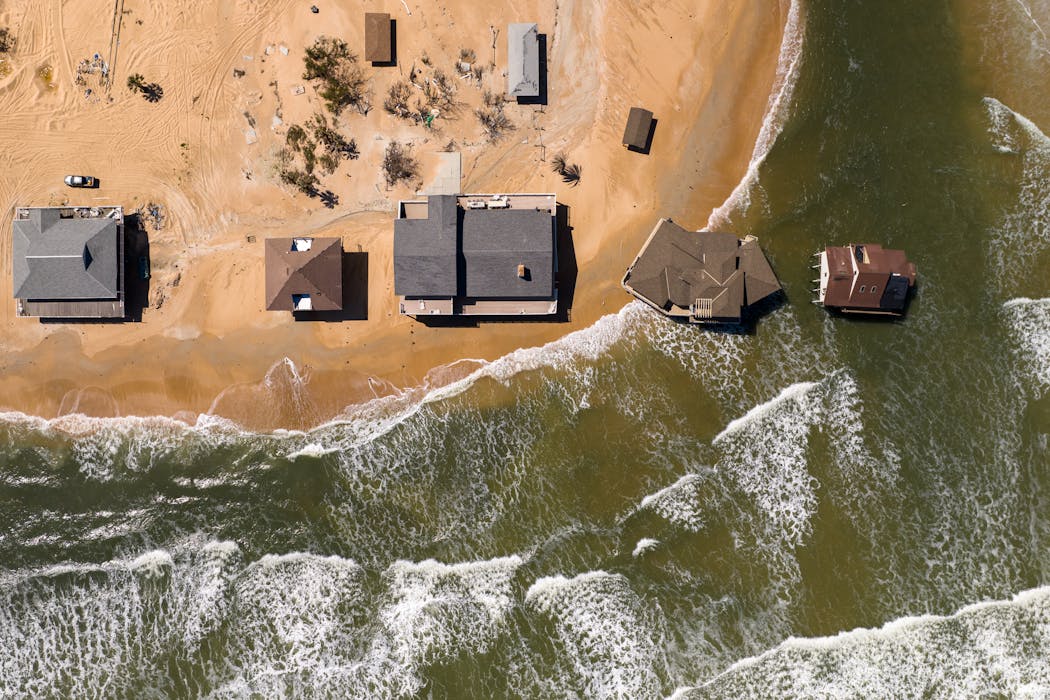
The melting of polar ice sheets creates worldwide consequences that extend far beyond the immediate polar regions. As ice disappears, it contributes to rising sea levels globally, modifies ocean circulation patterns, and influences temperature distributions across distant geographical areas.
Antarctic Ice Sheet Research
In November 2025, a scientific team conducted research examining how Antarctic ice melt influences global climate systems and sea level changes. The study employed sophisticated computer models that integrated Antarctic ice sheet dynamics, solid Earth processes, and comprehensive climate systems encompassing atmospheric and oceanic components.
The significance of Antarctic ice cannot be overstated, as it contains sufficient frozen water to potentially elevate global sea levels by approximately 190 feet (58 meters). This melting poses serious threats to coastal communities and island ecosystems worldwide.
Climate Dependence and Emissions
The degree of Antarctic ice sheet melting directly correlates with global warming levels, which themselves depend on future greenhouse gas emissions from transportation, energy production, and industrial activities.
Research indicates that substantial portions of the Antarctic ice sheet could remain intact if nations adhere to the 2015 Paris Agreement target of limiting global warming to 1.5 degrees Celsius (2.7 Fahrenheit) above pre-industrial levels. Conversely, continued emissions growth leading to significant atmospheric and oceanic warming could trigger extensive melting and substantially higher sea levels.
The study demonstrates that high emissions scenarios endanger not only the West Antarctic ice sheet, which is already contributing to sea-level rise, but also the larger and historically more stable East Antarctic ice sheet.
Regional Sea Level Variations
Sea level rise does not occur uniformly across the globe like water filling a bathtub. Instead, different regions experience varying degrees of sea level change, with some areas near melting ice sheets even witnessing sea level decreases.
This phenomenon primarily results from gravitational effects. Massive ice sheets exert gravitational pull on surrounding ocean waters, similar to how the Moon influences Earth's tides. As ice sheets diminish, their gravitational attraction weakens, causing sea levels to drop in nearby regions while rising in more distant areas.
Additionally, ice loss alters Earth's rotational axis, which further redistributes ocean waters globally.
Mitigating Factors
Two significant factors can potentially slow Antarctic ice melt. First, as the ice sheet loses mass, the underlying bedrock rebounds upward due to reduced pressure. This uplift can elevate portions of the ice sheet away from warming ocean waters, particularly in regions with faster mantle flow like West Antarctica.
Second, while Antarctic meltwater contributes to sea level rise, it also temporarily delays greenhouse gas-induced warming by cooling Southern Hemisphere and tropical Pacific ocean surfaces, trapping heat in deeper ocean layers.
Projected Sea Level Scenarios
The research combined multiple computer models to project potential sea level outcomes under different climate scenarios.
In a moderate emissions scenario where global warming exceeds 2 degrees Celsius (3.6 Fahrenheit) by 2100, Antarctic ice melt alone could contribute approximately 4 inches (0.1 meters) of sea level rise by 2100, increasing to over 3.3 feet (1 meter) by 2200.
Under this scenario, the greatest sea level increases from Antarctic melt—up to 5 feet (1.5 meters) by 2200—would occur in the Indian, Pacific, and western Atlantic ocean basins, regions distant from Antarctica. These areas include vulnerable island nations like Jamaica and the Marshall Islands.
A high emissions scenario projects more severe outcomes: about 1 foot (0.3 meters) of Antarctic-driven sea level rise by 2100 and nearly 10 feet (over 3 meters) by 2200, with particularly severe impacts across Pacific and Atlantic ocean basins.
Climate Justice Implications
These findings highlight climate justice concerns, as island nations contributing minimally to climate change already face devastating sea level impacts. Many such nations are losing territory to rising waters while leading global efforts to limit temperature increases.
Protecting vulnerable coastal regions requires accelerated reductions in greenhouse gas emissions beyond current international commitments.