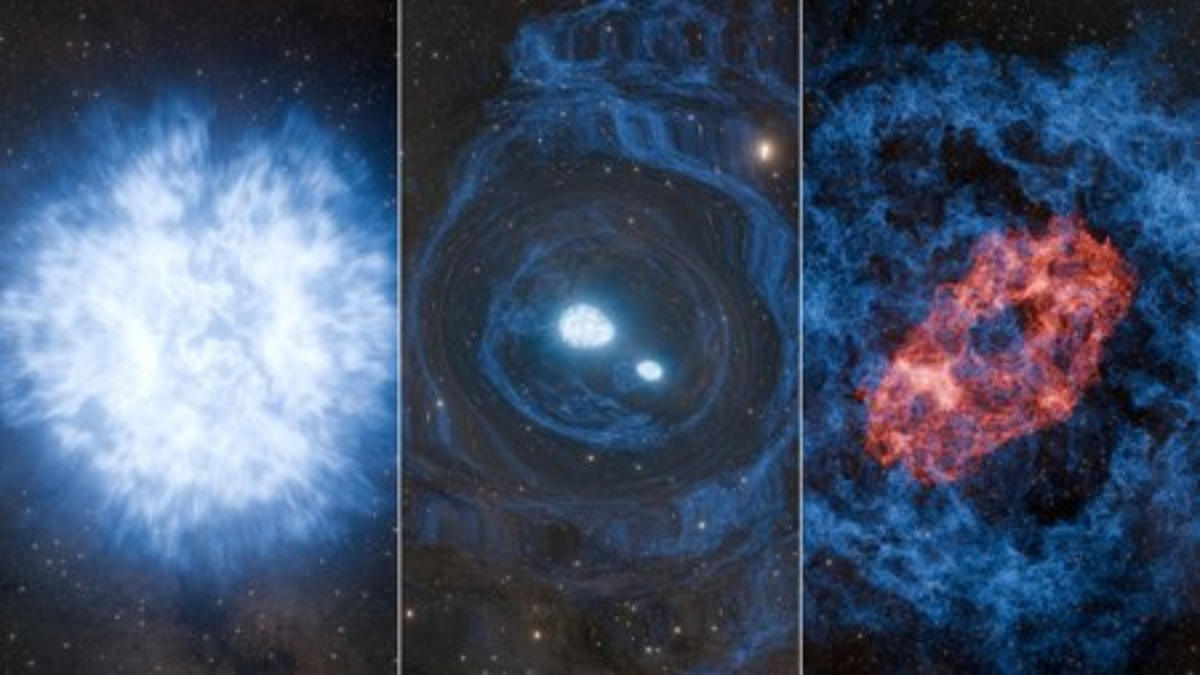
Scientists have identified the source of some of the universe's most brilliant and fleeting phenomena known as Luminous Fast Blue Optical Transients. These events, first observed in 2014, have baffled researchers for about ten years.
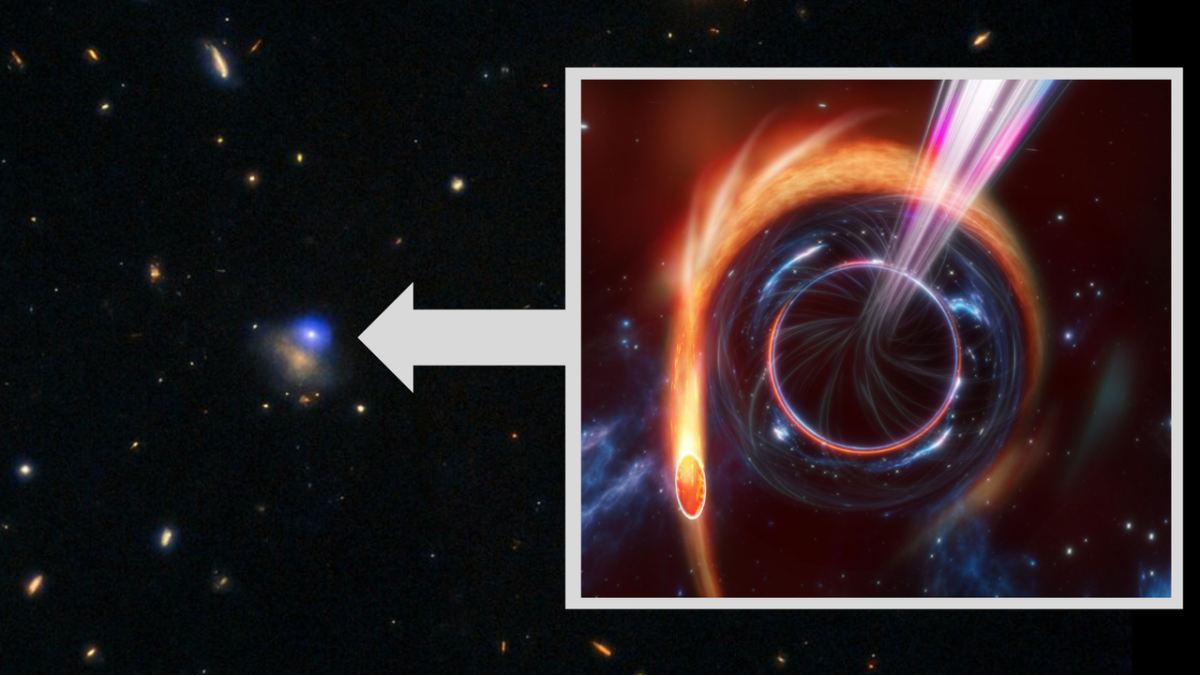
The breakthrough came from analyzing AT 2024wpp, an LFBOT detected in 2024. Observations indicate these explosions result from extreme tidal disruption events where a black hole, up to 100 solar masses, tears apart a neighboring star within days.
Only around fifteen LFBOTs have been found so far. They are exceptionally luminous, visible across billions of light-years, emitting high-energy blue, ultraviolet, and X-ray light, and fading after just a few days.
Early LFBOTs received animal-themed nicknames like "the Cow" (AT 2018cow), "the Koala," "the Tasmanian devil," and "the Finch." AT 2024wpp is yet to be named, with "the Wasp" being a likely candidate.
A Distinctive Energy Signature
Analysis of AT 2024wpp showed it releases about 100 times more energy than a typical supernova, eliminating stellar explosions as a possible cause. To match this output, a star would need to convert roughly 10% of its mass directly into energy in mere weeks.
Data from the Gemini South observatory detected unusual near-infrared emissions from AT 2024wpp, a feature previously seen only around AT 2018cow and not in ordinary supernovas.
"The immense energy radiated by these bursts cannot be explained by core-collapse stellar explosions or any standard stellar event," stated team member Natalie LeBaron from the University of California, Berkeley. "AT 2024wpp clearly shows our initial model was incorrect. This is not simply an exploding star."
While tidal disruption events are common, where stars are stretched into streams by black holes, only specific ones produce LFBOTs. The team proposes that in AT 2024wpp's case, the black hole had been slowly consuming material from a companion star, forming a surrounding shell. When the star finally moved too close, it was shredded, and its material collided with this shell, generating the intense light observed.
Radio emissions arise as matter near the black hole is funneled to its poles, accelerated to nearly 40% light speed, and ejected as jets. The destroyed star is estimated to be about ten times the sun's mass, a Wolf-Rayet star nearing its end, which accounts for the faint hydrogen signals detected. Such stars are prevalent in star-forming galaxies, like the one 1.1 billion light-years away hosting AT 2024wpp.
The findings are set to appear in The Astrophysical Journal Letters and are currently accessible on arXiv.