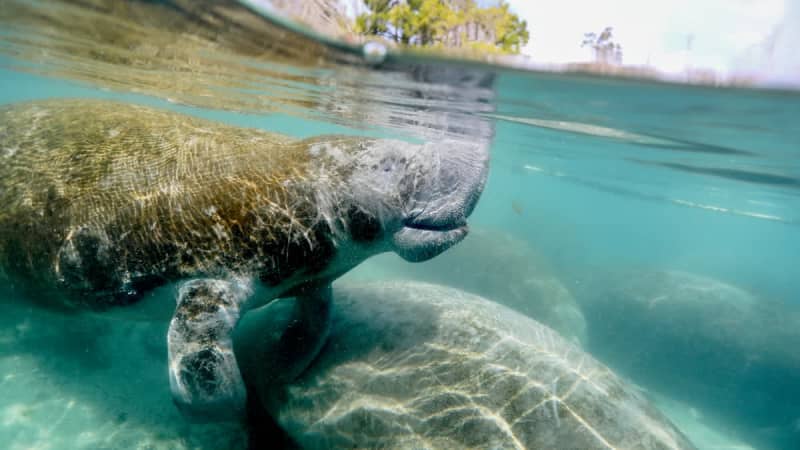
The discovery of deceased manatees in the Indian River Lagoon has drawn attention to severe water quality issues affecting Florida's ecosystems. Investigations reveal widespread contamination across numerous waterways, with pollution levels remaining dangerously high or worsening over recent decades.
Major industries including agriculture and urban development contribute millions of pounds of pollutants that flow into water systems from Tallahassee to Miami. This contamination triggers harmful algae blooms that destroy vital seagrass habitats and pose significant health risks to residents and visitors alike.
Environmental regulations have proven inadequate, often undermined by policies prioritizing economic interests over ecological protection. State officials have repeatedly failed to implement necessary safeguards, allowing water quality to deteriorate further.
Essential Actions for Water Protection
1. Mandatory Septic System Inspections
Experts consistently recommend requiring regular inspections of septic tanks, which release substantial pollution into Florida's springs. Such measures would identify malfunctioning systems and reduce nitrogen and phosphorus contamination.
In 2008, a Florida Department of Health report stated that mandatory inspections "would result in greater environmental and public health protection."
Although legislation passed in 2010 called for inspections, it was repealed before implementation with support from real estate interests. More recently, a scientific panel convened by Governor Ron DeSantis recommended inspection programs, but 2020 environmental legislation again omitted this requirement.
Elizabeth Southerland, a former EPA official specializing in water standards, described the absence of inspections as "unbelievable" given Florida's porous soils that allow contaminants to reach aquifers feeding rivers and springs.
"If you've got a failing septic tank, that groundwater is easily going to get contaminated," she said.
2. Verify Agricultural Pollution Controls
State authorities are responsible for confirming that recommended farm pollution methods, known as best management practices, actually work as intended.
While environmental officials have approved many practices based on previous research, comprehensive testing across Florida's diverse agricultural regions remains incomplete.
"Back when we were writing the law, everyone agreed we needed to do this," said Eric Livingston, former watershed management chief for Florida's environmental agency. "It's in the law. It's supposed to happen. It hasn't."
He suggested establishing deadlines to compel regulatory action, noting: "They've had 20 years. We think some things might work. But nobody's proved it yet."
Former Department of Environmental Protection Secretary Mimi Drew emphasized: "You have to monitor and verify in order to know if it's successful. If it isn't working, it's a waste of money."
3. Upgrade Aging Stormwater Infrastructure
Recent updates to runoff regulations for new developments don't address pollution from older systems built under less stringent standards.
"One of our biggest qualms with the new rule is that it wouldn't have any retroactivity whatsoever," said Jen Lomberk of Waterkeepers Florida. "Those systems are still going to continue to pollute waterways across the state."
Retrofitting existing developments presents challenges but remains essential. In some areas, dedicating land for stormwater retention rather than additional construction could improve water treatment.
Ed Sherwood of the Tampa Bay Estuary Program noted that maintenance neglect causes treatment systems to deteriorate, suggesting that testing near older stormwater ponds might reveal "eye-opening" results about contamination control failures.
4. Enhance Private Well Monitoring
Approximately 12% of Floridians rely on private wells that lack the oversight applied to public water systems. While health officials operate a limited surveillance program, comprehensive testing of all private wells doesn't occur.
Since the 1980s, at least 3,000 private wells have contained nitrate levels exceeding federal safety standards for public drinking water. Nitrates can cause "blue baby syndrome" in infants and have been linked to cancer and birth defects in recent studies.
Gabriel Lade, an economics professor at Ohio State University, emphasized the importance of increasing testing rates, noting that many well owners nationwide don't regularly check their water. Research in Iowa demonstrated that providing test strips and information about pollution risks significantly improved testing participation.
5. Improve Public Health Communication
State health guidance inadequately describes risks associated with contaminated well water and toxic algae blooms. Current information focuses primarily on "blue baby syndrome" from nitrates and states: "No proof of a link to cancer from nitrates in drinking water exists."
Experts consider this guidance outdated, as emerging research connects nitrates to colorectal cancer and thyroid disease in adults. Minnesota and Wisconsin have updated their advisories accordingly.
Christopher Schaupp, a toxicologist at the Minnesota Department of Health, stated: "We understand that this issue is important for many of our communities, and the emerging health effects associated with nitrate in drinking water should be acknowledged."
Florida's algae bloom guidance emphasizes short-term symptoms like coughing and nausea, while acknowledging that "long-term health impacts of toxin exposure need further research."
Residents exposed to toxic algae have reported prolonged symptoms including breathing difficulties and hearing loss. Attorney Jeffrey Hensley, who lost hearing after boating during red tide, remarked: "The awareness isn't there. It wasn't there for me, and I consider myself an educated individual."
6. Preserve Natural Landscapes
Florida's historical wetlands once absorbed rainfall that now flows across developed surfaces into waterways. Natural areas function as sponges that filter pollutants from fertilizer, waste, and runoff.
Scientists advocate for increased funding to protect remaining natural lands, particularly those connected to critical water systems.
"If we figure out a way to live with water," said Maya Burke of the Tampa Bay Estuary Program, "that is going to have benefits for wildlife, for water quality and for all of the things that make Florida a beautiful place to live."