
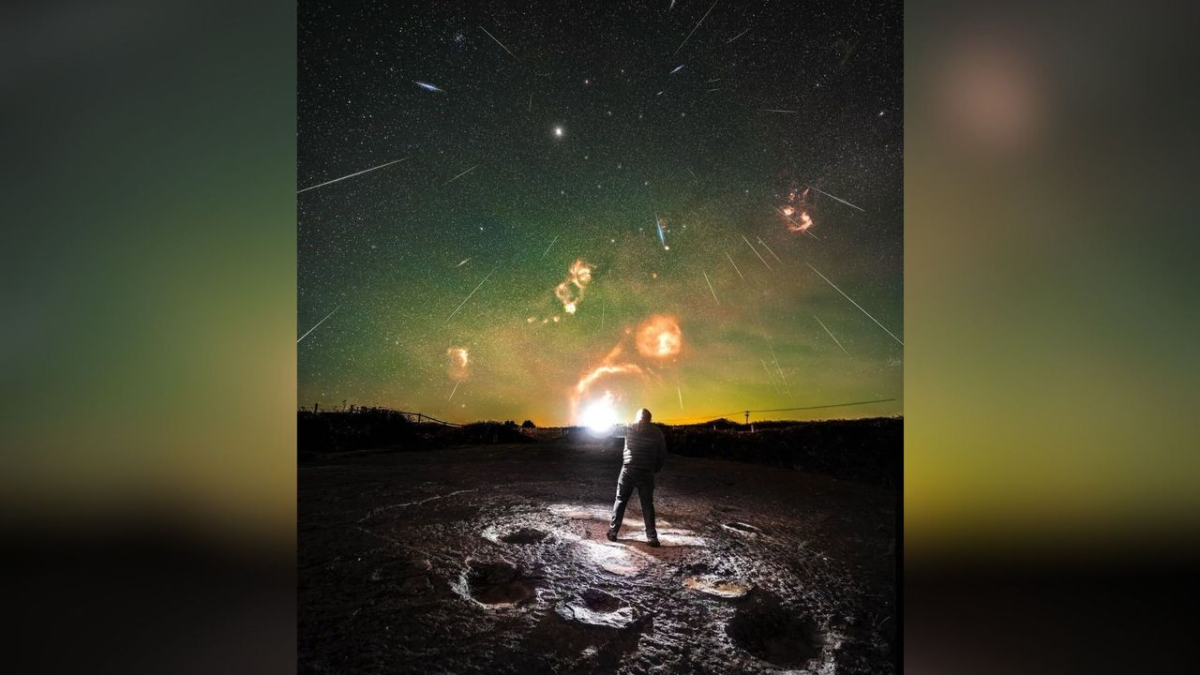
Each December, our planet travels through a region of space filled with cosmic dust, resulting in a dazzling display of meteors across the night sky. The Geminids meteor shower reached its maximum intensity around December 13, with viewing conditions enhanced by a faint moon.
Understanding the Phenomenon
Contrary to popular belief, a meteor is not a star falling from the heavens. It is actually a tiny particle, often as small as a speck of sand, that enters Earth's atmosphere at tremendous speeds and burns up, creating a brief, luminous trail.
The Geminids get their name because they seem to emerge from the constellation Gemini, close to the bright star Castor.
Photographic Highlights
This celestial event was documented by astrophotographers around the globe, including the renowned Josh Dury.
Unusual Characteristics
In a post on his Instagram, Dury noted: "The Geminids are strange; unlike most meteor showers, they are not debris from a comet, but rather - an asteroid." This asteroid, known as 3200 Phaethon, exhibits behavior more typical of a comet.
"This narrative of asteroid fragments raining down conjured the image for me of the extinction of the dinosaurs when the Chicxulub asteroid impacted with the Earth," Dury told Space.com. "Utilizing this year's meteor shower over the fossilized dinosaur tracks, I was able to reconstruct the morbid scene that might well have been the final scene before life on earth changed as we know it."
Observation Details
One notable image was captured near the Yucatán Peninsula in Mexico.
For those interested in further exploration, resources are available on meteor showers and the art of astrophotography.