
Historic Close Approach
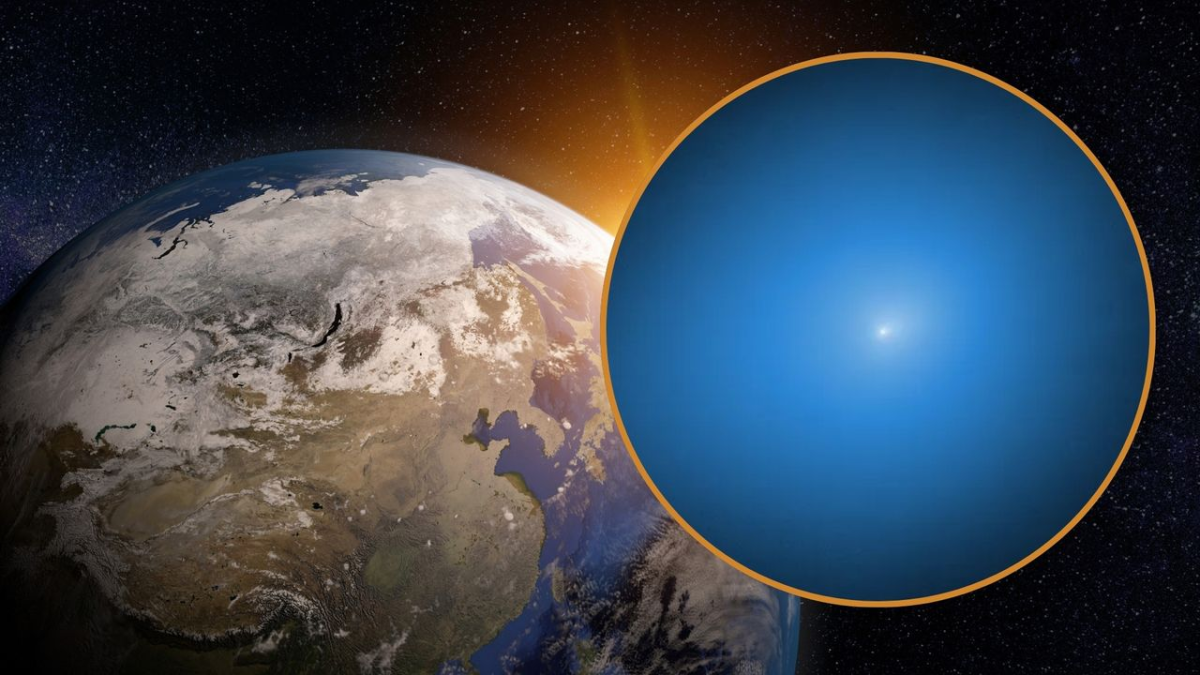
On Friday, December 19, the interstellar comet designated 3I/ATLAS made its nearest pass by Earth, reaching a distance of approximately 168 million miles (270 million kilometers) at 1 a.m. EST (0600 GMT).
Interstellar Visitor
This celestial object represents only the third confirmed interstellar body to traverse our solar system, following the discoveries of 1I/'Oumuamua in 2017 and comet 2I/Borisov in 2019. Its passage provides astronomers with a unique chance to examine primordial materials that formed around distant stars.
First detected by NASA's Asteroid Terrestrial-impact Last Alert System (ATLAS) on July 1, 2025, the comet's trajectory confirms its origin lies outside our solar system within the Milky Way galaxy.
Ancient Origins
Analysis suggests 3I/ATLAS originates from the Milky Way's "thick disk" region, which formed earlier than the "thin disk" containing our sun. This indicates the comet could be significantly older than our 4.6-billion-year-old solar system, potentially dating back up to 7 billion years.
University of Oxford astronomer Matthew Hopkins noted in a July statement: "All non-interstellar comets, such as Halley's comet, formed at the same time as our solar system, so they are up to 4.5 billion years old. But interstellar visitors have the potential to be far older, and of those known about so far, our statistical method suggests that 3I/ATLAS is very likely to be the oldest comet we have ever seen."
Unexpected Behavior
During its solar system journey, 3I/ATLAS exhibited surprising characteristics. As it approached perihelion (closest point to the sun) on October 29, the comet brightened more dramatically than scientists anticipated.
While comets typically brighten when nearing the sun due to solar heating vaporizing their icy surfaces, the exceptional brightening of 3I/ATLAS observed by multiple spacecraft including STEREO-A, STEREO-B, SOHO, and GOES-19 remains unexplained.
Researchers Qicheng Zhang of Lowell Observatory and Karl Battams of the Naval Research Laboratory wrote in their arXiv paper: "The reason for 3I's rapid brightening, which far exceeds the brightening rate of most Oort cloud comets at similar r [radial distance], remains unclear."
Scientific Legacy
Although 3I/ATLAS is now departing the solar system, the data collected during its visit will continue to provide insights about interstellar materials and the composition of our galaxy beyond our immediate cosmic neighborhood.
Public tracking of the comet's trajectory remains possible through NASA's Eyes on the Solar System interactive application.