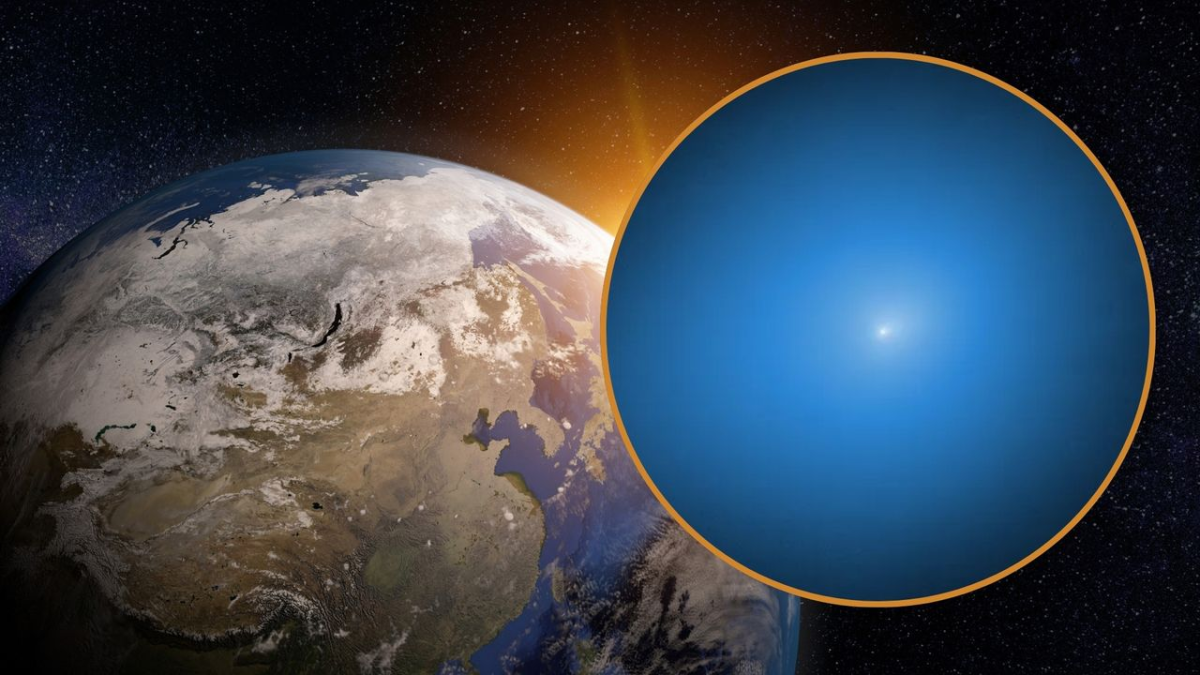

An object from beyond our solar system captured global attention in 2025. Identified as the third-known interstellar visitor, comet 3I/ATLAS was detected by the ATLAS survey in Chile on July 1, 2025, following earlier discoveries in 2017 and 2019.
While initial observations suggested it resembled typical solar system comets, with an icy nucleus and surrounding coma, the object soon became the center of extraordinary theories. Throughout the latter part of 2025, social media and some media outlets circulated unfounded assertions that it might be an alien spacecraft or probe.
Public interest intensified when celebrity Kim Kardashian publicly questioned NASA about the comet on social media platform X. Members of U.S. Congress also wrote letters urging the space agency to disclose information.
Timing and Information Gaps
Qicheng Zhang, a researcher at Lowell Observatory, noted that the extended period between discovery and closest approach allowed misinformation to flourish. "That seems to have given it a whole lot of extra time for conspiracy theorists to run wild and drum up attention before their unsubstantiated predictions are disproven to the extent they can ever be and people lose interest," Zhang told Space.com.
Compounding this, a U.S. government shutdown from October 1 to November 12, 2025, temporarily halted many NASA public communications. Larry Denneau, who discovered 3I/ATLAS, explained, "Unfortunately, it all came during the shutdown. And so that created its own complications, because the folks out there, who, you know, are conspiracy bent, thought NASA was trying to hide something."
Scientific Controversy
Harvard astrophysicist Avi Loeb significantly influenced the narrative. In July 2025, he published a non-peer-reviewed paper suggesting the comet's characteristics could indicate alien technology. Loeb later claimed NASA withheld images "for bureaucratic reasons" during the shutdown.
"It doesn't help that we have a Harvard professor who's out there, you know, saying that this thing could be an alien spacecraft or this doing all of this weird stuff," Denneau remarked. Science writer Mick West added, "It's because of Avi Loeb. His unremitting push, combined with the gravitas of his Harvard professorship, makes it an easy sensational story for the media."
When asked about the public fascination, Loeb responded via email, "My explanation for the viral interest in 3I/ATLAS involves its anomalies, as listed in my essay."
Scientific Consensus
Despite the speculation, multiple studies indicated 3I/ATLAS behaves like a typical comet. NASA's Nicky Fox stated during a November 19 briefing, "We certainly haven't seen any technosignatures or anything from it that would lead us to believe it was anything other than a comet."
Zhang's analysis found gas emission ratios "fall within the fairly typical range that we're seeing for solar system comets. So, not too much is unusual there." Research published in Research Notes of the AAS based on spacecraft observations concluded the comet exhibits expected cometary behavior.
Lead author T. Marshall Eubanks told SpaceWeather, "The results are pretty typical of ordinary comets, and certainly not record-breaking."
Ongoing Study and Legacy
Although mainstream interest eventually waned, scientific observation continued. Telescopes in Hawaii and European X-ray observatories captured new data in late November 2025, revealing extensive X-ray emissions around the nucleus.
Reflecting on the episode, Denneau observed, "The misinformation is much easier to produce and much harder to squash, and so it's just always an uphill battle. But you know, we're all doing what we can do right?"
The 3I/ATLAS phenomenon highlighted how sensational claims can overshadow genuine scientific inquiry, particularly when amplified by credible sources and timing coincidences.