Legal Experts Divided on Convention Procedures
Election attorneys from across Michigan's political landscape acknowledged on Monday that Secretary of State Jocelyn Benson acted appropriately in refusing to deliver a definitive constitutional judgment regarding major party endorsement conventions. However, these legal professionals expressed differing opinions when questioned about whether initial worries regarding potential special-interest interference in party decisions at these gatherings—ranging from delegate bribery in extreme cases to issue advocacy influence campaigns as a less severe alternative—were substantiated.
Benson released a non-binding interpretative statement late last week in reply to a request for a binding declarative ruling submitted by Dennis Lennox, a veteran Republican communications consultant. Lennox sought Benson's determination on whether the Michigan Republican Party's utilization of endorsement conventions early in an election year aligned with constitutional principles, given that the party officially nominates candidates during a post-August primary nomination convention in the summer months.
Lennox additionally inquired whether delegates at these conventions should be classified as officials obligated to submit financial disclosures and campaign statements, and whether parties could mandate earlier endorsement as a condition for securing nomination at the later summer conventions preceding the November election.
Michigan's Nomination System
This controversy originates from Michigan's approach of permitting respective parties to select their nominees for positions including attorney general, secretary of state, the three larger university boards, and candidates for the state Supreme Court bench. These nominees receive formal nomination during summer conventions following August primary elections, where parties also officially nominate candidates who triumphed in their respective primary contests.
Endorsement conventions were initiated by the Michigan Democratic Party in 2010 as a method to achieve delegate consensus on potential nominees well before the post-primary convention, providing those candidates with earlier opportunities to solicit donors, delegates, and potential voters during the election cycle. The Michigan Republican Party subsequently adopted similar practices, and both parties now conduct successive endorsement and nomination conventions during election years.
Benson's Legal Interpretation
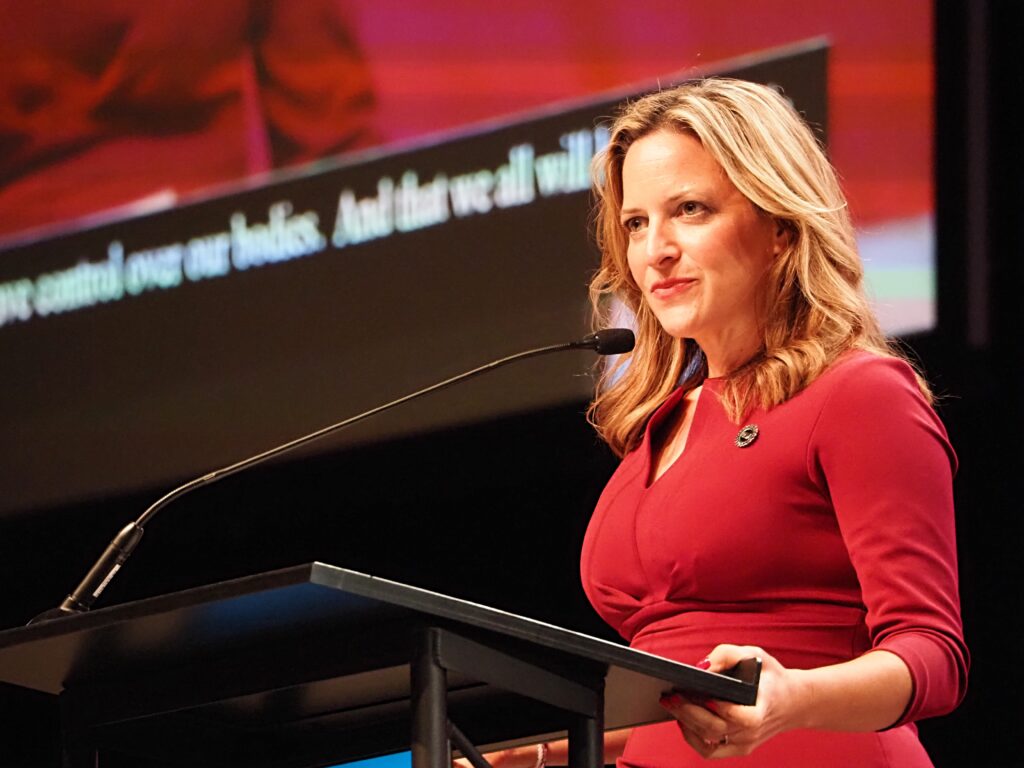
Secretary of State Benson, who is campaigning for governor in the 2026 race, stated that ruling on the constitutionality of endorsement conventions fell outside her jurisdiction, primarily because her office possesses authority only to rule on election law matters as specified by the state's Administrative Procedures Act.
Regarding the remaining questions, Benson also refrained from issuing definitive rulings, instead providing her office's interpretation of existing legislation. Benson clarified that an individual does not become a nominated candidate merely by being selected at an endorsement convention and would not need to file pre- or post-endorsement convention reports before or after that assembly. However, they would need to establish a candidate committee if they were established candidates competing for nomination and must submit other reports, such as a January disclosure statement, along with pre- and post-nominating convention campaign disclosures regardless of whether they received nomination.
Benson, herself an attorney, further interpreted that precinct delegates are not statewide elected officers and therefore not subject to the state's campaign finance disclosure regulations. While parties maintain different rules regarding delegate eligibility and selection processes for convention voting on party matters, these delegates are not formally elected in statewide or local elections.
The Michigan Department of State seldom reconsiders interpretative statements based on public feedback, but the department announced it would accept public comments on the draft statement issued December 19, with a submission deadline of December 30.
Divergent Legal Perspectives
Lennox expressed disappointment that Benson did not provide a more declarative and formal decision regarding constitutional aspects but voiced concern that interpreting delegates as exempt from campaign finance reporting rules could potentially enable delegate bribery and broader utilization of unregulated funds to secure their votes for specific candidates during nomination pursuits.
"I am not trying to subject the internal workings of the Michigan Democratic Party or the Michigan Republican Party, who is on what committee or how those committees are elected, to regulation by the secretary of state, whomever that secretary of state of the day is, whether Republican or Democrat," Lennox said. "But if they're going to have conventions that nominate public offices, I believe that specific race, at that specific convention, should be subject to the Campaign Finance Act. I think it's absurd to argue that you can bribe a precinct delegate and yet that's what the secretary of state's position is; that bribery of a precinct delegate is legal."
Mark Brewer, an election law attorney and former chair of the Michigan Democratic Party, stated that although dark money in elections represents a persistent concern, this concern does not stem from parties' employment of endorsement conventions.
"I think, at least from the Democratic side, that this is vastly overblown," Brewer told the Advance. "First of all, these aren't elections. ... It's a party function protected by the First Amendment to endorse candidates. Parties do that all the time, but in this case, it's happening at a convention. You have all kinds of different ways that they endorse candidates."
Brewer possesses familiarity with the endorsement convention framework—he established them for Michigan Democrats.
Regarding disclosure questions, Brewer noted these are already addressed through separate disclosure mechanisms.
"Candidates are going to have to file any reports come January, and then they're going to have to file the reports before they're actually nominated next summer," Brewer said. "And if somebody drops out after an endorsement convention, they have to file a dissolution report and disclose all the money they've raised. I think that that's really irrelevant to this. at least on the Democratic side, because nobody is elected to go to a convention."
Bob LaBrant, a retired attorney who previously served as general counsel to the Michigan Chamber of Commerce, also informed the Advance that he anticipates minimal changes concerning what delegates or candidates may undertake regarding fundraising or vote mobilization due to Benson's statement.
"First of all, the contribution limits are unaffected," LaBrant said. "We have election cycle limits. There are no contribution limit increases (as a result of Benson's statement). This doesn't have much impact on that. More importantly, the prohibited sources of contribution – corporations, labor unions and domestic dependent sovereigns – are still prohibited from using their own treasury funds to make contributions to a candidate."
LaBrant remarked that whether Benson's ruling might lead to "wholesale bribery" remains uncertain.