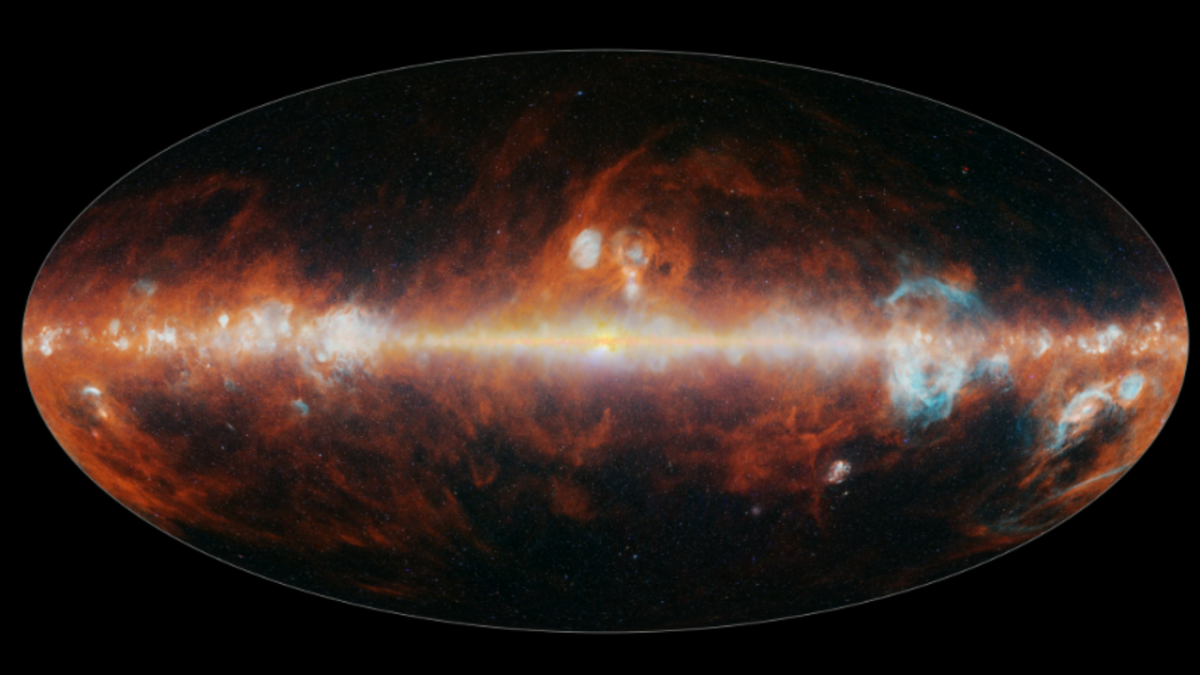
NASA's SPHEREx observatory has achieved a significant milestone by producing its initial comprehensive map of Earth's entire sky.
Scientific Significance of the Data
The information gathered by SPHEREx, which began operations in space earlier this year, will enable researchers to address fundamental questions about the universe. Scientists aim to understand events that occurred immediately following the Big Bang and how these early moments shaped the three-dimensional arrangement of galaxies across cosmic history.
"It's incredible how much information SPHEREx has collected in just six months — information that will be especially valuable when used alongside our other missions’ data to better understand our universe," Shawn Domagal-Goldman, director of the Astrophysics Division at NASA Headquarters in Washington, said in a statement. "We essentially have 102 new maps of the entire sky, each one in a different wavelength and containing unique information about the objects it sees.
"I think every astronomer is going to find something of value here, as NASA's missions enable the world to answer fundamental questions about how the universe got its start, and how it changed to eventually create a home for us in it."
Mission Operations and Future Plans
The SPHEREx spacecraft, orbiting Earth multiple times daily, captures thousands of images during each pass. Its observational perspective shifts as Earth moves around the sun.
After commencing scientific activities in May, the observatory required several months to compile this initial sky survey. Over its planned two-year primary mission, SPHEREx is expected to conduct three additional complete sky scans. Combining these future observations with existing data will create an enhanced and more detailed celestial map.
"SPHEREx is a mid-sized astrophysics mission delivering big science," JPL Director Dave Gallagher said. "It's a phenomenal example of how we turn bold ideas into reality, and in doing so, unlock enormous potential for discovery."
Researchers will utilize SPHEREx data to examine galactic development throughout the universe's 13.8-billion-year existence, potentially revealing how essential elements for life became distributed across cosmic structures.