Orbital Incident Reported
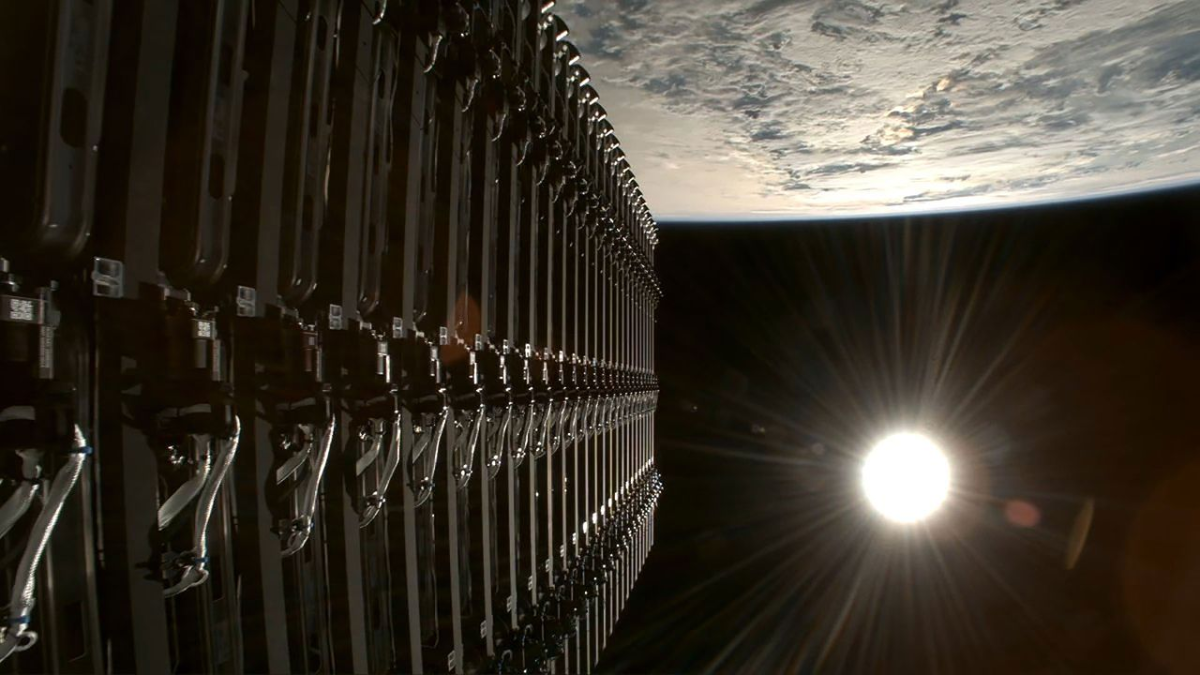
On Wednesday, December 17, a satellite from SpaceX's Starlink broadband network experienced an unexpected technical issue while operating at approximately 260 miles above Earth's surface.
According to company representatives, the anomaly resulted in communication loss with the spacecraft and caused venting from its propulsion system. This led to a reduction in orbital altitude by around 4 kilometers and the release of several trackable objects moving at low relative velocity.
Safety Measures and Monitoring
SpaceX has coordinated with NASA and U.S. Space Force authorities to monitor the newly created space debris. In a statement released on Thursday morning, December 18, the company emphasized that the situation presents minimal concern.
"The satellite is largely intact, tumbling, and will reenter the Earth’s atmosphere and fully demise within weeks. The satellite's current trajectory will place it below the @Space_Station, posing no risk to the orbiting lab or its crew," Starlink representatives wrote.
"As the world’s largest satellite constellation operator, we are deeply committed to space safety," they added. "We take these events seriously. Our engineers are rapidly working to root cause and mitigate the source of the anomaly and are already in the process of deploying software to our vehicles that increases protections against this type of event."
Starlink Constellation Context
The Starlink network represents the most extensive satellite constellation ever deployed, currently comprising approximately 9,300 operational spacecraft. This accounts for roughly 65% of all functional satellites orbiting our planet.
SpaceX has conducted 122 Starlink launch missions during the current year alone, delivering over 3,000 additional satellites to low Earth orbit. Each satellite has a designed operational lifespan of about five years, after which SpaceX intentionally deorbits them before they become non-functional.
Collision Avoidance Systems
To address space debris concerns, Starlink satellites incorporate autonomous collision avoidance capabilities. These systems have proven highly active, with spacecraft executing approximately 145,000 evasive maneuvers during the first half of 2025—averaging about four avoidance actions per satellite monthly.
However, not all satellite operators demonstrate similar responsibility. Recently, a Chinese-launched satellite narrowly avoided collision with a Starlink spacecraft without prior coordination.
"As far as we know, no coordination or deconfliction with existing satellites operating in space was performed, resulting in a 200-meter close approach between one of the deployed satellites and STARLINK-6079 (56120) at 560 km altitude. Most of the risk of operating in space comes from the lack of coordination between satellite operators — this needs to change," Michael Nicolls, vice president of Starlink engineering at SpaceX, said via X on December 12.