
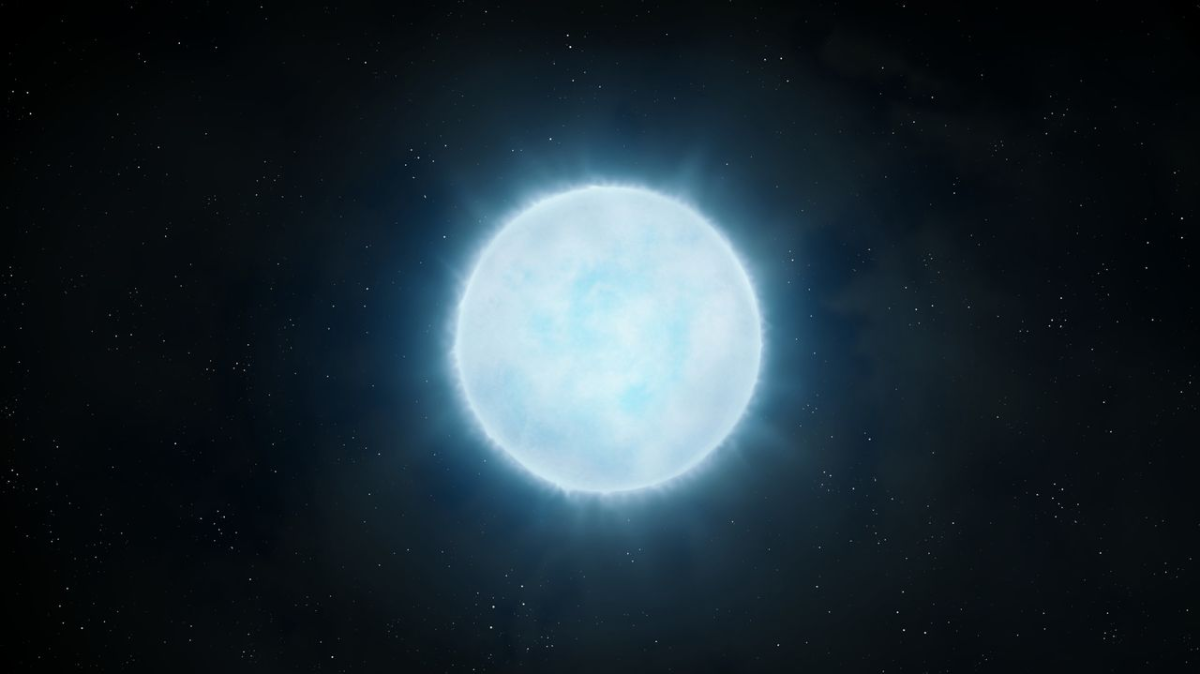
Searching for Invisible Particles Through Stellar Remnants
How can scientists detect theoretical particles that remain unseen? One approach involves examining the cooling rates of white dwarfs—the dense remnants left behind after stars die.
In recent years, significant attention has turned to axions, hypothetical particles first proposed decades ago to address issues with nuclear forces. Initial searches in particle colliders yielded no results, causing interest to wane temporarily.
However, subsequent studies suggested axions might contribute to dark matter, the mysterious substance comprising most of the universe's mass. Researchers recognized these particles could permeate space while avoiding direct observation.
A Novel Detection Method
Although axions would be nearly undetectable, they wouldn't leave the universe completely unchanged. In November 2025, scientists described a new testing approach using archival Hubble Space Telescope data in a paper posted to arXiv. While they discovered no axion evidence, their work surpassed previous attempts and provided clearer boundaries for particle physics.
The investigation focused on white dwarfs—compact stellar cores containing sun-like mass within Earth-sized volumes. These exotic objects maintain structural integrity through electron degeneracy pressure, where quantum principles prevent electrons from occupying identical states.
Axion Production Mechanisms
Certain axion models propose these particles could emerge from electrons under specific conditions. Within white dwarfs, electrons move at relativistic speeds approaching light velocity as they navigate confined spaces. This rapid motion might generate substantial axion quantities.
Newly created axions would escape their stellar origins, carrying energy away from white dwarfs. Since these remnants don't produce internal energy, axion emission would accelerate their cooling processes beyond normal expectations.
Simulations and Observations
Researchers incorporated axion cooling models into advanced stellar evolution software that simulates temperature and brightness changes over time. This enabled predictions about white dwarf temperatures with and without axion effects.
For observational data, scientists examined Hubble's observations of 47 Tucanae, a globular cluster where white dwarfs share similar formation times. This provided an ideal sample for comparative analysis.
Findings and Implications
The study revealed no signs of axion-induced cooling among observed white dwarfs. However, it established unprecedented limits on electron-axion interactions: production cannot exceed one instance per trillion opportunities.
While not eliminating axions entirely, these results suggest direct electron-axion interactions are improbable. Future searches will require increasingly innovative detection strategies to uncover these elusive particles.